 December 2024 in “Australian Journal of General Practice”
 In this case report, a 20-year-old woman exhibited progressive asymptomatic hair loss with a pattern inconsistent with alopecia areata or female pattern hair loss, showing areas of both extending and improving hair loss.
 March 2024 in “Cytologia”
 In this study, researchers observed that melatonin-mediated LncRNA MTC in Liaoning cashmere goat skin fibroblasts enhances cell proliferation by interacting with the GSTM1 protein, affecting its complex formation with ASK1 and thereby inhibiting apoptosis, which may be relevant for improving cashmere growth.
 January 2015 in “Durham e-Theses (Durham University)”
 This study found that glucose starvation and hypoxia are physiological triggers of ER stress in in vitro differentiated adipocytes, rather than high concentrations of saturated fatty acids, cholesterol, or proinflammatory cytokines.
 5 citations
,
October 2020 in “Lasers in Medical Science”
5 citations
,
October 2020 in “Lasers in Medical Science” This study found that combination therapy with LLLT and 5% minoxidil improved hair diameter and density more effectively than each treatment alone in women with female pattern hair loss.
 3 citations
,
November 2020 in “Biological Trace Element Research”
3 citations
,
November 2020 in “Biological Trace Element Research” This study found that patients with androgenetic alopecia had deficiencies in certain trace elements and vitamins, which were linked to distinct patterns of hair loss connected to androgen levels.
January 2009 in “UWA Profiles and Research Repository (University of Western Australia)” This study found that the metabolic syndrome is significantly more prevalent in women with polycystic ovary syndrome compared to controls, highlighting an association between PCOS and increased cardiometabolic risk.
 52 citations
,
January 2020 in “Scientific Reports”
52 citations
,
January 2020 in “Scientific Reports” This study found that nanostructured lipid carriers with clobetasol propionate significantly enhance follicular drug delivery compared to commercial cream, and manual massage further doubles follicular retention.
45 citations
,
January 2022 in “Lab on a Chip” This study demonstrates that a 3D-printed agarose microwell platform supports the growth of size-uniform, viable NSCLC cancer spheroids, and can effectively evaluate drug responses using limited tumor material from biopsies, particularly with EGFR tyrosine kinase inhibitors gefitinib and osimertinib.
 4 citations
,
March 2019 in “Biodiversitas Journal of Biological Diversity”
4 citations
,
March 2019 in “Biodiversitas Journal of Biological Diversity” In this study of duku trees along the Batanghari River in Indonesia, researchers identified traits in mother trees that may help select for resistance to stem canker disease.
3 citations
,
January 2023 in “Biodiversitas Journal of Biological Diversity” This study found that endophytic bacteria isolated from Leea indica leaves showed high antioxidant activity, suggesting they could be a novel source of natural antioxidants.
 1 citations
,
February 2021 in “Biodiversitas”
1 citations
,
February 2021 in “Biodiversitas” This study found that among ten Curcuma aeruginosa accessions, the MD accession showed the highest anticancer activity against MCF-7 cells, suggesting its potential for pharmaceutical development.
July 2026 in “University of Southern Denmark Research Portal (University of Southern Denmark)” This study found that the succinate receptor, GPR91, plays a crucial role in the progression of androgenetic alopecia by affecting the immune system and hair follicle biology, and targeting it may offer new therapeutic strategies.
 July 2023 in “Biodiversitas”
 In this study, researchers found that Sundanese mothers in a rural village in West Java frequently used 25 medicinal plant species, primarily from the Zingiberaceae family, during pregnancy, childbirth, and postpartum, with popular preparations including decoctions and cooking.

This study suggests that the exercise-induced cytokine IL-15 can improve wound healing in aged skin, along with previously reported benefits on skin structure and mitochondrial function.
January 2014 in “SciDok (Saarland University and State Library)” This study demonstrated that in vitro pig ear models effectively predict human follicular uptake of nanoparticles for potential transfollicular vaccination, but massage did not enhance nanoparticle penetration.
This study developed nanoparticulate systems for caffeine delivery in hair follicles, demonstrating effective caffeine loading and release, as well as successful imaging within model hair follicles.

This research suggests that plucked hair follicles may serve as a reliable surrogate tissue for tumor biopsies in drug development, based on a mouse model linking hair and tumor pharmacodynamic responses.
 26 citations
,
January 1978 in “Nephron”
26 citations
,
January 1978 in “Nephron” Minoxidil lowers blood pressure effectively but may cause side effects.
 16 citations
,
January 2007 in “Actas dermo-sifiliográficas/Actas dermo-sifiliográficas”
16 citations
,
January 2007 in “Actas dermo-sifiliográficas/Actas dermo-sifiliográficas” This review discusses frontal fibrosing alopecia and reports no clinical results; the authors note that no therapeutic options tested, including corticosteroids, finasteride, and minoxidil, have shown clear benefits.
 6 citations
,
June 2019 in “Skin Research and Technology”
6 citations
,
June 2019 in “Skin Research and Technology” In this study, finasteride treatment for two years did not significantly reverse miniaturized hair follicles in men with male pattern hair loss, challenging the "reversal hypothesis" as 79 out of 113 miniaturized hairs remained unchanged.
 May 2022 in “bioRxiv (Cold Spring Harbor Laboratory)”
 This study found that intracrine androgen signaling, mediated by steroid 5α-reductase, is essential for optimal decidualization and vascular development in the endometrium during pregnancy, indicating potential targets for improving age-related fertility issues.
 December 2005 in “Endocrine-related cancer”
 This case report describes a 57-year-old woman's virilizing adrenal tumor effectively treated with the antiandrogen cyproterone acetate, which led to symptom reversal and tumor resolution.
 133 citations
,
February 2019 in “PLoS Biology”
133 citations
,
February 2019 in “PLoS Biology” This research found that feather pattern formation in birds is regulated by a mechanochemical system involving fibroblast growth factor and bone morphogenetic protein signaling, which is altered in the flightless emu and ostrich.
 124 citations
,
June 2020 in “Cell Stem Cell”
124 citations
,
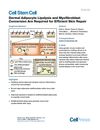
June 2020 in “Cell Stem Cell” This study found that in mice, dermal adipocytes initiate inflammation and aid repair after skin injury by releasing lipids, suggesting a role in managing inflammatory diseases and impaired wound healing.
 56 citations
,
May 2017 in “Nature Cell Biology”
56 citations
,
May 2017 in “Nature Cell Biology” Hair can regrow after certain stem cells are lost because other stem cells can take over their role.
 39 citations
,
January 2015 in “International journal for parasitology/International Journal for Parasitology”
39 citations
,
January 2015 in “International journal for parasitology/International Journal for Parasitology” This study found that Schistosoma mansoni cercariae stimulate epidermal keratinocytes in mice, initiating pro-inflammatory responses and barrier repair mechanisms akin to those in wound healing.
 89 citations
,
February 1993 in “Journal of Medicinal Chemistry”
89 citations
,
February 1993 in “Journal of Medicinal Chemistry” This research article focuses on nonsteroidal inhibitors of human type I steroid 5-alpha-reductase but reports no new results.
 81 citations
,
May 2007 in “Fertility and Sterility”
81 citations
,
May 2007 in “Fertility and Sterility” This review discusses the safety of testosterone therapy for postmenopausal women and concludes that, aside from hirsutism and acne, it appears safe at physiological doses for several years, though more long-term studies are needed.
79 citations
,
August 1998 in “The Journal of Cell Biology” In a transgenic mouse model, this study found that overexpression of keratin 16 in skin keratinocytes led to hyperkeratosis and increased EGF receptor signaling, altering skin cell behavior and structure.