 9 citations
,
January 2014 in “DARU Journal of Pharmaceutical Sciences”
9 citations
,
January 2014 in “DARU Journal of Pharmaceutical Sciences” This study found that Cuscuta reflexa extracts promoted hair regrowth and follicular proliferation in cyclophosphamide-induced hair loss in male rats.
46 citations
,
January 1991 in “Tissue and Cell” This study observed that during male silkmoth development, trichogen cells in olfactory sensilla undergo significant membrane recycling, contributing to sensillum structure formation in a precisely timed series of stages.
 8 citations
,
January 2000
8 citations
,
January 2000 This study found that terbinafine prevented the invasion of keratin by Trichophyton mentagrophytes in experimental models replicating human dermatomycoses.
1 citations
,
October 1978 in “The Journal of Pediatrics” 1 citations
,
January 2017 in “International journal of trichology” This case report suggests that topical diphenylcyclopropenone (DPCP) may be beneficial for treating both alopecia areata and verruca vulgaris, although it is not typically a first-line therapy.
10 citations
,
June 2019 in “Dermatologic therapy” In this study, treatment with DPCP alone was more effective for hair regrowth and presented fewer side effects in chronic extensive alopecia areata compared to combination therapy with DPCP and anthralin.
 24 citations
,
September 2001 in “Journal of Dermatological Science”
24 citations
,
September 2001 in “Journal of Dermatological Science” This study found that cyclophosphamide-induced hair follicle damage in C3H mice could be remodelled into intact anagen hair follicles with topical cyclosporin A, especially in anagen IV stage follicles.
December 2025 in “UTTAR PRADESH JOURNAL OF ZOOLOGY” This study found that Notoedres cati infests about 5.5% of domestic cats in Hyderabad and suggests that Selamectin provides faster recovery than an Aloe vera and virgin coconut oil formulation, although both treatments are effective.
 April 2006 in “Dermatologic Clinics”
 This study found that white wax and its extract significantly promoted hair growth in a mouse model of androgenetic alopecia, outperforming finasteride by inhibiting 5α-reductase activity and enhancing cellular proliferation.
 10 citations
,
June 2014 in “Journal of Pharmacy and Pharmacology”
10 citations
,
June 2014 in “Journal of Pharmacy and Pharmacology” This study found that antiandrogenic compounds in Curcuma aeruginosa, including germacrone, degrade rapidly at high temperatures but are more stable when solubilized in PEG-40.
 April 2012 in “Journal of the American Academy of Dermatology”
 In this survey of dermatologists, pimozide was most commonly identified as the preferred first-line antipsychotic for treating delusions of parasitosis, followed by risperidone.
 11 citations
,
April 2017 in “The European Journal of Contraception & Reproductive Health Care”
11 citations
,
April 2017 in “The European Journal of Contraception & Reproductive Health Care” This review highlights that Cyproterone acetate combined with ethinylestradiol is highly effective for treating severe acne and hirsutism in women with hyperandrogenism, and it also provides benefits for cycle control and mood improvement, according to the analysis of 78 studies.
 11 citations
,
May 2010 in “Annals of the Academy of Medicine Singapore”
11 citations
,
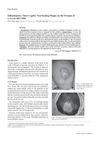
May 2010 in “Annals of the Academy of Medicine Singapore” This case report describes a 4-year-old girl in Singapore with inflammatory tinea capitis, which improved with oral griseofulvin and selenium sulfide shampoo.
 March 2014 in “Journal of clinical microbiology”
 This paper reviews the diagnosis and treatment of inflammatory tinea capitis, highlighting the importance of laboratory confirmation and recommending griseofulvin as the gold standard treatment.
March 2023 in “Reactions Weekly”  84 citations
,
March 2004 in “Veterinary Dermatology”
84 citations
,
March 2004 in “Veterinary Dermatology” In randomized controlled trials, this research reports that cyclosporin is as effective as glucocorticoids for treating canine atopic dermatitis and has potential benefits for other immune-mediated skin conditions in dogs.
 October 2021 in “Meditsinskiy sovet = Medical Council”
 This study found that cyproterone acetate treatment improved quality of life and reduced anxiety and depressive symptoms in women with skin manifestations of hyperandrogenism.
5 citations
,
March 2012 in “Veterinary dermatology” This case report describes a potential drug-induced localized scleroderma in a Persian cat following the application of a 'spot-on' treatment.
1 citations
,
August 2024 in “Skin Health and Disease” Among pediatric alopecia areata patients treated with DPCP, this study reported complete hair regrowth in 8.8% and any regrowth in 61.8% after one year, with better outcomes for those with milder initial symptoms and longer treatment durations.
 15 citations
,
January 1992 in “Sen'i Gakkaishi”
15 citations
,
January 1992 in “Sen'i Gakkaishi” This study suggests that the cell membrane complex in hair cuticles contains hydrophilic regions with disulfide bonds allowing polymer uptake and hydrophobic lamella-like lipid layers.
 January 2026 in “Zenodo (CERN European Organization for Nuclear Research)”
 This study used molecular docking simulations to identify Adapalene, Diosmin, and Azelastine as promising drugs for repurposing against Onchocerciasis by targeting Onchocerca volvulus and its endosymbiont; further research is suggested to confirm their efficacy.
January 2021 in “Social Science Research Network” In this study, researchers developed and optimized ethanol-free microemulsion systems for transdermal finasteride delivery, finding that the predicted formulations closely matched their physical and chemical characteristics, potentially reducing adverse effects compared to oral administration.
April 1946 in “Archives of Dermatology” This report describes two cases of tinea capitis: one resistant to local iodine treatment after partial improvement, and another cured with the same treatment, in African American and Caucasian children, respectively.
January 2015 in “SciDok (Saarland University and State Library)” This study confirmed the porcine ear skin model's effectiveness for studying nanoparticle-based drug delivery in human hair follicles, noting particle-dependent uptake and enhancement by massage.
1 citations
,
January 2003 in “Chinese Journal of Pharmaceuticals” This study developed a new synthetic route for finasteride that omits the costly reagent 2,2′ dipyridyl disulfide, achieving an overall yield of 16%.
20 citations
,
March 2021 in “Drug design, development and therapy” This review summarizes the pharmacology, mechanisms, and clinical efficacy of topical immunotherapy for alopecia areata but reports no new clinical results.
 3 citations
,
September 2016 in “Natural Product Communications”
3 citations
,
September 2016 in “Natural Product Communications” This study identified 8-hydroxy germacrene B from Curcuma aeruginosa as a highly potent in-vitro 5-alpha reductase inhibitor with significant anti-androgenic activity, while exhibiting mild cytotoxicity on prostate cancer cells without affecting human dermal papilla cells at tested concentrations.
19 citations
,
October 2015 in “British Journal of Dermatology” This review reports very low quality evidence for the effectiveness and safety of treatments in extensive resistant alopecia areata and emphasizes the need for high-quality randomized controlled trials.
 April 2017 in “Journal of Investigative Dermatology”
 Applying pseudoceramide improved skin and hair health.
46 citations
,
September 2011 in “British journal of dermatology/British journal of dermatology, Supplement” This study found that certain zinc pyrithione shampoos effectively deliver antifungal agents to the scalp's follicular infundibulum, correlating with reduced Malassezia populations, likely influenced by particle size optimizing such delivery.