1 citations
,
May 2024 in “Journal of Dermatological Science” In this study, KC-AD-MSCs were found to increase COL7 deposition and anchoring fibril formation at the dermal-epidermal junction in a RDEB mouse model, suggesting potential for improving skin integrity in recessive dystrophic epidermolysis bullosa patients.
January 2009 in “한국피부장벽학회지” This study reports that in mice, CaR plays a critical role in sensing the epidermal Ca2+ gradient, influencing keratinocyte differentiation, and affecting epidermal development.
 1 citations
,
April 2025 in “Romanian Journal of Ophthalmology”
1 citations
,
April 2025 in “Romanian Journal of Ophthalmology” This study indicates that central serous chorioretinopathy linked to topical minoxidil use is rare, suggesting the need for early detection and discontinuation if it occurs.
October 2023 in “International journal of molecular sciences” In this study, researchers analyzed the skin proteome of Alpine Merino sheep to identify proteins and pathways related to wool fiber diameter, finding that cyclic adenosine monophosphate and certain signaling pathways may play a role in this trait.
 5 citations
,
November 2020 in “EBioMedicine”
5 citations
,
November 2020 in “EBioMedicine” This study reports a novel diagnostic method for latent circadian rhythm sleep-wake disorder using circadian gene oscillations from hair follicle cells to improve sleep disorder differentiation and potential therapeutic intervention.
3 citations
,
July 2022 in “Brain and Behavior” This study observed that a CARASIL mouse model demonstrated abnormal behavior, vascular and cellular changes, and upregulation of the TGF-β/Smad signaling pathway, indicating its potential involvement in CARASIL pathogenesis.
3 citations
,
May 1994 in “Journal of Pharmacology and Experimental Therapeutics” This study found that minoxidil sulfate stimulates Cl channels, potentially depolarization-activated and outwardly rectifying, in eccrine clear cells, while minoxidil itself stimulates Ca-insensitive K currents.
1 citations
,
December 2005 in “Journal of Biological Research - Bollettino della Società Italiana di Biologia Sperimentale” This study used Scanning Electron Microscopy to analyze South American mummy hair, revealing high levels of sulfur, calcium, and potassium, highlighting SEM's utility in anthropological investigations.
June 1996 in “Journal of Dermatological Science” April 2025 in “Digital Commons - East Tennessee State University (East Tennessee State University)” In a mice model of atopic dermatitis, this study reported that a formulated cromolyn sodium oleate gel significantly reduced scab size and provided better healing than dexamethasone, with fewer adverse effects.

In this thesis, researchers explored ways to enhance the management of myotonic dystrophy type 1 by investigating the genetic inheritance patterns, especially small-sized repeat expansions, and assessing cardiac care, energy expenditure, and body composition in affected individuals.
12 citations
,
June 2020 in “Lupus” This study found that treating a murine model of systemic lupus erythematosus with early and optimally dosed mesenchymal stem cells effectively suppressed disease severity.
 4 citations
,
December 2022 in “Advanced science”
4 citations
,
December 2022 in “Advanced science” This study found that fatty acid desaturation regulated by SCD1 is crucial for hair growth by maintaining hair follicle stem cell niches, with its absence causing abnormal hair growth in mice.
March 2025 in “Laboratory Investigation” This systematic review found that mixed epithelial and stromal tumor of the seminal vesicle (MESTSV) is characterized by abundant stromal proliferation, architectural heterogeneity, and strong immunoreactivity for ER/PR, with most being benign but warranting surveillance for possible recurrence or metastasis.
 33 citations
,
December 2012 in “NMR in Biomedicine”
33 citations
,
December 2012 in “NMR in Biomedicine” This study reports that microencapsulation of therapeutic cells with contrast agents enables visualization across multiple imaging modalities, potentially improving cellular immunoprotection and tracking after transplantation.
 16 citations
,
April 2021 in “International Journal of Molecular Sciences”
16 citations
,
April 2021 in “International Journal of Molecular Sciences” This study found that micro-current electrical stimulation may promote hair growth in human hair follicle-derived papilla cells and a mice model by enhancing cell proliferation, migration, and activating key growth pathways.
3 citations
,
January 2021 in “Oxidative Medicine and Cellular Longevity” In this study, Nrf-2-expressing hair follicle mesenchymal stem cells showed the most significant therapeutic effect in a rat model of ulcerative colitis, suggesting a new potential treatment for the disease.
83 citations
,
May 2011 in “European Journal of Dermatology” This review discusses the role of corneodesmosin in skin and hair follicle integrity, with mentions of its link to hypotrichosis simplex and peeling skin disease, and reports no new results.
 August 2023 in “Gastroenterology”
 This study describes the diagnosis and successful management of Cronkhite-Canada syndrome in a 78-year-old man, highlighting improvement in symptoms and endoscopic findings after treatment with prednisone and supportive therapies.
 March 2026 in “Preprints.org”
 This study investigated the secretome of adipose mesenchymal stem cells and fibroblasts used in skin care products, finding 16 therapeutic pathways involving numerous signaling mechanisms, which may offer skin benefits through anti-inflammatory and regenerative effects.
 September 2023 in “Clinical, cosmetic and investigational dermatology”
 In this study, the researchers found that a 28-day topical treatment with a postbiotic ferment complex notably altered the scalp microbiome in women with sensitive scalps, increasing certain bacterial species and decreasing others, while also reportedly alleviating symptoms of sensitive skin syndrome in all participants.
1 citations
,
January 2026 This study reveals that the microRNA-200 family, highly enriched in hair matrix progenitors, restricts sebaceous gland development by inhibiting the SOX9-dependent lipogenic program, highlighting its specific role in epithelial plasticity within hair follicles.
 January 2024 in “Biological Research”
 This study found that mesenchymal stem cell-derived exosomes reduced hearing and hair cell loss caused by neomycin in experimental models by modulating autophagy, which promoted cell survival and lowered oxidative stress and apoptosis, indicating potential for deafness treatment.
2 citations
,
July 2020 in “bioRxiv (Cold Spring Harbor Laboratory)” This study demonstrates that neural stem cells in the adult vertebrate brain coordinate their division decisions using delayed local feedback mechanisms, involving Notch-mediated inhibition and dispersion effects, to maintain population homeostasis.
 1 citations
,
November 2024 in “Cureus”
1 citations
,
November 2024 in “Cureus” This case report describes a rare aggressive variant of squamous cell carcinoma on the scalp of a non-immunosuppressed older male, highlighting its high biological risk for metastasis and poor outcomes.
 27 citations
,
August 2006 in “Laboratory Investigation”
27 citations
,
August 2006 in “Laboratory Investigation” In this study, the combination of SCF and ET-1 was found to significantly enhance skin pigmentation and melanin content in human skin xenografts on SCID mice compared to either treatment alone.
 May 2015 in “Actas Dermo-Sifiliográficas”
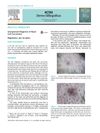
 A young man was unexpectedly diagnosed with basal cell carcinoma after a scalp examination and confocal microscopy.
25 citations
,
January 2012 in “Proteome Science” This study suggests that common proteomic changes, including the expression of the protein S100A6, may occur during the expansion of AD-MSC from different donors.
 December 2025 in “Academic Journal of Science and Technology”
 This review explores the potential of mesenchymal stem cells in skin regeneration and rejuvenation, highlighting their ability to modulate immune response and enhance extracellular matrix strength but does not provide new clinical evidence.
 April 2018 in “Journal of Investigative Dermatology”
 This study suggests that for dermatomyositis patients with minimal skin disease activity, further improvement in cutaneous symptoms may not translate into better quality of life, highlighting a need to revise trial endpoints.