December 2025 in “JGH Open” In this case study, a 78-year-old Japanese woman with Cronkhite-Canada syndrome experienced mesenteric lymphadenopathy, which reduced in size after treatment with the corticosteroid prednisolone. This suggests that mesenteric lymphadenopathy, though uncommon in CCS, may respond to steroid therapy.
 4 citations
,
June 2025 in “Cochrane Database of Systematic Reviews”
4 citations
,
June 2025 in “Cochrane Database of Systematic Reviews” This Cochrane review found no clear superiority among treatments for central serous chorioretinopathy, with low-dose photodynamic therapy, supplements, and eplerenone showing slightly higher probabilities of improving visual acuity, but evidence remains uncertain due to biases and small study sizes.
 June 2019 in “Journal of Aesthetic Nursing”
 This article describes Amy Senior's evolving views on the Joint Council for Cosmetic Practitioners and reports no new research findings.
 2 citations
,
March 2015 in “Toxicology and Environmental Health Sciences”
2 citations
,
March 2015 in “Toxicology and Environmental Health Sciences” This study found that rice bran supercritical CO₂ extract was classified as a non-irritant for ocular use but a moderate irritant for dermal use in rabbits and guinea pigs.
This study found that super-enhancers in squamous cell carcinoma stem cells are distinctly different from those in normal skin stem cells, with ETS2 playing a crucial role in promoting tumor growth.
 April 2018 in “Journal of Investigative Dermatology”
 This study observed that β-catenin overexpression in human squamous cell carcinoma cells led to increased CREB expression, which significantly enhanced clonogenic activity, suggesting CREB as a β-catenin-regulated factor promoting cancer characteristics.

This review presents a scholarly exchange examining whether sexual minority individuals undergoing SOCE therapy face increased suicidal risk, featuring articles from the American Journal of Public Health and Archives of Sexual Behavior arranged with commentary for comprehensive understanding. Results are not reported in the abstract.
5 citations
,
April 2023 in “Life” This review discusses central centrifugal cicatricial alopecia in adolescents, noting varied presentation and highlighting genetic and environmental factors, but reports no new clinical findings.

This case study presented by the researchers describes the effective use of topical calcipotriene ointment in treating a 6-year-old girl with en coup de sabre scleroderma, resulting in normalization of the sclerotic skin, hair regrowth, and improved pigmentation.
3 citations
,
October 2011 This article discusses revised SLE classification criteria by the SLICC and reports no new research results.
September 2017 in “The journal of investigative dermatology. Symposium proceedings/The Journal of investigative dermatology symposium proceedings” This study emphasizes the genetic component of central centrifugal cicatricial alopecia, highlighting an atypical case involving an adolescent male within an African-American family.
This study introduced the C-CAT, a new assessment tool for central centrifugal cicatricial alopecia, and found that established treatments improved symptoms in most patients over six months.
 October 2023 in “The American Journal of Gastroenterology”
 This case report describes chronic iron deficiency anemia in a patient with Cronkhite-Canada syndrome, highlighting the need for more data to guide treatment and cancer surveillance due to its rarity and mortality risk.
 42 citations
,
November 2019 in “Frontiers in Endocrinology”
42 citations
,
November 2019 in “Frontiers in Endocrinology” This article provides an overview of diagnosing Cushing's syndrome, emphasizing the importance of assessing clinical signs and the appropriate use of first-line biochemical screening.
10 citations
,
August 2002 in “British Journal of Ophthalmology” This case study reports that intralesional cidofovir was successfully used for treatment without systemic toxicity, suggesting it might be an option worth considering for SCC.
 February 2026 in “Frontiers in Medicine”
 This study reported that trichoscopy can identify specific hair shaft abnormalities linked to increased serological activity, highlighting its use as a valuable non-invasive diagnostic tool in pediatric dermatology for neonates with ECS.
7 citations
,
March 2022 in “The FASEB journal” This study observed that mice with a whole-body deficiency of Cystathionine-β-synthase developed severe hyperhomocysteinemia and related mild symptoms without increased mortality, indicating HHCy may not directly cause end organ damage.
 April 2019 in “The journal of investigative dermatology/Journal of investigative dermatology”
 In this study, researchers found that CCCA in women of African descent is associated with molecular changes, including dysregulation of fatty acid metabolism and fibrosis pathways, suggesting potential targets for new treatments.
 5 citations
,
September 2017 in “Medicine”
5 citations
,
September 2017 in “Medicine” In this case report, a patient with Cronkhite-Canada Syndrome developed colon cancer and liver metastasis despite hormone therapy, highlighting the need for regular monitoring and early detection strategies.
 January 2020 in “SCIENCE, ENGINEERING AND TECHNOLOGY: GLOBAL TRENDS, PROBLEMS AND SOLUTIONS”
 This conference proceedings compilation from Prague covers global trends, problems, and solutions in science, engineering, and technology, but reports no new clinical results.
3 citations
,
October 2020 in “UNC Libraries” This article discusses the SLICC's revision and validation of the ACR SLE classification criteria to enhance clinical relevance and integrate recent immunological insights, but does not report new clinical results.
 May 2024 in “Animal genetics”
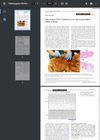
 The researchers investigated a Maine Coon cat with suspected classical Ehlers-Danlos Syndrome and discovered a heterozygous deletion in the COL5A1 gene, underscoring the value of whole-genome sequencing for precise veterinary diagnostics.
6 citations
,
April 2012 in “PubMed” This case report describes a 33-year-old Indian male with Cronkhite-Canada syndrome who experienced complete symptom recovery within 5 months after starting a high protein diet, proton pump inhibitors, and zinc-vitamin supplements.
 July 2023 in “British journal of dermatology/British journal of dermatology, Supplement”
 In this study, researchers analyzed skin tumors from patients with CYLD cutaneous syndrome and found that loss of CYLD function is linked to changes in cellular signaling pathways, particularly NF-κB signaling, and leads to increased secretion of specific extracellular matrix proteins.
 1 citations
,
February 2018 in “Journal of Plastic Reconstructive and Aesthetic Surgery”
1 citations
,
February 2018 in “Journal of Plastic Reconstructive and Aesthetic Surgery” This review from the 2013 Keogh Review found that non-surgical cosmetic interventions in the UK are largely unregulated, leaving patients with little protection or recourse.
March 2026 in “Journal of Investigative Dermatology” This study identified CCCA in 10 children of African descent, highlighting the occurrence of this scarring alopecia in patients under 18 and the importance of early diagnosis for better outcomes.
 August 2013 in “Gastroenterology”
 This case report highlights a 60-year-old patient's diagnosis with Cronkhite-Canada syndrome, characterized by gastrointestinal polyps, diarrhea, weight loss, brittle nails, alopecia, and skin changes, which showed improvement with treatment.
The report aimed to improve health and safety standards in day care by identifying risks and suggesting solutions.
 July 2019 in “Journal of Aesthetic Nursing”
 This article discusses the JCCP's new Premises Standards for aesthetic practitioners, focusing on how these guidelines help ensure patient safety, and reports no new research findings.
2 citations
,
August 2002 in “British Journal of Ophthalmology” This article discusses the potential of intralesional cidofovir as a treatment for SCC and reports no systemic toxicity, but highlights surgical excision as the most reliable curative option.