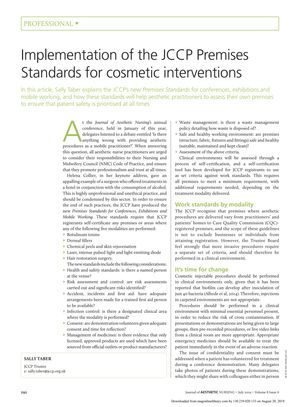
Implementation of the JCCP Premises Standards for Cosmetic Interventions
July 2019
in “
Journal of Aesthetic Nursing
”
Studysummary This article discusses the JCCP's new Premises Standards for aesthetic practitioners, focusing on how these guidelines help ensure patient safety, and reports no new research findings. Our plain-language summary of this paper — not a Tressless recommendation.
In 2019, the Joint Council for Cosmetic Practitioners (JCCP) introduced Premises Standards for cosmetic interventions to improve patient safety. These standards, which are self-certified by aesthetic practitioners, address various aspects of practice including health and safety, infection control, and consent, and are tailored to the invasiveness of procedures such as botulinum toxins, dermal fillers, and hair restoration surgery. The JCCP specifically advises that cosmetic injectable procedures be conducted in clinical settings to reduce contamination risks. Industry stakeholders have shown support for these standards. Additionally, the document provides guidance on mobile working for aesthetic practitioners, referencing Health Improvement Scotland and the Health and Social Care Act. The JCCP aims for these standards to enhance the safety and quality of non-surgical cosmetic treatments.