May 2025 in “Lasers in Surgery and Medicine” This study reported that nonablative monopolar radiofrequency therapy provided sustained reductions in both inflammatory and noninflammatory acne lesion counts and sebum production in participants with moderate-to-severe acne vulgaris, with high patient satisfaction and no significant adverse effects observed up to 12 months posttreatment.
 January 2019 in “Acta dermatovenerologica Alpina, Pannonica et Adriatica (Tiskana izd.)”
 This study found that the treatment group experienced a higher average increase in hair counts than the placebo group, but the difference was not statistically significant.
 1 citations
,
March 2019 in “Lasers in Surgery and Medicine”
1 citations
,
March 2019 in “Lasers in Surgery and Medicine” This article contains the late-breaking abstracts from the 39th Annual Conference of the American Society for Laser Medicine and Surgery and does not present new research results.
 39 citations
,
March 2009 in “Clinics in plastic surgery”
39 citations
,
March 2009 in “Clinics in plastic surgery” This review discusses the evolution and studies of injection lipolysis for fat reduction, highlighting the need for more research to ensure patient safety and treatment efficacy; it reports no new clinical results.
15 citations
,
August 2011 in “Lasers in medical science” This study reported that a single treatment with a short-pulsed 755-nm alexandrite laser effectively treated trichostasis spinulosa in patients with skin types II to V, providing rapid results with minimal pain and no recurrence during a 3-month follow-up.
 42 citations
,
December 2014 in “Clinical, cosmetic and investigational dermatology”
42 citations
,
December 2014 in “Clinical, cosmetic and investigational dermatology” This review indicates that microneedle bipolar RF and fractional bipolar RF treatments offer significant improvement in acne scarring, with optimal results observed about three months after treatment.
January 2014 in “European Journal of Dermatology” This study reports that hair regrowth is observed in 64-97% of adult patients with patchy alopecia areata treated with intralesional triamcinolone acetonide injections.
5 citations
,
April 2020 in “Journal of Mind and Medical Sciences” This review discusses the challenges of treating lipomas and related adipose tissue diseases, finding that laser liposuction is highly effective and preferred by patients due to minimal pain, quick recovery, and low recurrence, and reports no new clinical results.
3 citations
,
August 2021 in “Journal of Cosmetic Dermatology” This study found that non-ablative Er:YAG laser treatment, alone or combined with other therapies, effectively improved hair quality and reduced AGA grade in patients, with high satisfaction reported and no adverse reactions.
11 citations
,
October 2020 in “PLoS ONE” This study found that scalp cooling markedly reduces cellular uptake of anthracycline drugs in human keratinocytes, partially explaining its protective effect against chemotherapy-induced cytotoxicity.
39 citations
,
January 2006 in “Journal of Cosmetic and Laser Therapy” This study found that pneumatic skin flattening (PSF) significantly reduces pain and post-treatment erythema during high-energy IPL and laser hair removal while enhancing treatment efficacy.
 June 2023 in “QJM: An International Journal of Medicine”
 This study found that combining fractional CO2 laser treatment with platelet-rich plasma led to a statistically significant improvement in hair regrowth for male androgenetic alopecia, compared to using the laser treatment alone.
January 2020 in “Integrative Medicine Research” 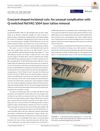 1 citations
,
November 2020 in “Journal of Cosmetic Dermatology”
1 citations
,
November 2020 in “Journal of Cosmetic Dermatology” This letter to the editor discusses an unusual complication, crescent-shaped incisional cuts, observed with Q-switched Nd:YAG 1064 laser tattoo removal and reports no new clinical results.
 June 2025 in “Cancer Management and Research”
 This study found that scalp cooling resulted in visible hair retention in 53% of breast cancer patients undergoing Epirubicin/Cyclophosphamide and Paclitaxel treatment, with factors like hair bulb diameter, shaft diameter, and anagen rate significantly predicting outcomes.
 October 2024 in “Frontiers in Neurology”
 This study at Shandong Provincial Hospital evaluated interventional embolization for scalp arteriovenous fistulas, finding a cure rate of 85.71% among 21 patients, with swelling as a common postoperative complication, suggesting this method is both effective and safe.
September 2024 in “Journal of the American Academy of Dermatology” Subcision is the most efficient, cost-effective, and safest treatment for post-acne boxcar scarring in skin of color.
 7 citations
,
January 2017 in “International Journal of Dermatology”
7 citations
,
January 2017 in “International Journal of Dermatology” This study found that superficial cryotherapy significantly increased hair density and thickness in treated eyebrows compared to untreated controls after 5 months in patients with alopecia areata.
June 2024 in “Lasers in Surgery and Medicine” This study found that the novel dermal cooling system was an effective and safe treatment for reducing pigmentation in benign pigmented lesions in Asian patients, with minimal side effects.
 44 citations
,
October 2017 in “Scientific Reports”
44 citations
,
October 2017 in “Scientific Reports” This study found that far-infrared radiation preconditioning significantly enhanced the proliferation, survival, and migration of bone marrow-derived stem cells in vitro, indicating potential therapeutic benefits for cardiac ischemia treatment.
 May 2005 in “Seminars in Plastic Surgery”
 This article shares the authors' experiences with the erbium YAG laser in hair restoration surgery, noting improved graft yield and reduced thermal damage compared to traditional methods.
September 2023 in “Journal of the American Academy of Dermatology”  1 citations
,
July 2015 in “European Journal of Dermatology”
1 citations
,
July 2015 in “European Journal of Dermatology” This article discusses timed exposure settings with ablative lasers for treating benign dermal tumors and highlights their potential to reduce treatment time and scarring risk, but it reports no new clinical results.
48 citations
,
May 2012 in “Journal of cosmetic and laser therapy” This study found that fractional bipolar RF energy significantly reduced acne scar severity and improved skin texture, with high subject satisfaction and limited side effects.
 132 citations
,
October 1995 in “Journal of the American Academy of Dermatology”
132 citations
,
October 1995 in “Journal of the American Academy of Dermatology” This report concludes that the blend method is the most effective electrolysis technique for permanent hair removal, requiring proper technique and preparation such as shaving before treatment to increase efficacy.
 January 2025 in “Surgical & Cosmetic Dermatology”
 In this case study, a 35-year-old man with recalcitrant folliculitis decalvans was successfully treated with Erbium-YAG laser, showing rapid improvement without hair loss, though further clinical studies are needed to define its benefits more comprehensively.
9 citations
,
September 2024 in “Frontiers in Endocrinology” This study found that intrauterine PRP infusion is a safe and effective treatment for patients with refractory thin endometrium and implantation failures, with the improvement primarily driven by the angiogenic cytokines in PRP.
 3 citations
,
November 2022 in “Advances in Clinical and Experimental Medicine”
3 citations
,
November 2022 in “Advances in Clinical and Experimental Medicine” The authors reported that electrochemotherapy and electroporation-based treatments, both with and without cytotoxic drugs, show promise as safer and more effective options for breast cancer treatment, including metastatic cases and palliative care, in vitro and in vivo.
1 citations
,
November 2024 in “Journal of Investigative Dermatology” Er:YAG laser therapy effectively treats Hailey-Hailey disease, leading to long-term remission and improved quality of life.
1 citations
,
September 2001 in “Dermatologic Surgery” This study found that adding a low-power CO2 laser to Er:YAG laser improves hemostasis in hair transplantation without significantly affecting hair counts or increasing thermal damage.