
EFBL offers hidden incisions, faster recovery, and fewer risks, but may raise hairline and cost more.
6 citations
,
October 2006 in “International Journal of Dermatology” This article discusses central trichoptilosis with onycholysis but provides no new clinical results.
1 citations
,
March 2024 in “Pathogens” The systematic review reports an association between Beau’s lines and COVID-19 infection or vaccination, observing variability in onset and resolution times, and suggesting these nail disorders might indicate previous severe infection or vaccination, as well as potentially signify long COVID-19 syndrome.
September 2024 in “Journal of the American Academy of Dermatology” Subcision is the most efficient, cost-effective, and safest treatment for post-acne boxcar scarring in skin of color.
19 citations
,
January 2015 in “Skin appendage disorders” This study identified a new variety of central centrifugal cicatricial alopecia that includes patchy hair loss on the lateral and posterior scalp in African-American women, which could be misdiagnosed as traction alopecia without dermatoscopy and pathology.
6 citations
,
August 2024 in “Biomacromolecules” This study introduces a novel in vitro model for clubfoot fibrosis to enable high-throughput drug screening and found that while the model increased collagen deposition, the antifibrotic drug minoxidil effectively inhibited the expression of collagen cross-linking enzymes.
52 citations
,
November 2006 in “International Journal of Cosmetic Science” This review discusses the identification and classification of different wrinkle types based on histological features and microanatomy, emphasizing their varying responses to treatments, and reports no new clinical results.
4 citations
,
January 1992 in “American Journal of Ophthalmology”  101 citations
,
July 2020 in “Dermatologic therapy”
101 citations
,
July 2020 in “Dermatologic therapy” This systematic review reports that "COVID toes" and other skin manifestations can be initial signs of COVID-19, and advises immunosuppressive therapy adjustments only for infected or at-risk patients.
November 2024 in “Journal of Investigative Dermatology” Genetic defects in the Wnt/PCP pathway may cause congenital yellow nail syndrome.
27 citations
,
March 2011 in “JEADV. Journal of the European Academy of Dermatology and Venereology/Journal of the European Academy of Dermatology and Venereology” This study found that fractional CO(2) laser treatments led to significant improvements in eyelid skin tightening and eyebrow elevation over one year, with no significant side effects reported.
 55 citations
,
May 2014 in “Journal of feline medicine and surgery”
55 citations
,
May 2014 in “Journal of feline medicine and surgery” This review discusses feline dermatophytosis and emphasizes the importance of early detection and appropriate treatment, but it reports no new clinical results.
2 citations
,
May 2020 in “Journal of the American Academy of Dermatology” Hair shaft changes may be linked to CCCA, but their role is unclear.
 February 2019 in “International journal of research in dermatology”
 This study found that a combination therapy of subcision, micro-needling, and TCA CROSS led to significant improvement in atrophic acne scars, with many patients showing improved scar grades over the treatment period.
 3 citations
,
January 2017 in “Evidence-based complementary and alternative medicine”
3 citations
,
January 2017 in “Evidence-based complementary and alternative medicine” This study found that Galla chinensis solution significantly improved skin lesions and fungal eradication in dermatophytosis-infected dogs, showing over 85% efficacy in fungal removal after 14 days and outperforming the positive control treatment.
 May 2024 in “Animal genetics”
 The researchers investigated a Maine Coon cat with suspected classical Ehlers-Danlos Syndrome and discovered a heterozygous deletion in the COL5A1 gene, underscoring the value of whole-genome sequencing for precise veterinary diagnostics.
January 2015 in “Annals of dermatology/Annals of Dermatology” This report describes a case where travoprost treatment for open-angle glaucoma was associated with periocular hypertrichosis, hyperpigmentation, and eyelash growth, which gradually improved after discontinuation.
May 2013 in “Optometry and Vision Science” This research reports that partial orthokeratology combined with daytime spectacle correction effectively slowed myopic progression in high myopes, with a 63% reduction in axial elongation compared to spectacle use alone.
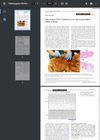
June 2026 in “Journal of Clinical Microbiology” This abstract reports no new research findings; it includes an educational image of microorganisms found in a skin biopsy.
 November 2021 in “Journal of the European Academy of Dermatology and Venereology”
 This study found that children with COVID-19 experienced more frequent acral ischemic lesions, whereas telogen effluvium was the most common skin manifestation in adults.
152 citations
,
April 2002 in “The journal of investigative dermatology/Journal of investigative dermatology” This study presents evidence that keratitis–ichthyosis–deafness syndrome is caused by a mutation in the connexin 26 gene, expanding the gene's known involvement in various disorders.
 February 2024 in “World journal of stem cells”
 This review highlights the potential of adipose-derived mesenchymal stem cells as a cost-effective solution for tissue restoration and regeneration in ophthalmic and oculoplastic surgeries, addressing unmet needs in reconstructive procedures.
 3 citations
,
April 2022 in “Cutis”
3 citations
,
April 2022 in “Cutis” This article reviews central centrifugal cicatricial alopecia, particularly in women of African descent, and explains its progression and symptoms but provides no new clinical findings.
1 citations
,
December 2013 in “Balkan Journal of Medical Genetics” This case study describes a 3.5-month-old girl with cystic fibrosis who experienced hair and skin depigmentation, which resolved after treatment with pancreatic enzymes and vitamins.
June 2025 in “British Journal of Dermatology” This case series highlighted three pediatric patients with congenital nail anomalies, revealing underlying developmental or genetic issues such as symbrachydactyly and potential Adams–Oliver syndrome, underscoring the critical role of dermatologists in early detection and diagnosis of these conditions.
20 citations
,
April 2009 in “Cell Biology International” This study demonstrates that bulge KSCs from hair follicles can transdifferentiate into corneal epithelial-like cells under specific conditions, which could support bioengineered cornea development.
 52 citations
,
January 2001 in “Eye”
52 citations
,
January 2001 in “Eye” This review discusses challenges in treating CMO associated with uveitis and highlights the need for prospective studies to guide therapy, as current treatments are largely empirical and potentially harmful.
21 citations
,
August 1991 in “Journal of the American Academy of Dermatology” This case report presents the first known instance of unilateral erythromelanosis follicularis faciei et colli in a white girl, contributing to the limited documented cases of this rare condition.
October 2021 in “Operative techniques in otolaryngology--head and neck surgery” This article reviews various surgical techniques to improve ocular and cosmetic outcomes in patients with facial paralysis but reports no new clinical results; it emphasizes tailored long-term management strategies.
 1 citations
,
April 2017 in “Journal of Investigative Dermatology”
1 citations
,
April 2017 in “Journal of Investigative Dermatology” In this study, D-OCT imaging revealed distinct structural and vascular changes in patients with frontal fibrosing alopecia, highlighting the technique's potential for diagnosing and monitoring the condition's activity.