 October 2024 in “Journal of the Endocrine Society”
 This case study reported a 40-year-old woman developing Cushing Syndrome months after a single intraarticular injection of Triamcinolone Acetonide, highlighting the potential long-term effects of corticosteroid exposure and the importance of awareness about these risks for clinicians and patients.

The research examined Crown-X, a novel formulation containing Menstrual Stem Cells, and found that it promoted significant proliferation of human dermal papilla cells, suggesting its potential as a non-invasive treatment for male pattern baldness. Future clinical trials are necessary to confirm its efficacy.
June 2025 in “Australasian Journal of Dermatology” This study introduced and evaluated a new dermoscopic feature, pigmented rings with central clearing, for improving the diagnosis of melasma and differentiating it from similar conditions.
13 citations
,
February 2019 in “Türk oftalmoloji dergisi” This review discusses various treatment options for chronic central serous chorioretinopathy, evaluating studies conducted since 2000, but reports no new clinical results.
 1 citations
,
September 2024 in “BMC Ophthalmology”
1 citations
,
September 2024 in “BMC Ophthalmology” This study found significantly elevated central corneal thickness and intraocular pressure in patients with polycystic ovary syndrome, suggesting it should be considered in evaluating anterior segment diseases and glaucoma in women.
43 citations
,
September 2001 in “Annals of Neurology” This study found that somatic mosaic mutations in the doublecortin gene may cause subcortical band heterotopia in male patients, and molecular analysis using hair roots is a useful detection method.
19 citations
,
November 2014 in “Journal of Comparative Physiology A” This study found that Cupiennius salei spiders have specialized mechanosensitive hairs on their legs that adaptively respond to joint movements during walking, suggesting a proprioceptive function.
7 citations
,
March 2022 in “The FASEB journal” This study observed that mice with a whole-body deficiency of Cystathionine-β-synthase developed severe hyperhomocysteinemia and related mild symptoms without increased mortality, indicating HHCy may not directly cause end organ damage.
June 2025 in “Dermatologic Surgery” This article reviews multiple noncutaneous manifestations of pityriasis rubra pilaris, such as subungual hyperkeratosis and hair loss, but reports no new clinical results.
 5 citations
,
February 2015 in “JEADV. Journal of the European Academy of Dermatology and Venereology/Journal of the European Academy of Dermatology and Venereology”
5 citations
,
February 2015 in “JEADV. Journal of the European Academy of Dermatology and Venereology/Journal of the European Academy of Dermatology and Venereology” This article is a letter discussing optical coherence tomography-assisted diagnosis of follicular keratosis of the chin and reports no new research findings.
January 2017 in “International journal of surgery and transplantation research” This study reviewed 647 facial enhancement surgeries using Covas-Lift, reporting reduced surgery time and fewer complications compared to traditional methods, with high patient satisfaction and minimal recovery issues observed.
January 2023 in “Indian journal of pharmacy practice” This study observed that dermoscopic features of skin affected by topical corticosteroids and hydroquinone correlated with histopathological changes, highlighting the importance of awareness regarding their long-term adverse effects.
6 citations
,
August 2016 in “Journal of Visualized Experiments” This article describes a method using the CUBIC protocol to clarify and visualize molecular and cellular interactions in mouse skin biopsies at single cell resolution, but does not provide new biological findings.
21 citations
,
December 2006 in “Archives of dermatology” This abstract contains no research findings and pertains only to website navigation and policies.
In this study, researchers developed a method for high-resolution live imaging of leg regeneration in the crustacean Parhyale hawaiensis, which effectively captures the entire process at cellular resolution over 10 days while minimizing photodamage.
June 2018 in “Chinese Journal of Dermatology” This study reported that connective tissue nevi show distinctive dermoscopic and RCM features, with RCM being particularly helpful for diagnosing lesions of less than one year in duration.
83 citations
,
February 1991 in “Development” This study found that Fos protein expression is closely linked to epithelial cell differentiation, particularly during cornification and cell death, with overexpression observed in keratinization-blocked mutant epidermis.
 8 citations
,
November 2015 in “The American journal of dermatopathology/American journal of dermatopathology”
8 citations
,
November 2015 in “The American journal of dermatopathology/American journal of dermatopathology” The authors present a case of punctate follicular porokeratosis, suggesting it as a distinct clinical entity distinguished by keratotic lesions originating specifically from hair follicles.
June 2026 in “BULLETIN OF STOMATOLOGY AND MAXILLOFACIAL SURGERY” This review summarizes the clinical, dermoscopic, and histopathological features of keratoacanthoma and discusses treatment strategies, emphasizing dermoscopy's role in diagnosis and individualized treatment planning.
22 citations
,
January 2009 in “Advances in experimental medicine and biology” This review discusses the human Nude/SCID phenotype and FOXN1 gene's role in immunological disorders affecting T-cell development but reports no new clinical findings.
 9 citations
,
September 2021 in “Stem Cell Reviews and Reports”
9 citations
,
September 2021 in “Stem Cell Reviews and Reports” This study concluded that hair-derived stem cells from older donors may offer a promising alternative for autologous corneal endothelial replacement, potentially benefitting patients of various age groups.
 14 citations
,
July 2012 in “Journal of the American Academy of Dermatology”
14 citations
,
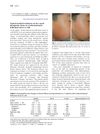
July 2012 in “Journal of the American Academy of Dermatology” This study found that topical tacalcitol improved roughness and scaling in erythromelanosis follicularis faciei et colli, although it was less effective for facial erythema.
 29 citations
,
September 2014 in “American Journal of Dermatopathology”
29 citations
,
September 2014 in “American Journal of Dermatopathology” This study found that horizontal sections of scalp biopsies in patients with Central Centrifugal Cicatricial Alopecia often reveal follicular miniaturization, inflammation, and scarring, which can guide personalized treatment.
 1 citations
,
December 2019 in “American journal of ophthalmology. Case reports”
1 citations
,
December 2019 in “American journal of ophthalmology. Case reports” This case report describes an unusual occurrence of late-onset nevus comedonicus affecting both eyelids, with complications including bilateral ptosis and ectropion.
 December 2021 in “Australasian Journal of Dermatology”
 This study reported cases of post-COVID-19 telogen effluvium in patients who also exhibited distinctive red band changes in their nails.
24 citations
,
March 2008 in “Neuroscience Research” This study revealed the complex three-dimensional innervation of touch domes in cat forepaw skin, highlighting the extensive branching and unmyelinated endings associated with Merkel cell–axon complexes.
18 citations
,
May 2023 in “Science Advances” In this study, transiently activating the sonic hedgehog signaling pathway in chickens transformed reticulate scales on the feet into feathers comparable to body feathers, without ongoing treatment, suggesting this pathway affects the diversity of bird skin appendages.
 April 2018 in “Journal of Investigative Dermatology”
 This study found that combining CelluTome system and RCM is a safe and effective protocol for evaluating wound healing responses in patients with epidermolysis bullosa.
August 2024 in “Skin Research and Technology” This report describes the diagnosis and treatment of traumatic anserine folliculosis in children, highlighting its distinct skin features and suggesting tretinoin cream as an effective remedy.
 April 2023 in “Journal of Investigative Dermatology”
 This study explored COVID-related chilblains using transcriptomics and found they showed a distinct interferon and JAK/STAT pathway activation, absent in vaccine-related chilblains, with inflammatory cell types varying over time.