 134 citations
,
January 2011 in “Development”
134 citations
,
January 2011 in “Development” This study found that disrupting Adam10 in the epidermis led to severe skin and multi-organ abnormalities, implicating Adam10 as crucial for proper Notch signaling and skin maintenance.
October 2025 in “Cell Proliferation” In laboratory research, investigators found that apoptotic vesicles from interleukin-10-treated fibroblasts promote wound healing and reduce fibrotic scarring by enhancing mitochondrial function, modulating collagen composition, and inhibiting the Hedgehog signalling pathway, offering potential for regenerative medicine applications.
11 citations
,
February 2023 in “British Journal of Pharmacology” This study found that ISX9 may activate the Wnt/β-catenin signaling pathway and holds potential as a therapeutic agent for treating alopecia.
 2 citations
,
November 2019 in “Cancer reports”
2 citations
,
November 2019 in “Cancer reports” This study concluded that the Wnt signaling pathway does not significantly influence human keratoacanthoma development, but the overexpression of Sox9 suggests alternate signaling involvement.
6 citations
,
January 2025 in “Differentiation” This review highlights the role of the glycoprotein WNT10A in human tissue and organ development, exploring its genetic structure, expression, and association with disorders like ectodermal dysplasia and pathological conditions such as fibrosis and cancer.

This study found that Pygo2 is crucial for early intestinal hyperproliferation induced by stabilized β-catenin, suggesting it as a potential target for therapeutic intervention in cancers with β-catenin mutation.
 9 citations
,
November 2012 in “Biomolecules & therapeutics”
9 citations
,
November 2012 in “Biomolecules & therapeutics” This study found that diphlorethohydroxycarmalol significantly increased prostaglandin $E_2$ synthesis in HaCaT human keratinocytes by upregulating COX-1 and COX-2 expression, suggesting potential benefits from elevated $PGE_2$ production.
 1 citations
,
July 2023 in “Nature communications”
1 citations
,
July 2023 in “Nature communications” This study found that deleting the Mof gene in mouse skin leads to severe defects in skin cell self-renewal, differentiation, and hair follicle growth, indicating that MOF is crucial for mitochondrial and ciliary gene expression and essential for skin development.
March 2025 in “European Journal of Cell Biology” This review discusses the role of regulatory T cells, highlighting recent research on how prostanoids may modulate their function, but it reports no new findings.
6 citations
,
January 2023 in “International journal of molecular sciences” This review discusses the bidirectional interactions between human mast cells and CD8 T cells in the skin, particularly in the context of disorders like psoriasis, atopic dermatitis, and vitiligo, and reports no new findings.
1 citations
,
September 2001 in “PubMed” This study found that the serine protease inhibitor ONO-3403 significantly suppressed tumor growth in mice with induced squamous cell carcinoma without apparent side effects, suggesting its potential for cancer treatment.
22 citations
,
June 2020 in “iScience” This study found that disrupting Sox21 in developing teeth leads to severe enamel hypoplasia, regional osteoporosis, and abnormal hair formation, with impaired dental epithelial differentiation and regulation of hair follicle cell fate.
July 2024 in “Journal of Investigative Dermatology” November 2022 in “Journal of Investigative Dermatology” This study reported that an HS-associated NCSTN mutation in iPSC-derived skin organoids led to altered hair follicle stem cell differentiation and increased expression of proteins linked to HS inflammation.
57 citations
,
July 2000 in “Toxicology Letters” This study found that the K6/ODC transgenic mouse model is highly sensitive to identifying genotoxic carcinogens, showing 100% concordance with traditional rodent bioassays.
33 citations
,
June 2007 in “Gene Expression Patterns” This study found that CTIP2 is highly expressed in mouse skin during embryogenesis and adulthood, suggesting it may play a role in skin development and homeostasis.
 35 citations
,
January 2013 in “The Journal of experimental medicine/The journal of experimental medicine”
35 citations
,
January 2013 in “The Journal of experimental medicine/The journal of experimental medicine” This study found that deleting the CD98hc protein in mouse skin impairs wound healing and homeostasis, resembling aging effects, due to disrupted integrin signaling pathways.
37 citations
,
January 2006 in “Carcinogenesis” In this study, crossing mice overexpressing antizyme with MEK mutants significantly delayed tumor development and reduced tumor frequency, likely by slowing cell growth in skin tumors.
28 citations
,
February 2006 in “Biochemical and Biophysical Research Communications” Wnt-10b helps skin cells and hair grow.
July 2024 in “Journal of Investigative Dermatology”  6 citations
,
May 2013 in “PloS one”
6 citations
,
May 2013 in “PloS one” This study found that the Foxn1(-/-) nude phenotype significantly influences epithelial progeny in skin, with notable changes in stem cell niches not achievable in other models.
October 2014 in “Cancer research” This study found that targeting mTORC1 with rapamycin effectively inhibited skin tumor promotion in a mouse model, highlighting a potential target for cancer chemoprevention.
January 2015 in “CU Scholar (University of Colorado Boulder)” This research found that Foxc1 is critical for maintaining quiescence in activated hair follicle stem cells and that the cancer cell-of-origin influences tumor heterogeneity in mouse skin squamous cell carcinoma.
11 citations
,
February 2018 in “Oncotarget” This study observed that reduced activation of SMAD2/3 proteins in cutaneous squamous cell carcinoma tissue compared to adjacent tissue may indicate a tumor suppressor role in disease progression.
 35 citations
,
May 2008 in “Journal of Clinical Oncology”
35 citations
,
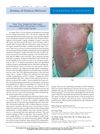
May 2008 in “Journal of Clinical Oncology” A cancer patient died from a severe skin reaction after taking the drug cetuximab.
 June 2018 in “Reactions Weekly”
 A 65-year-old man developed a serious skin cancer linked to a drug he was taking for a fungal infection after a bone marrow transplant.
1 citations
,
April 2022 in “Journal of cosmetic dermatology” This study found that Krox20 is overexpressed in scar fibroblasts and may play a role in scar formation by upregulating genes involved in tissue remodeling and wound healing.
2 citations
,
February 2025 in “Free Radical Biology and Medicine” In a mouse model of chemotherapy-induced alopecia, this study found that inhibiting the protein S100A8 with paquinimod alleviated hair loss and reduced oxidative stress and ferroptosis, suggesting a potential therapeutic strategy for managing this side effect in chemotherapy patients.
November 2019 in “SLAS technology” This study demonstrates that Sox11 and Sox4 are crucial for activating embryonic-like programs during wound healing, with Sox11 overexpression impairing skin differentiation and promoting genes linked to embryonic epidermis.
6 citations
,
October 2020 in “Frontiers in cell and developmental biology” This study found that WWOX deficiency in mice leads to impaired skin development, reduced epidermal thickness, and significant hypothermia due to disrupted cell proliferation and homeostasis.