 6 citations
,
December 2022 in “Colloids and Surfaces B: Biointerfaces”
6 citations
,
December 2022 in “Colloids and Surfaces B: Biointerfaces” This study reported that a novel bilayer wound dressing made from PLCL nanofibers and keratin hydrogel, loaded with FGF-2, promoted skin healing and showed potential for use in skin tissue engineering.
 April 2023 in “Dermatologic surgery”
 This study found that using histidine-tryptophan-ketoglutarate solution with adenosine triphosphate and deferoxamine for hair graft preservation significantly reduced postsurgical shedding compared to Ringer solution, enhancing patient satisfaction.
 13 citations
,
July 2012 in “Dermatologic Surgery”
13 citations
,
July 2012 in “Dermatologic Surgery” Platelet-rich plasma (PRP) may help promote hair growth and improve graft survival after hair transplantation, but more research is needed to confirm its effectiveness and determine the best dosage.
August 2000 in “Chinese Journal of Dermatology” This study found that dermal papilla cells can induce and sustain hair follicle regeneration and growth in both laboratory and animal settings.
1 citations
,
July 2025 in “The Open Dermatology Journal” This study explores the transformative role of tissue engineering in cosmetics, highlighting innovations like lab-grown skin and personalized grafts that enhance product efficacy, offer ethical alternatives to animal testing, and address aesthetic issues such as scarring and aging.
 9 citations
,
August 2024 in “Tissue Engineering and Regenerative Medicine”
9 citations
,
August 2024 in “Tissue Engineering and Regenerative Medicine” In this study, researchers suggest that strategic early intervention during fetal wound healing could lead to significantly improved long-term skin regeneration outcomes.
 3 citations
,
June 2017 in “Aesthetic plastic surgery”
3 citations
,
June 2017 in “Aesthetic plastic surgery” This study reported that novel adipose slurry injections improved rhytides and dermis density in patients receiving facial wrinkle treatments based on evaluations at multiple follow-up intervals.
 December 2025 in “Frontiers in Nutrition”
 This review suggests that although hydrolyzed collagen peptides with certain supplements may improve skin elasticity and joint function, evidence for collagen's anti-aging and regenerative benefits remains inconsistent.
 13 citations
,
May 2005 in “Seminars in Plastic Surgery”
13 citations
,
May 2005 in “Seminars in Plastic Surgery” This article discusses the cell therapy potential of follicular cell implantation for hair regeneration and reports no new clinical results, emphasizing the role of dermal papilla cells in forming new follicles.
 11 citations
,
May 2022 in “Journal of immunology research”
11 citations
,
May 2022 in “Journal of immunology research” This review characterizes breast implant illness and its autoimmune symptoms, reporting an association between breast implants and autoimmune diseases, with explantation relieving symptoms in over half of patients.
10 citations
,
May 2020 in “Clinical and Experimental Health Sciences” This study found that Tideglusib at 50nM stimulated Type-I collagen production in human gingival fibroblasts and osteoblasts, suggesting potential benefits for bone regeneration.
 7 citations
,
December 2017 in “Open Access Macedonian Journal of Medical Sciences”
7 citations
,
December 2017 in “Open Access Macedonian Journal of Medical Sciences” This abstract outlines the historical development and medical validation of artificial hair implants, particularly the approval and improvement of the Biofibre® implant technique in Europe and Australia, and highlights its advantages as the latest advancement in hair restoration treatments.
 January 2020 in “Majalah Kedokteran Gigi Indonesia”
 The researchers reported that freeze-dried collagen-activated platelet-rich plasma increased transforming growth factor-β1 levels compared to non freeze-dried PRP with collagen, suggesting a potential benefit for tissue regeneration.
 109 citations
,
December 2003 in “American Journal of Pathology”
109 citations
,
December 2003 in “American Journal of Pathology” This study observed that the ontogenetic transition from scarless repair in early fetal rat wounds to scar-forming repair in late gestation is associated with differential TGF-β ligand and receptor expression patterns.
 28 citations
,
February 2014 in “PLoS ONE”
28 citations
,
February 2014 in “PLoS ONE” This study reports that transplantation of an ESCs-collagen-chitin biomimetic membrane leads to successful in situ skin regeneration, including hair follicle cell proliferation and formation of dermatoglyphs, in nude mice with full-thickness skin defects.
 September 2023 in “Journal of microbiology and biotechnology”
 This study found that low molecular weight collagen peptide from fish may promote hair growth in both human cells and mice by activating the Wnt/β-catenin signaling pathway.
 1 citations
,
February 2021 in “Journal of Dermatological Treatment”
1 citations
,
February 2021 in “Journal of Dermatological Treatment” The researchers reviewed artificial hair implantation's history and controversies, noting that studies show promise but suffer from poor methodology. They emphasized the need for higher-quality research to confirm the procedure's safety and efficacy.
 3 citations
,
June 2019 in “Dermatologic Therapy”
3 citations
,
June 2019 in “Dermatologic Therapy” This study reported that the Biofibre® hair implantation system, used on 1,518 patients with various degrees of baldness and causes of alopecia, delivered immediate and visible results without scarring or hospitalization, which greatly improved patients' self-esteem and psychological well-being.
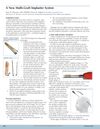 2 citations
,
May 2018 in “International Society of Hair Restoration Surgery”
2 citations
,
May 2018 in “International Society of Hair Restoration Surgery” The new system makes hair transplants faster and more precise.
 May 2026 in “International Journal of Drug Delivery Technology”
 This clinical trial found that using a 45-degree angled implanter with the bevel facing the skin in FUE hair transplantation significantly reduced insertion resistance, graft popping, and bleeding, while improving efficiency and graft alignment compared to conventional methods.
This study concluded that using Plasma gel and PRP as autologous collagen biostimulators improved acne scars and skin density, demonstrating efficiency and safety for facial rejuvenation in clinical evaluations including patient satisfaction.
 January 2018 in “Journal of cosmetology & trichology”
 This study describes the use of automatic Biofibre® hair implants as a surgical technique for hair restoration, offering immediate aesthetic results for men and women with hair loss or thinning, provided certain conditions for success are met.
 1 citations
,
June 2024 in “PLoS ONE”
1 citations
,
June 2024 in “PLoS ONE” This study found that implanting hair-follicle-associated pluripotent stem cell sheets facilitated wound healing and early macrophage activity while reducing inflammation in a diabetic mouse model, suggesting clinical potential for difficult-to-heal diabetic ulcers.
 September 2024 in “Cureus”
 This case report describes a woman who experienced worsened breast implant illness symptoms following a COVID-19 infection and vaccination, which improved after implant removal, even though numerous screenings had been inconclusive prior to explantation.
 43 citations
,
August 2008 in “Regenerative Medicine”
43 citations
,
August 2008 in “Regenerative Medicine” In this study, murine follicular cell aggregates developed into hair-like structures in culture, which upon implantation into mice skin matured into complete hair follicles, suggesting potential for treating hair loss.
 May 2022 in “International Journal of Clinical Trials”
 This study concluded that platelet rich fibrin (PRF) may enhance healing and functional recovery compared to platelet rich plasma (PRP) during immediate post-extractive dental implant procedures.
 22 citations
,
September 2018 in “Medical Clinics of North America”
22 citations
,
September 2018 in “Medical Clinics of North America” This article reviews the biological causes and treatment options for facial aging but reports no new clinical findings.
 December 2023 in “bioRxiv (Cold Spring Harbor Laboratory)”
 This study observed that extracellular matrix scaffold membranes performed less effectively in wound healing for aged mice compared to younger ones, with senescent SPP1+ macrophages potentially hindering epidermal and fibroblast repair abilities.
 June 2005 in “Key Engineering Materials”
 This study found that biodegradable hydrogels loaded with various growth factors significantly enhanced hair follicle growth and blood vessel formation in mice, demonstrating a positive effect on their hair growth cycle.
 140 citations
,
August 2011 in “Biomaterials”
140 citations
,
August 2011 in “Biomaterials” This study observed that keratose, derived from human hair, integrated well in mouse tissue and remodeled with collagen, suggesting potential as a non-toxic biomaterial for regenerative applications.