 January 2020 in “International Journal of PharmTech Research”
 This case report describes a patient with untreated lepromatous leprosy developing Lucio's phenomenon, highlighting difficulties in distinguishing it from erythema nodosum leprosum with vasculonecrotic lesions.
 11 citations
,
August 2010 in “Pediatric dermatology”
11 citations
,
August 2010 in “Pediatric dermatology” This report details two cases of Lichen spinulosus in the submental area, treated effectively and safely with topical tacalcitol cream.
 4 citations
,
January 2008 in “Food Science and Technology Research”
4 citations
,
January 2008 in “Food Science and Technology Research” This study found that mature leaves of Japanese 'Saijo' persimmon have the highest ascorbic acid levels, whereas polyphenol levels were high in both mature leaves and adventitious shoots but low in young shoots.
 January 2025 in “Termometer Jurnal Ilmiah Ilmu Kesehatan dan Kedokteran”
 In this study, researchers tested a tea leaf ethanol extract (Camellia sinensis) hair tonic and found it increased average hair growth compared to positive and negative controls over 28 days, but exhibited some instability and inhomogeneity after accelerated testing.
This narrative review examined the potential of hibiscus leaves and apple skin as natural ingredients for hair tonics and reported their effectiveness in addressing hair loss, highlighting properties like strong antioxidant content and ability to strengthen hair roots.
1 citations
,
April 2024 in “Cells” This review summarizes recent insights into corneal limbal stem cell differentiation and the potential role of progenitor-like cells, but reports no new experimental results.
1 citations
,
June 2011 in “Journal of the Society of Cosmetic Scientists of Korea” This study suggests that enzyme-modified oriental medical prescriptions could be a promising ingredient for hair products due to their beneficial effects on hair growth and melanogenesis with minimal skin irritation.
January 2026 in “Psychoneuroendocrinology” Lye relaxers don't significantly change hair cortisol levels.
 January 2025 in “International Journal of Mosquito Research”
 In this study, the combination of petroleum ether extracts from Jacquinia ruscifolia flowers and Thuja orientalis strobili demonstrated synergistic larvicidal effects against third-instar Culex quinquefasciatus larvae, achieving 100% mortality at 250 ppm with noted synergism particularly in a 1:2 ratio.
24 citations
,
July 2015 in “Molecular Medicine Reports” This study found that lysophosphatidic acid increases mesenchymal stem cell proliferation and migration through signaling pathways and reactive oxygen species, implicating potential applications in stem cell expansion.
January 2023 in “Zenodo (CERN European Organization for Nuclear Research)” This article reviews melatonin's roles, including regulating sleep and mitigating oxidative stress, and reports no new research findings.
 2 citations
,
July 2021 in “Uro”
2 citations
,
July 2021 in “Uro” This review discusses the efficacy of the lipidosterolic extract of Serenoa repens for treating lower urinary tract symptoms and reports no new clinical results; the authors propose further examination of the existing literature and guidelines.
2 citations
,
June 2023 in “Research in Pharmaceutical Sciences” Bhamrung-Lohit may help with inflammation and oxidation.
10 citations
,
March 2010 in “Journal of Food Biochemistry” This study found that Sithong-bao seed coat extract, with high phenolic content, exhibited the strongest antioxidant properties among certain Thai tamarind cultivars, suggesting potential for nutraceutical development.
 April 2025 in “Jurnal Inovasi Bahan Lokal dan Pemberdayaan Masyarakat”
 This study found that variations in propylene glycol concentration in wax apple leaf extract hair tonic affected pH, specific gravity, and viscosity, aligning with SNI requirements.
In this study, imaging techniques showed that nanostructured lipid carrier formulations distributed ascorbic acid more effectively across skin layers compared to conventional cream formulations, suggesting a better method for skin permeation.
 November 2022 in “Journal of Investigative Dermatology”
 This study developed a chalcone-based molecule that significantly increased tyrosinase inhibition and solubility, showing potential as a safe and effective skin depigmenting and antiaging agent, with supportive epigenetic and antioxidant properties observed in vitro.
This study concluded that bitter melon leaf ethanol extract can be effectively formulated into a shampoo that meets quality standards and promotes rabbit hair growth.
June 2022 in “Pham Ngoc Thach Journal of Medicine and Pharmacy” This study identified key natural compounds such as polyphenols and flavonoids in tongue fern and established optimal extraction conditions using methanol.
 2 citations
,
April 2024 in “Science & Technology Indonesia”
2 citations
,
April 2024 in “Science & Technology Indonesia” In this study, extracts from the bark of Albizia saponaria, particularly the ethyl acetate fraction, showed significant antioxidant activity, potentially due to its high phenolic and flavonoid content, suggesting its usefulness as a source of antioxidants for pharmaceutical formulations.
October 2023 in “IP Indian Journal of Clinical and Experimental Dermatology” This study demonstrated that a 12-week treatment with luliconazole-containing shampoo significantly reduced scalp scaling, erythema, and itching in adults with seborrheic dermatitis, achieving high tolerability and progressive symptom improvement without reported intolerance or recurrences.
February 2025 in “Journal of Fundamental and Applied Pharmaceutical Science” In this experimental study, the researchers developed and evaluated a hair tonic made from mangosteen peel extract, finding that all four tested formulations showed suitable physical characteristics and met standard requirements for attributes like pH, viscosity, and stability.
4 citations
,
October 2017 in “Indian drugs” This study isolated and characterized several chemical compounds from the leaves and flowers of Hibiscus rosa-sinensis, using spectral data and chemical reactions for structure elucidation.
 December 2023 in “Journal of dispersion science and technology”
 This study introduced a natural shampoo formulation containing Gleditsia sinensis Lam extract, Sapindus mukurossi extract, and other ingredients, which demonstrated effective foaming, antioxidant, antibacterial, and antifungal properties.
 4 citations
,
July 2023 in “Legume Research - An International Journal”
4 citations
,
July 2023 in “Legume Research - An International Journal” This review integrated findings on the nutritional, pharmacological, and techno-functional properties of Leucaena seeds, highlighting their potential benefits and challenges for human nutrition, particularly due to the presence of the antinutrient mimosine, which can cause adverse effects.
December 2024 in “Applied Functional Materials” This study reported that a scalp serum containing Zanthoxylum ailanthoides extract effectively reduced inflammation and increased melanin production in cell assays, while demonstrating stable formulation and microbial safety, suggesting its potential to address scalp issues and enhance scalp health.
 July 2026 in “Journal of Medicinal Plants Studies”
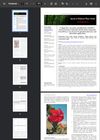
 In this study, methanolic extracts of Hibiscus rosa-sinensis showed higher phenolic and flavonoid content, as well as greater concentrations of gallic acid and quercetin, than aqueous extracts, despite the latter yielding more extract, highlighting the effectiveness of methanol for extracting bioactive phytochemicals.
September 2022 in “Journal of the American Academy of Dermatology” The serum reduces acne and improves skin clarity.
 March 2026 in “Food Science and Biotechnology”
 In this study, oral administration of blue honeysuckle fruit extract was found to promote hair growth in mice by enhancing dermal papilla cell proliferation and activating β-catenin signaling, suggesting its potential use as a food or cosmetic product for hair regeneration.
 September 2025 in “Journal of Surfactants and Detergents”
 In this study, shampoos containing sodium lauroyl methylaminopropionate showed superior coacervate formation and lubrication on wet hair, outperforming other amino acid surfactants and suggesting potential for creating low-irritation, high-performance hair products.