 January 2012 in “Else Kröner-Fresenius Symposia”
 This symposium reported that DNA damage accumulation in aging stem cells affects genome integrity, highlighting novel mechanisms like Bmi1's role in DNA repair and the involvement of BATF in lymphoid differentiation.
 38 citations
,
April 2016 in “Experimental Dermatology”
38 citations
,
April 2016 in “Experimental Dermatology” This review discusses immunohistological and immunofluorescent methods for studying the human hair follicle cell cycle, reporting no new results, and suggests its potential for advancing cell cycle research.
 61 citations
,
September 2010 in “Genomics”
61 citations
,
September 2010 in “Genomics” This study found distinct gene expression profiles in alopecia areata-affected skin, suggesting T-cell mediated immune responses and unique gene profiles between different stages of the disease.
 74 citations
,
January 2013 in “Expert Opinion on Biological Therapy”
74 citations
,
January 2013 in “Expert Opinion on Biological Therapy” This review discusses recent advances in hair follicle biology, regeneration, and tissue engineering, highlighting emerging therapeutic opportunities, and reports no new experimental results.
 2 citations
,
August 2023 in “Journal of Endocrinological Investigation”
2 citations
,
August 2023 in “Journal of Endocrinological Investigation” In this study, researchers found that pregnant mice exposed to excessive androgen led to thinner ventricular walls and cardiac hypertrophy in offspring, suggesting that prenatal androgen exposure adversely affects cardiac health through reduced cardiomyocyte proliferation.
 November 2025 in “Frontiers in Cell and Developmental Biology”
 This study mapped a detailed genetic profile of goat hair follicle apoptosis, identifying key genes and regulatory factors involved in the hair cycle, offering new insights into programmed cell death.
 5 citations
,
January 2021 in “iScience”
5 citations
,
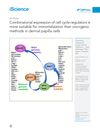
January 2021 in “iScience” Using a combination of specific cell cycle regulators is better for safely keeping hair root cells alive indefinitely compared to cancer-related methods.
 16 citations
,
March 2019 in “Experimental dermatology”
16 citations
,
March 2019 in “Experimental dermatology” This study found that injury affects the behavior of hair follicle dermal stem cells, steering them towards recruitment into the dermal papilla, a shift influenced by the hair cycle stage.
 4 citations
,
January 2014 in “The Scientific World Journal”
4 citations
,
January 2014 in “The Scientific World Journal” This study found that deer antler aqueous extract may promote hair growth in mice by extending the anagen phase and increasing cell proliferation in the hair follicle region.
 June 2025 in “International Journal of Nephrology and Renovascular Disease”
 This study suggests that PLA2R1 overexpression in PMN affects the podocyte cycle and may involve an additional immune response, which could provide new directions for PMN treatment development.
 April 2023 in “The journal of investigative dermatology/Journal of investigative dermatology”
 This study found that inhibiting the Mitochondrial Pyruvate Carrier in human hair follicles ex vivo activated the integrated stress response, affecting cell proliferation and metabolism.
November 2020 in “bioRxiv (Cold Spring Harbor Laboratory)” This study in live mice suggests that hair follicle regression involves apoptosis propagation towards stem cells, potentially slowed by a protective signal from the stem cells themselves.
 133 citations
,
September 2013 in “Nature Reviews Molecular Cell Biology”
133 citations
,
September 2013 in “Nature Reviews Molecular Cell Biology” Different types of stem cells and their environments are key to skin repair and maintenance.
 52 citations
,
May 2015 in “PLOS Genetics”
52 citations
,
May 2015 in “PLOS Genetics” This study found that the microRNA miR-22 is a key regulator of the hair cycle, influencing hair loss by promoting the transition from growth to rest phases and repressing keratinocyte differentiation.
 1 citations
,
October 2025 in “Nature Communications”
1 citations
,
October 2025 in “Nature Communications” This study observed that, in mouse ear epidermal stem cells, a cell-autonomous size control mechanism involving the RB pathway dictates S phase entry timing based on cell size, despite external environmental variations affecting growth rates.

In this study with mice, simultaneous inactivation of Smad4 and PTEN genes led to rapid development of invasive forestomach squamous cell carcinomas, mirroring human esophageal SCCs.

In this study, the deletion of Smad4 and PTEN genes in mice was associated with rapid and invasive squamous cell carcinoma formation in the forestomach, modeling human esophageal cancer progression.
 17 citations
,
December 2001 in “Journal of Investigative Dermatology”
17 citations
,
December 2001 in “Journal of Investigative Dermatology” This study found that osteopontin mRNA is abundantly expressed in dermal papilla cells during the catagen phase of hair growth in rats, suggesting a role in this phase.
 135 citations
,
December 2013 in “Seminars in Cell & Developmental Biology”
135 citations
,
December 2013 in “Seminars in Cell & Developmental Biology” This review examines the literature on the molecular and cellular makeup of the hair follicle niche and how it influences stem cell behavior during hair regeneration, but does not provide new experimental results.
36 citations
,
October 2015 in “Cell reports” In this study, researchers found that Gab1 is critical in controlling the hair cycle and the self-renewal of hair follicle stem cells in mice.
 499 citations
,
September 2011 in “Cell”
499 citations
,
September 2011 in “Cell” This study found that intradermal adipocyte lineage cells in mice are necessary and sufficient to activate follicular stem cells, highlighting their role in regulating skin stem cell activity.
 29 citations
,
December 2016 in “The EMBO Journal”
29 citations
,
December 2016 in “The EMBO Journal” This study found that the transcription factor Gata6 plays a crucial role in adult mouse hair follicle regeneration by promoting the renewal and preventing DNA damage of rapidly proliferating progenitor cells.
 25 citations
,
September 2014 in “Biological Research”
25 citations
,
September 2014 in “Biological Research” This study found that arctiin, a compound from Arctium lappa, demonstrated protective effects against oxidative stress-induced dysfunction in human hair dermal papilla cells, suggesting potential therapeutic use for alopecia.
 24 citations
,
March 2018 in “Pigment Cell & Melanoma Research”
24 citations
,
March 2018 in “Pigment Cell & Melanoma Research” This review discusses the interactions between melanocyte stem cells and their niche in hair regeneration and repair, but reports no new results; recent studies on molecular pathways are highlighted.
 23 citations
,
September 2017 in “The journal of investigative dermatology/Journal of investigative dermatology”
23 citations
,
September 2017 in “The journal of investigative dermatology/Journal of investigative dermatology” In this mouse study, NF-κB was shown to play a role in hair follicle cycling and morphogenesis, with specific activity patterns differing by hair type and involving noncanonical signaling for zigzag hair bending.
22 citations
,
April 2023 in “The Journal of Cell Biology” In this study, researchers found that coordinated intercellular Ca2+ signaling among basal stem cells in mice is crucial for cell cycle progression and tissue-wide communication during epidermal regeneration.
 20 citations
,
September 1978 in “International Journal of Dermatology”
20 citations
,
September 1978 in “International Journal of Dermatology” Hair growth is influenced by factors like genetics and nutrition, and more research is needed to understand hair loss and growth mechanisms.
 February 2026 in “Frontiers in Medical Technology”
 This review discusses current knowledge of keratinocyte stem cell dynamics, including their regenerative roles and potential applications beyond wound healing, but presents no new clinical findings.
December 2024 in “International Journal of Molecular Sciences” This study observed that treating basal and squamous cell carcinoma cells with platelet-rich fibrin significantly reduced cell viability and increased apoptosis-associated gene expression, suggesting potential use as adjunctive therapy for localized nonmelanoma skin cancers.
 September 2022 in “Research Square (Research Square)”
 This study found that overexpressing Rps14 in supporting cells promoted hair cell regeneration in the organ of Corti by facilitating cell proliferation and differentiation.