 7 citations
,
October 2024 in “Frontiers in Immunology”
7 citations
,
October 2024 in “Frontiers in Immunology” In this study, researchers prepared a humanized CXCL12 antibody for alopecia areata treatment, finding it significantly delayed disease onset in mice and reduced immune cell activation, suggesting potential as an immune modulatory therapy.
4 citations
,
October 2024 in “Experimental Dermatology” In this study, researchers identified 173 differentially expressed genes in alopecia areata patients linked to immune and hair follicle pathways, constructed a regulatory network involving mRNA, miRNA, and lncRNA, and highlighted CD8A and FOXD2-AS1 as potential diagnostic markers and therapeutic targets.
3 citations
,
June 2023 in “Frontiers in Medicine” This study constructed a model using serum levels of BMP2, CD8A, PRF1, and XCL1 as a non-invasive biomarker to accurately predict recurrence in patients with alopecia areata.
3 citations
,
January 2025 in “BMC Medical Informatics and Decision Making” This study suggests that novel diagnostic, preventive, and treatment approaches for autoimmune diseases like alopecia areata may be developed by identifying hub genes, and highlights the usefulness of machine learning and bioinformatics in finding new disease biomarkers.
November 2025 in “Journal of Investigative Dermatology” Certain CD8+ T cells attack hair follicles in alopecia areata, suggesting they could be targeted for treatment.
July 2026 in “The Journal of Immunology” This study in a murine model of alopecia areata found that IFNg is crucial while perforin is not necessary for CD8 T cell-mediated disease development.
 4 citations
,
March 2018 in “Daehan han'yi hag'hoeji/Journal of Korean medicine”
4 citations
,
March 2018 in “Daehan han'yi hag'hoeji/Journal of Korean medicine” This study found that topical application of Astragalus membranaceus extract induced hair regrowth and reduced immune response markers in mice with natural hair loss.
July 2024 in “Journal of Investigative Dermatology” This study found that in mice with alopecia areata, CD8+ T cells showed clonal expansion and specific regulatory networks, which might help identify new therapeutic targets for patients not responding to JAK inhibitors.
 August 2025 in “Dermatology and Therapy”
 This study conducted a meta-analysis of gene expression data from alopecia areata patients, identifying 5109 differentially expressed genes and highlighting enriched pathways like JAK-STAT signaling, providing insights into the disease's pathogenesis and potential treatment targets.
 610 citations
,
April 2014 in “Nature Reviews Immunology”
610 citations
,
April 2014 in “Nature Reviews Immunology” This review discusses the complex mechanisms regulating skin immunity to balance host defense with inflammation, but reports no new findings.
 306 citations
,
April 2019 in “International Journal of Molecular Sciences”
306 citations
,
April 2019 in “International Journal of Molecular Sciences” This review discusses the protective roles of skin-resident immune cells in maintaining tissue homeostasis and facilitating wound healing, but reports no new experimental findings.
 222 citations
,
September 2016 in “JCI insight”
222 citations
,
September 2016 in “JCI insight” This research overview highlights that although JAK inhibitors show promise as potential treatments for alopecia areata based on recent insights into the disease mechanism, their efficacy has not yet been thoroughly evaluated in a systematic manner.
 196 citations
,
September 2016 in “JCI insight”
196 citations
,
September 2016 in “JCI insight” This study explored the effectiveness of the oral JAK1/2 inhibitor ruxolitinib in treating patients with moderate-to-severe alopecia areata, building on prior success with JAK inhibitors in mice, but results are not reported in this abstract.
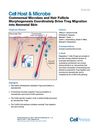 192 citations
,
March 2017 in “Cell host & microbe”
192 citations
,
March 2017 in “Cell host & microbe” The researchers reported that hair follicle development and commensal microbe colonization promote the accumulation of regulatory T cells in neonatal skin, with the Ccl20-Ccr6 pathway playing a key role in this process.
 191 citations
,
May 2018 in “British journal of dermatology/British journal of dermatology, Supplement”
191 citations
,
May 2018 in “British journal of dermatology/British journal of dermatology, Supplement” This study reviewed recent theories on alopecia areata's pathogenesis, highlighting its autoimmune nature due to immune privilege disruption in hair follicles, and noted current treatments have limited efficacy with high relapse rates, underscoring the need for further research into its mechanisms for better therapies.
 184 citations
,
February 2015 in “EBioMedicine”
184 citations
,
February 2015 in “EBioMedicine” This study observed that baricitinib treatment led to significant improvement in a patient's alopecia areata symptoms and suggests further clinical trials to explore its potential as a treatment.
 176 citations
,
August 2015 in “The journal of allergy and clinical immunology/Journal of allergy and clinical immunology/The journal of allergy and clinical immunology”
176 citations
,
August 2015 in “The journal of allergy and clinical immunology/Journal of allergy and clinical immunology/The journal of allergy and clinical immunology” This study identified a distinct cytokine activation signature in alopecia areata, involving TH2, TH1, IL-23, and IL-9/TH9 pathways, suggesting potential targeting strategies similar to those in psoriasis and atopic dermatitis.
 165 citations
,
September 2001 in “Genes & development”
165 citations
,
September 2001 in “Genes & development” This study found that Cutl1 mutant mice experienced retarded lung differentiation and abnormal hair follicle morphogenesis, indicating the vital role of CDP in lung development and hair follicle cell-lineage specification.
 148 citations
,
December 2018 in “Journal of autoimmunity”
148 citations
,
December 2018 in “Journal of autoimmunity” This review discusses genetic and environmental factors contributing to autoimmunity in alopecia areata and reports no new clinical findings, emphasizing the need for further study on its aetiology and pathophysiology.
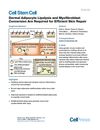 124 citations
,
June 2020 in “Cell Stem Cell”
124 citations
,
June 2020 in “Cell Stem Cell” This study found that in mice, dermal adipocytes initiate inflammation and aid repair after skin injury by releasing lipids, suggesting a role in managing inflammatory diseases and impaired wound healing.
 83 citations
,
June 2018 in “Frontiers in immunology”
83 citations
,
June 2018 in “Frontiers in immunology” This review discusses the roles of αβ and γδ T cells in skin health and disease and reports no new clinical results; the authors highlight potential therapeutic developments.
 82 citations
,
March 2016 in “Autoimmunity reviews”
82 citations
,
March 2016 in “Autoimmunity reviews” This review explores animal models of alopecia areata, particularly focusing on the insights they've provided into the disease's immune mechanisms and potential treatment approaches, without reporting new experimental data.
 69 citations
,
January 2013 in “Frontiers in Immunology”
69 citations
,
January 2013 in “Frontiers in Immunology” This review summarizes existing knowledge on the role of FOXN1 as a key regulator of thymic epithelial cell lineage and function, reporting no new experimental results.
 66 citations
,
May 2021 in “Science Advances”
66 citations
,
May 2021 in “Science Advances” In this study, researchers found that electrospun membranes with aligned surface topography advanced the immune response towards an adaptive stage and highlighted the role of T cells in hair follicle regeneration in mice, showcasing the intricate interactions between immune and skin cells.
 60 citations
,
September 2015 in “Expert Review of Clinical Immunology”
60 citations
,
September 2015 in “Expert Review of Clinical Immunology” This study suggests that CD8+ cytotoxic T lymphocytes play a crucial role in the development of alopecia areata, based on observations in rodent models that mimic human autoimmune disease.
 59 citations
,
June 2023 in “Nature Aging”
59 citations
,
June 2023 in “Nature Aging” This study observed that in aged mouse skin, there was an increase in IL-17-expressing T helper cells, γδ T cells, and innate lymphoid cells, and blocking IL-17 signaling reduced skin inflammation and delayed age-related changes, suggesting it as a potential target to mitigate skin aging.
 48 citations
,
January 2024 in “Immune Network”
48 citations
,
January 2024 in “Immune Network” This review highlights recent insights into how IL-15 influences T cell responses and contributes to immunopathogenesis in various diseases, suggesting its crucial role in TCR-independent activation and potential in optimizing therapeutic strategies.
 37 citations
,
November 2003 in “Veterinary pathology”
37 citations
,
November 2003 in “Veterinary pathology” This study showed that in C3H/HeJ mice, focal follicular inflammation starts before overt hair loss, with inflammation severity possibly reaching a threshold causing hair follicle dystrophy prior to visible hair loss.
 36 citations
,
January 2021 in “Scientific Reports”
36 citations
,
January 2021 in “Scientific Reports” This study identified key genes and signaling pathways involved in the growth phases of Pashmina goat hair follicles, highlighting the role of several gene families and transcription factors in fiber quality and growth regulation.
 27 citations
,
January 2013 in “The journal of investigative dermatology/Journal of investigative dermatology”
27 citations
,
January 2013 in “The journal of investigative dermatology/Journal of investigative dermatology” This study identified somatostatin as a potential secretory factor contributing to the immune privilege of human hair follicles.