 1 citations
,
June 2020 in “bioRxiv (Cold Spring Harbor Laboratory)”
1 citations
,
June 2020 in “bioRxiv (Cold Spring Harbor Laboratory)” In this study, researchers identified unique prenatal lymphocyte features in human fetal skin, including proliferative naive T cells and memory-like T cells, which may influence antigen and allergen responses in utero and infancy.
 1 citations
,
April 2019 in “JAAD case reports”
1 citations
,
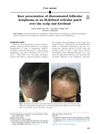
April 2019 in “JAAD case reports” This case report presents a rare manifestation of secondary cutaneous B-cell lymphoma as erythematous macules coalescing into reticular patches on the scalp and forehead.
 1 citations
,
August 2018 in “bioRxiv (Cold Spring Harbor Laboratory)”
1 citations
,
August 2018 in “bioRxiv (Cold Spring Harbor Laboratory)” This study reports that a novel gain-of-function mutation in TMEM173, combined with polymorphisms in TMEM173 and IFIH1, results in a distinct clinical phenotype with features of SAVI, including alopecia and photosensitivity.
 1 citations
,
April 2018 in “Journal of Investigative Dermatology”
1 citations
,
April 2018 in “Journal of Investigative Dermatology” In this study, OEA was found to significantly enhance sebaceous lipogenesis and potentially reduce inflammation in human sebocytes, suggesting it as a promising candidate for treating skin dryness.
 1 citations
,
November 2017
1 citations
,
November 2017 This chapter reviews classic regeneration models in planarian worms and amphibian limbs, focusing on the role of stem cells, and reports no new experimental results.
 1 citations
,
January 2013 in “Journal of Investigative Dermatology”
1 citations
,
January 2013 in “Journal of Investigative Dermatology” The document concludes that stem cells and their environments are crucial for skin and hair health and have potential for medical treatments.
 1 citations
,
October 2012 in “Elsevier eBooks”
1 citations
,
October 2012 in “Elsevier eBooks” This article reviews advancements in understanding skin regeneration and suggests that bioengineering skin surrogates may soon enhance treatments for skin trauma, but it presents no new clinical findings.
 April 2026 in “npj Regenerative Medicine”
 This review discusses the processes of melanocyte stem cell quiescence and activation, focusing on their interaction with hair follicle stem cells, and highlights current research on hair graying mechanisms; it reports no new results.
 January 2026 in “Immune Network”
 This review discusses the heterogeneity of Tregs in normal and tumor environments, emphasizing the complexity of targeting tumor-resident Tregs while maintaining systemic immune tolerance, but reports no new findings.
 December 2025 in “Nature Communications”
 This study demonstrated that skin organoids derived from human stem cells can model cutaneous tuberculosis, revealing that fibrosis development in Mycobacterium tuberculosis-infected organoids is linked to the PI3K-AKT and AP1 pathways in fibroblasts, and suggesting the potential for antifibrotic treatment evaluation.
 November 2025 in “Frontiers in Immunology”
 This review integrates studies on mouse models and human clinical observations to highlight the role of immune cells in skin development and how their dysregulation leads to skin disorders, suggesting potential therapeutic pathways for skin regeneration.
 November 2025 in “Frontiers in Medicine”
 In this prospective cohort, baseline severity, disease activity, and relapse history were identified as key factors influencing response and recurrence in alopecia areata, suggesting that implementing standardized assessments could enhance risk stratification and personalized care approaches.
 November 2025 in “Communications Materials”
 This research demonstrated that transforming pomelo peel into expanded sponges and carbonized aerogels can accelerate hemostasis and enhance healing in diabetic wounds while eradicating bacterial biofilms, offering an eco-friendly solution for wound care from agricultural waste.
 November 2025 in “Clinical Cosmetic and Investigational Dermatology”
 This study found that specific immune cell phenotypes, particularly CD25 on CD4 Treg cells, were causally linked to androgenic alopecia, suggesting potential targets for immune-based therapies.
 October 2025 in “Animal Bioscience”
 This review summarizes the application of genome wide association studies and selection signature analyses in sheep and goat breeding in China, highlighting genomic regions that influence traits like reproductive performance and body size.
 September 2025 in “Frontiers in Cell and Developmental Biology”
 In this review, retinoids are highlighted as promising agents for promoting scarless skin regeneration by coordinating cellular and molecular processes that suppress fibrosis, enhance re-epithelialization, promote angiogenesis, and enable hair follicle formation, potentially advancing functional skin repair.
 September 2025 in “Dermatology Online Journal”
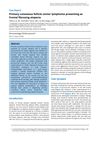
 In this case study, a 24-year-old woman with frontal alopecia resembling frontal fibrosing alopecia was ultimately diagnosed with primary cutaneous follicle center lymphoma, highlighting the critical role of biopsy in identifying atypical alopecia presentations.

Using high-throughput proteomics, this study identified 34 differentially expressed proteins in the lesional skin of adults with scalp psoriasis, suggesting a cytokine storm response linked to bacterial antigens.

This study investigated dual TCR Treg cells in mouse tissues, revealing a high proportion and diverse pairing patterns compared to single TCR Tregs, providing insights into their origins and characteristics across different tissue locations.
 July 2025 in “Clinical Cosmetic and Investigational Dermatology”
 This study examines the role of immune phenotypes and cytokines in the development of pathological scars, providing insights that may aid in early identification and treatment strategies for these scars.

In this study, human dermal papilla cells exposed to wasabi leaf extract showed changes in cytokine-related gene expression, which the authors suggest could help clarify the biological effects of wasabi.

In this study, researchers analyzed over 5,000 T cells per sample using scRNA+TCR-seq technology and found that dual TCR Tregs are present in high proportions across various mouse tissues, showing unique TCR pairing patterns, V(D)J usage, and mRNA expression compared to single TCR Tregs.

In this study, researchers describe a technique for preparing mesenchymal stem cells to optimize hair transplantation for androgenetic alopecia, highlighting future plans to assess stem cell characteristics and hair density improvements through flow cytometry and trichoscopy.
 July 2024 in “Journal Of Stem Cell Research”
 In this review, the authors highlight the crucial role of mesenchymal stem cells in dermatologic therapies, noting their potential to enhance skin structure and appearance through regenerative mechanisms like inflammation induction, angiogenesis, and recruitment of tissue-specific progenitors.

This study suggests that using cell-free dexamethasone-primed stem cell media may offer a promising alternative treatment for systemic lupus erythematosus, showing immunomodulatory benefits and therapeutic efficacy in reducing various complications.
 June 2024 in “Research Square (Research Square)”
 This study demonstrated that in mice, the absence of Jagged-1 expression in skin-resident regulatory T cells significantly delays wound healing by reducing the accumulation of neutrophils, highlighting the role of Jagged-1 in coordinating immune cell recruitment during injury.
 January 2024 in “Frontiers in immunology”
 This review highlights the crucial role of histone modification in the pathogenesis and treatment of chronic inflammatory skin diseases, and explores therapeutic strategies targeting these epigenetic changes to improve management of conditions such as psoriasis and atopic dermatitis.
 December 2023 in “bioRxiv (Cold Spring Harbor Laboratory)”
 This study found that AP-2α and AP-2β transcription factors are crucial for maintaining adult skin homeostasis, with their inactivation in keratinocytes leading to impaired differentiation, hair abnormalities, and inflammation, highlighting their key regulatory roles.
 October 2023 in “bioRxiv (Cold Spring Harbor Laboratory)”
 This study constructed a comprehensive atlas of prenatal human skin, revealing that innate immune cells, such as macrophages, play a crucial role in skin morphogenesis by interacting with non-immune cells, influencing hair follicle formation and angiogenesis beyond their traditional immune functions.
 May 2023 in “Sučasna pedìatrìâ. Ukraïna”
 In a clinical observation study, researchers documented a case of total alopecia in an 11-year-old child, highlighting a potential link to genetic conditions such as autoimmune polyendocrinopathy candidiasis-ectodermal dystrophy (APECED syndrome) requiring further genetic and serological testing to verify the diagnosis.