 5 citations
,
May 2023 in “Frontiers in immunology”
5 citations
,
May 2023 in “Frontiers in immunology” This review discusses how environmental factors like lifestyle, nutrition, and vitamin deficiencies may influence autoimmune diseases such as MS, SLE, and AA, highlighting associations with vitamin D levels and dietary interventions, but notes a lack of conclusive evidence for their roles in disease pathogenesis.
 4 citations
,
May 2025 in “npj Parkinson s Disease”
4 citations
,
May 2025 in “npj Parkinson s Disease” This study identified peripheral myeloid cells as the earliest dysregulated immune cells in PINK1 KO mice with Parkinson’s-like symptoms following intestinal infections, suggesting that PINK1 regulates gut immune functions linked to early Parkinson’s disease mechanisms.
 2 citations
,
January 2026 in “Frontiers in Endocrinology”
2 citations
,
January 2026 in “Frontiers in Endocrinology” This review discusses the impaired functionality of regulatory T cells in the pancreas during the development of Type 1 diabetes, highlighting their role in disease pathogenesis, potential of Treg-based therapies, and challenges in clinical applications.
 2 citations
,
August 2025 in “Scientific Reports”
2 citations
,
August 2025 in “Scientific Reports” This study analyzed pexidartinib-associated adverse events from FDA data and reported common events such as hepatic issues and systemic reactions. It highlighted sex-specific susceptibilities and reinforced the need for risk mitigation and long-term monitoring in tenosynovial giant cell tumor management.
 1 citations
,
November 2024 in “Frontiers in Immunology”
1 citations
,
November 2024 in “Frontiers in Immunology” This study provides an analysis of global publications on TLS, offering insights into the role of TLS in immunotherapy and suggesting future research directions.
 1 citations
,
March 2024 in “Signal transduction and targeted therapy”
1 citations
,
March 2024 in “Signal transduction and targeted therapy” In this review, researchers explored the multifaceted role of NF-κB signaling in various biological processes and diseases, including its interactions with other pathways, and discussed possible therapeutic approaches targeting this pathway for treating conditions like cancer, autoimmune disorders, and COVID-19.
 July 2026 in “Nature Communications”
 In this study, researchers used patient-derived organoids to model metastasis in colorectal cancer and discovered that cancer cells temporarily switch to a wound-healing program, orchestrated by reduced EZH2 activity and YAP signaling, before spreading to new organs.
 February 2026 in “Frontiers in Immunology”
 This study found that administering human amniotic mesenchymal stem cells (hAMSCs) in a mouse model of psoriasis improved skin lesions and reduced inflammation-related markers, suggesting potential therapeutic benefit and safety for treating psoriasis, and identified specific gene targets involved in the treatment's mechanism.
 January 2026 in “Immune Network”
 This review discusses the heterogeneity of Tregs in normal and tumor environments, emphasizing the complexity of targeting tumor-resident Tregs while maintaining systemic immune tolerance, but reports no new findings.
 January 2026 in “Food Science and Human Wellness”
 This study found that oral administration of Flammulina velutipes polysaccharide reduced tumor volume and improved survival in mice by modulating macrophage polarization and enhancing antitumor immune responses.
 October 2023 in “Advancement in yoga and physical therapy”
 This narrative review explores the potential influence of brown adipose tissue on polycystic ovary syndrome and reports no new experimental findings.
 April 2023 in “Digital Library of Theses and Dissertations (Universidade de São Paulo)”
 This study concluded that mesenchymal stem cells from adipose tissue harvested using laser-assisted liposuction with selective photo-stimulation are as effective and low-risk for cell therapy as those obtained through conventional liposuction, based on their differentiation potential, cellular proliferation, and cytokine expression.
The study found that adipose-derived mesenchymal stem cells obtained via laser-assisted liposuction with selective photo-stimulation are comparable in differentiation potential and tumorigenic risk to those from conventional liposuction for cell therapy applications.
 April 2023 in “Egyptian journal of Immunology”
 This study found that human platelet lysate supported mesenchymal stem cell growth as effectively as fetal bovine serum, while fetal bovine serum was more effective for hepatocyte proliferation.
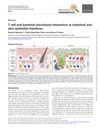 January 2023 in “Discovery immunology”
 T cells and bacteria in the gut and skin help maintain health and protect against disease.
 November 2022 in “CARDIOMETRY”
 This article discusses the potential benefits of GcMAF and oral MAF, developed by "Saisei Mirai", for cancer and other conditions, but reports no new clinical results.
 January 2022 in “International Journal of Science and Research (IJSR)”
 This review discusses the biochemical and psychological impacts of polycystic ovary syndrome on immune functions against COVID-19 but reports no new clinical results.
 March 2021 in “Research Square (Research Square)”
 This study found that patients with RASopathies demonstrated lower levels of serum IgA and CD8 T cells compared to controls, potentially indicating an increased risk of developing autoimmune disorders.
This study found that PRL-1-overexpressing PD-MSCs reduced adipogenesis in orbital fibroblasts from Graves' ophthalmopathy patients by secreting IGFBPs and modulating the FAK pathway.
This study reported that high cholesterol levels were linked to increased prostate cancer risk, while selenium supplementation affected gene expression, suggesting nutritional and clinical factors might influence prostate cancer risk and biology.
In this narrative review, researchers evaluated existing literature on the treatment of frontal fibrosing alopecia, finding that while no curative treatment exists, clinical improvements can be achieved through personalized and combined therapy approaches.
118 citations
,
April 2020 in “Stem Cell Research & Therapy” This study found that adipose-derived mesenchymal stromal cell secretome, particularly when preconditioned with IFNγ, significantly influences cell motility and anti-inflammatory responses, enhancing its potential as a regenerative therapy.
82 citations
,
July 2012 in “Brain pathology” This study found that LGR5 may play a significant role in maintaining brain cancer stem-like cells and is associated with glioma progression and poor outcomes.
 12 citations
,
February 2018 in “Scientific Reports”
12 citations
,
February 2018 in “Scientific Reports” This study demonstrated that pharmacologically mobilizing endogenous bone marrow stem cells with AMD3100 and low-dose FK506 can enhance liver regeneration and improve liver function in rats after extensive hepatectomy.
16 citations
,
July 2008 in “BMC Genomics” This study shows that alpha 6 + /MHCI - cells have gene expression profiles similar to hair follicle stem cells, suggesting they may be enriched for stem cells.
November 2024 in “Journal of Investigative Dermatology”  October 2024 in “Journal of Cutaneous Immunology and Allergy”
 This case report describes a successful treatment of sarcoidal foreign body reactions caused by permanent makeup ink with local steroid injections, while also identifying the involvement of M2 macrophages in the reaction.
49 citations
,
December 2022 in “Pharmacological Reviews” This review discusses androgen receptor targeting as a potential treatment strategy for triple-negative breast cancer and reports no new experimental outcomes.
February 2020 in “Oncology Times” This article reviews antibody drug conjugates for cancer treatment, describing their mechanism, recent approvals, and ongoing research efforts, but reports no new clinical results.
12 citations
,
December 2010 in “Journal of thoracic oncology” This article organizes and lists ongoing and completed clinical trials of novel agents for lung cancer, serving as a reference tool with no new research findings reported.