 58 citations
,
June 2000 in “The Journal of Steroid Biochemistry and Molecular Biology”
58 citations
,
June 2000 in “The Journal of Steroid Biochemistry and Molecular Biology” This study found that Atlantic croaker nuclear androgen receptors AR1 and AR2 have different binding affinities for androgens, suggesting that they may mediate distinct physiological actions in teleosts.
1 citations
,
July 2019 in “Small ruminant research” This study suggests that the NGF/TrkA/CREB system plays a crucial role in promoting outer root sheath cell proliferation in cashmere goats, which may aid in marker-assisted breeding.
2 citations
,
October 2023 in “PubMed” This study reported the creation of isogenic immortalized COL7A1-deficient keratinocyte lines, providing a model for researching Recessive Dystrophic Epidermolysis Bullosa biology and potential therapies.
 11 citations
,
August 2010 in “Developmental neurobiology”
11 citations
,
August 2010 in “Developmental neurobiology” This study suggests that Ptprq in the hair bundles may exist as multiple isoforms that are differentially expressed throughout development and affect the organization of stereocilia in the chick inner ear.
June 2020 in “Journal of Investigative Dermatology” Hair shaft malformation contributes to Central Centrifugal Cicatricial Alopecia.
 1 citations
,
April 2022 in “The Journal of Family Practice”
1 citations
,
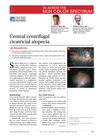
April 2022 in “The Journal of Family Practice” This report describes early and late stages of central centrifugal cicatricial alopecia in two Black women, highlighting progression from a small to a large central patch of hair loss.
 14 citations
,
March 2019 in “Plant methods”
14 citations
,
March 2019 in “Plant methods” This study introduced a new adaptive microrhizotron for non-destructive observation of pepper root traits, finding that specific installation patterns significantly enhanced root interception probability while effectively measuring root architecture for plant research.
29 citations
,
February 2011 in “PloS one” This study found that blocking corticotropin-releasing factor receptors with astressin-B promoted hair regrowth and prevented alopecia in a mouse model of stress-induced hair loss.
April 2012 in “Development” This study found that Rac1 activity in specific skin compartments is sufficient for hair formation, but results in hair with altered structure and pigmentation compared to normal.
This study identified a 14,883 bp genomic deletion affecting the Plcd1 and Vill genes as likely responsible for the abnormal phenotype observed in snthr-1Bao mice.
5 citations
,
October 2022 in “Biology” This study found that CAP1 plays a significant role in reducing ammonium toxicity in Arabidopsis thaliana by promoting shoot growth and maintaining reactive oxygen species homeostasis.
 March 2025 in “OncoTargets and Therapy”
 This study found that in circulating tumor cells from non-invasive liquid biopsies, the GG genotype of the CYP3A5 A6986G affects longer disease-free survival in DLBCL patients, highlighting the significance of circulating biomarkers for prognostic evaluation.
11 citations
,
January 2022 in “Experimental Dermatology” This study suggests that patients with severe, extensive central centrifugal cicatricial alopecia may exhibit a distinct gene expression pattern in the lesional scalp, highlighting potential targets for future research on disease severity and therapies.
July 2024 in “Journal of Investigative Dermatology” This study found that in mice with alopecia areata, CD8+ T cells showed clonal expansion and specific regulatory networks, which might help identify new therapeutic targets for patients not responding to JAK inhibitors.
3 citations
,
October 2020 in “UNC Libraries” This article discusses the SLICC's revision and validation of the ACR SLE classification criteria to enhance clinical relevance and integrate recent immunological insights, but does not report new clinical results.
22 citations
,
April 2010 in “Journal of Cellular Biochemistry” This study concluded that the hairless protein interacts with the vitamin D receptor to repress transcription crucial for hair cycling, employing multiple protein interfaces and modulating chromatin structure.
 January 2021 in “Medical Research Archives”
 This study observed that 25-hydroxyvitamin D3 restored rickets symptoms in genetically modified rats, suggesting its direct action through vitamin D receptor pathways.
 November 2022 in “Journal of Investigative Dermatology”
 This study explores the role of cell competition in maintaining genomic quality in epidermal stem cells and proposes that this process might influence cancer development in skin tissues.

This study found that lateral root formation in plants in response to L. bicolor volatiles involves complex signaling processes, potentially including unknown proteins, CRKs, and ABA pathways.
39 citations
,
January 2020 in “Scientific Reports” This study identified four circRNAs with significantly different expression levels in Liaoning cashmere goats, suggesting a potential role in regulating cashmere fineness.
 44 citations
,
October 2017 in “Scientific Reports”
44 citations
,
October 2017 in “Scientific Reports” This study found that far-infrared radiation preconditioning significantly enhanced the proliferation, survival, and migration of bone marrow-derived stem cells in vitro, indicating potential therapeutic benefits for cardiac ischemia treatment.
58 citations
,
February 2013 in “Journal of Biological Chemistry” This study identifies specific molecular components involved in the intracellular trafficking of LGR5, revealing mechanisms that differ from typical GPCR recycling processes.
 1 citations
,
February 2022 in “bioRxiv (Cold Spring Harbor Laboratory)”
1 citations
,
February 2022 in “bioRxiv (Cold Spring Harbor Laboratory)” This study uses cryo-electron microscopy to reveal how androgen receptor forms a non-obligate dimer to bind DNA, with implications for prostate cancer development.
 26 citations
,
June 2018 in “The journal of immunology/The Journal of immunology”
26 citations
,
June 2018 in “The journal of immunology/The Journal of immunology” This study demonstrated that AIRE-deficient rats exhibit key symptoms of APECED, making them a relevant model for exploring potential treatments.
16 citations
,
April 2024 in “Proceedings of the National Academy of Sciences” This study found that selectively targeting HDAC4 and HDAC7 in mice can reduce Th17 cell-mediated intestinal inflammation, suggesting a potential treatment approach for Th17-related inflammatory diseases like ulcerative colitis.
 28 citations
,
November 2018 in “Journal of Cellular and Molecular Medicine”
28 citations
,
November 2018 in “Journal of Cellular and Molecular Medicine” This review discusses the role of the CXXC5 protein as a transcription factor and signaling coordinator, noting its involvement in embryonic development, tissue homeostasis, and diseases such as tumorigenesis, but reports no new experimental findings.
 37 citations
,
August 2016 in “Clinical, Cosmetic and Investigational Dermatology”
37 citations
,
August 2016 in “Clinical, Cosmetic and Investigational Dermatology” This article discusses central centrifugal cicatricial alopecia, highlighting its prevalence, potential genetic factors, and management challenges, but reports no new clinical conclusions and calls for further research.
6 citations
,
April 2024 in “Journal of Investigative Dermatology” This review highlights recent advances in CRISPR-based lineage tracing methods that can improve our understanding of skin stem cell behavior, regeneration, and disease, with potential applications in organoids and model organisms.
This study found that RXR and RAR proteins were detectable in normal human skin, suggesting they may play a role in epidermal cell differentiation and hair and gland physiology.
2 citations
,
September 2024 in “Journal of the American Academy of Dermatology” CCCA in African Americans may be linked to hair grooming, low vitamin D, and autoimmune factors.