 April 2017 in “Journal of Investigative Dermatology”
 This study found that 10% carbamide peroxide significantly reduced acne lesions compared to a vehicle solution, suggesting it as an effective and safe alternative to benzoyl peroxide for treating mild to moderate acne.
 April 2017 in “Journal of Investigative Dermatology”
 This study found that a 10% carbamide peroxide solution significantly reduced acne lesions more effectively than a vehicle solution, suggesting it as a safe and effective alternative to benzoyl peroxide for treating mild to moderate acne.
 12 citations
,
December 2017 in “Food and chemical toxicology”
12 citations
,
December 2017 in “Food and chemical toxicology” This study found that mixtures used in permanent hair dyes had irritant effects on reconstructed human epidermis, while individual ingredients alone did not.
4 citations
,
April 2025 in “Antioxidants” This study found that α-ketoglutarate protected dermal papilla cells from oxidative stress by enhancing the Nrf2 pathway and mitigating cell damage through the ERK/Nrf2 axis.
 1 citations
,
December 2022 in “Middle East Journal of Science”
1 citations
,
December 2022 in “Middle East Journal of Science” This review covers hair dye formulations, their mechanisms, and potential applications, but reports no new findings; the authors highlight the process of oxidative dyeing and repairing damaged hair.
 January 2019 in “ARC journal of pharmaceutical sciences”
 This review traces the historical understanding and treatment of acne across ancient Egyptian, Greek, and Roman civilizations, but provides no new clinical findings.
15 citations
,
February 2020 in “Journal of Investigative Dermatology” Ceramide Synthase 4 is crucial for healthy skin barrier function.
 May 2025 in “REVISTA DA ASSOCIAÇÂO DE FARMÁCIAS VIVAS”
 This study introduced an innovative antioxidant serum for skin care, using a lipid active from Rana catesbeiana Shaw, and validated its rejuvenating potential through physical-chemical and microbiological tests that ensured its antioxidant effectiveness, microbiological safety, and formulation stability.
 June 2025 in “International Journal of Cosmetic Science”
 In this study, researchers developed cationic liposomes encapsulated with keratin to improve the recovery of UV-damaged hair, finding that these liposomes significantly improved keratin penetration and reduced protein denaturation and lipid peroxidation, resulting in smoother hair surfaces compared to keratin solution alone.
41 citations
,
July 2016 in “Radiation Research” This study found that radiation-induced salivary gland dysfunction in mice involves microvascular damage mediated by ceramide and reactive oxygen species, suggesting ROS scavengers could protect salivary function during radiotherapy for head and neck cancer.
 18 citations
,
June 2019 in “Clinical research in dermatology”
18 citations
,
June 2019 in “Clinical research in dermatology” This review discusses psychological impacts associated with facial acne, noting that high levels of anxiety and depression among these patients are not linked to oxidative stress, and reports no new clinical results.
 12 citations
,
January 2020 in “Analyst”
12 citations
,
January 2020 in “Analyst” This study found that untargeted hair metabolomics analysis detected significantly altered endogenous biomolecules, potentially serving as biomarkers for identifying oxidative cosmetic hair treatments like bleaching.
 April 2025 in “Antioxidants”
 In this study, the researchers found that the water-soluble fraction of Rhus semialata gall extract and its component Penta-O-Galloyl-β-D-Glucose promoted hair growth in human dermal papilla cells, and clinical trials supported these findings, showing improved hair density and appearance compared to placebo.
20 citations
,
October 2017 in “Stem Cell Reports” This study found that loss of the ACER1 gene in mice led to increased ceramide levels and progressive hair loss, highlighting ACER1's role in maintaining hair follicle stem cell homeostasis.
December 2025 in “International Journal of Molecular Sciences” In this study, orally administered Centella asiatica extract, standardized for asiaticoside content, significantly improved skin barrier function, elasticity, and reduced signs of UVB-induced photoaging in hairless mice, highlighting its potential as a nutricosmetic for skin health.
 9 citations
,
May 2021 in “Molecules”
9 citations
,
May 2021 in “Molecules” This review discusses indole-based bifunctional aldose reductase inhibitors and antioxidants for diabetic complications and chronic inflammation-related pathologies, but reports no new clinical results.
6 citations
,
May 2024 in “Frontiers in Pharmacology” This review discusses the potential of natural products to induce ferroptosis as a promising therapeutic strategy for non-small cell lung cancer and reports no clinical results; the authors highlight the need for further comprehensive studies.
 September 2025 in “Clinical Cosmetic and Investigational Dermatology”
 In this randomized, placebo-controlled study, Kūlaris supplementation significantly improved quality of life for participants with mild-to-severe acne over 12 weeks, though no significant changes in general skin health measures were observed compared to placebo.
 March 2014 in “Journal of The American Academy of Dermatology”
 The document lists various dermatology topics, treatments, and diagnostic methods.
 May 2019 in “Asian Journal of Chemistry”
 Finasteride forms three new products under acidic stress.
 47 citations
,
September 2023 in “Pharmacological Reports”
47 citations
,
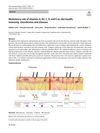
September 2023 in “Pharmacological Reports” In this review, researchers explored the roles of vitamins A, B3, C, D, and E in skin immunity, highlighting their potential as therapeutics for skin diseases due to their antioxidant, anti-inflammatory, and antimicrobial properties.
 10 citations
,
December 2014 in “Journal of Pharmaceutical and Biomedical Analysis”
10 citations
,
December 2014 in “Journal of Pharmaceutical and Biomedical Analysis” Finasteride's polymorphic form affects capsule quality and drug effect, requiring strict control.
 7 citations
,
March 2013 in “Tetrahedron Letters”
7 citations
,
March 2013 in “Tetrahedron Letters” This study reports a new one-pot method for synthesizing chromeno-pyrimidine-N-oxides with high yield from 4-chloro-3-formylcoumarin and aromatic carboximide oximes, confirmed by X-ray analysis.
 5 citations
,
February 2013 in “Journal of Liquid Chromatography & Related Technologies”
5 citations
,
February 2013 in “Journal of Liquid Chromatography & Related Technologies” This study developed and validated a micellar electrokinetic chromatography method to determine finasteride stability, finding that the drug degrades under acidic, basic, and oxidative stress conditions.
 January 2020 in “International Journal of Research in Pharmacy and Chemistry”
 This study developed a validated HPLC method for accurately estimating dutasteride and its related compounds in capsules, suitable for routine and stability sample analysis.
 April 2018 in “Journal of Chromatographic Science”
 In this study, researchers found that finasteride undergoes second-order alkaline degradation kinetics and that its degraded form negatively impacts cell proliferation, highlighting the need for careful handling in pharmaceutical manufacturing and storage.
 40 citations
,
June 2011 in “Journal of biological chemistry/The Journal of biological chemistry”
40 citations
,
June 2011 in “Journal of biological chemistry/The Journal of biological chemistry” This study revealed that deficiency in the enzyme FA2H in mice affected sebaceous gland function, altered sebum composition, and caused cycling alopecia, highlighting FA2H's role in hair follicle homeostasis.
 30 citations
,
July 2018 in “Scientific Reports”
30 citations
,
July 2018 in “Scientific Reports” In this study, a high-fat, high-cholesterol diet in atherosclerotic mice led to skin inflammation and hair problems, which could be reversed by inhibiting glycosphingolipid synthesis.
 10 citations
,
May 2010 in “Analytica Chimica Acta”
10 citations
,
May 2010 in “Analytica Chimica Acta” This study reported the development of two highly sensitive ELISA assays to detect banned substances finasteride and dutasteride in human urine, offering better sensitivity than existing HPLC/MS/MS methods.
 7 citations
,
April 2018 in “Cosmetics”
7 citations
,
April 2018 in “Cosmetics” This study found that the medulla of Japanese hair contains unsaturated lipids such as squalene and oleic acid, which may contribute to hair glossiness.