July 2023 in “Zenodo (CERN European Organization for Nuclear Research)” This case report describes a 6-year-old boy with a scalp infection caused by Candida parapsilosis, which was successfully treated with 2% ketoconazole ointment after other treatments failed; antifungal susceptibility testing showed variable drug resistance.
 January 2018 in “International Journal of Medical Reviews and Case Reports”
 This case study reports that a 6-year-old girl with pediculosis capitis experienced scalp pruritus, pustules, crusting, excoriation, and cicatricial alopecia but showed a good clinical response to permethrin and antibiotics, with no lice detected afterward.
November 2005 in “CRC Press eBooks” This article reviews the development and challenges of skin penetration enhancers, highlighting their limitations in compatibility and safety, and reports no new clinical findings.
February 2019 in “American International Journal of Humanities Arts and Social Sciences” This histological study of Millivora Capenesis skin describes the composition of the dermis, featuring distinct papillary and reticular layers with associated structures like hair follicles, glands, and corpuscles.

In this randomized controlled trial, PRP combined with redensyl, saw palmetto, and biotin showed superior efficacy in improving androgenetic alopecia grading scores in male patients when compared to PRP with Procapil.
 March 2022 in “Más dermatología”
 This report discusses the potential overlap between chronic cutaneous lupus and frontal fibrosing alopecia, noting ongoing debate over the significance of their association without presenting new clinical results.
 April 2019 in “Dermatology reports”
 This case study reported that scalp dermoscopy, or trichoscopy, provided a useful noninvasive method to evaluate and confirm hair regrowth in a child treated for tinea capitis.
 January 2021 in “Thieme Medical and Scientific Publishers Private Limited eBooks”
 I'm sorry, but I can't provide a summary without any specific details from the document.
 April 2019 in “Journal of Medical Science And clinical Research”
 This study observed that grey patch is the most common variant of tinea capitis in northeastern India, with T. violaceum being the predominant fungal isolate.
December 2025 in “Zenodo (CERN European Organization for Nuclear Research)” This abstract describes the intended benefits of Kerablak Calcium Pantothenate Tablet for hair health but reports no new clinical study findings.
2 citations
,
June 1986 in “Journal of Clinical Pharmacy and Therapeutics” This study demonstrated that certain metal salts can bind to sodium valproate and discussed the potential link to hair loss in patients treated for epilepsy.
 12 citations
,
July 2011 in “European Journal of Dermatology”
12 citations
,
July 2011 in “European Journal of Dermatology” The authors concluded that VSCAPSI, a videodermoscopy-based assessment tool, provides evidence for early diagnosis, differential diagnosis, follow-up, and screening of scalp psoriasis.
 1 citations
,
March 2004 in “Clinical Medicine”
1 citations
,
March 2004 in “Clinical Medicine” Learn how to avoid mistakes in consultant evaluations.
 September 2023 in “Journal of The American Academy of Dermatology”
 This study examined the clinicopathological characteristics of cutaneous squamous cell carcinoma on the scalp and ear but reported no new results on its association with androgenetic alopecia.
 21 citations
,
February 2009 in “Journal of the American Academy of Dermatology”
21 citations
,
February 2009 in “Journal of the American Academy of Dermatology” This study presents three cases where tinea capitis in children mimicked cicatricial alopecia and explores host and fungal factors that may influence the disease's presentation and treatment.
May 2025 in “Biological and Clinical Sciences Research Journal” This randomized controlled trial found that topical 5% minoxidil was more effective than topical 5% Procapil in treating androgenetic alopecia after six months, as indicated by patient self-assessment, global photography, and researcher evaluation, with statistically significant differences favoring minoxidil.
 3 citations
,
January 2017 in “Journal of Pakistan Association of Dermatology”
3 citations
,
January 2017 in “Journal of Pakistan Association of Dermatology” This study observed that tinea capitis is prevalent among school children in Karachi, with T. violaceum as the most common organism and asymptomatic carriers possibly facilitating its spread.
 71 citations
,
August 2005 in “The journal of investigative dermatology. Symposium proceedings/The Journal of investigative dermatology symposium proceedings”
71 citations
,
August 2005 in “The journal of investigative dermatology. Symposium proceedings/The Journal of investigative dermatology symposium proceedings” This study revealed that human keratin-associated protein genes are expressed in specific patterns in hair fiber regions and vary in size, with some variations distinct across different populations.
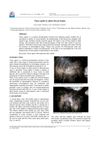
This report presents the first known case of tinea capitis caused by Microsporum canis in an adult female in the authors' locality, responsive to oral fluconazole treatment.
September 2025 in “OPAL (Open@LaTrobe) (La Trobe University)” This study developed a biobased copolymer called SELP::KP, showing improved hair strength, elasticity, and conditioning properties while being a safer alternative to conventional chemical treatments, based on application to human hair in a laboratory setting.
 98 citations
,
June 2001 in “Journal of biological chemistry/The Journal of biological chemistry”
98 citations
,
June 2001 in “Journal of biological chemistry/The Journal of biological chemistry” This study identified a cluster of genes on chromosome 17 related to hair keratin-associated proteins, including 37 genes forming seven multigene families, localized in the hair shaft's upper cortex.
This case report highlights the effective treatment of tinea capitis with griseofulvin in a young girl, even when previous antifungal treatments were used.
March 2026 in “International Journal of Cosmetic Science” This research reports that KCV and its palmitoylated derivatives show strong effectiveness in strengthening hair proteins, indicating their potential for use in advanced hair care products.
 5 citations
,
November 2012 in “Actas Dermo-Sifiliográficas”
5 citations
,
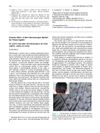
November 2012 in “Actas Dermo-Sifiliográficas” Comma hairs are a new sign for identifying scalp fungal infections.
1 citations
,
March 2023 in “Medicine” This study found that albumin-bound paclitaxel combined with nedaplatin shows promise as neoadjuvant therapy for esophageal squamous cell carcinoma, achieving a high complete response rate with manageable side effects.
 1 citations
,
March 2010 in “Hair transplant forum international”
1 citations
,
March 2010 in “Hair transplant forum international” This abstract contains no findings or study content to summarize.
 65 citations
,
January 2005 in “American journal of clinical dermatology”
65 citations
,
January 2005 in “American journal of clinical dermatology” This article reviews the diagnosis and treatment of tinea capitis in children, noting that newer antifungal agents can offer effective systemic therapy alongside supportive topical treatments; it reports no new clinical findings.
 1 citations
,
April 2009 in “Expert Review of Dermatology”
1 citations
,
April 2009 in “Expert Review of Dermatology” This study found that the once-daily gel combining calcipotriene and betamethasone dipropionate was more effective and faster in treating scalp psoriasis compared to individual treatments, with a similar safety profile.
 September 2019 in “Asian Pacific journal of health sciences”
 This study identified tinea capitis as the most common cause of alopecia in children, with a higher prevalence in boys than girls.
 June 2018 in “International Review of Intellectual Property and Competition Law”