135 citations
,
October 1997 in “Journal of biological chemistry/The Journal of biological chemistry” This study suggests that trichohyalin is modified by peptidyl-arginine deiminase before being cross-linked by TGase 3, allowing the formation of rigid structures in hair follicle cells.
47 citations
,
August 2024 in “Science Advances” This study introduces a new biomimetic double wound mask designed to promote scarless healing by coordinating multiple biological pathways and providing enhanced protection and nourishment to wounds.
151 citations
,
June 2010 in “Endocrinology and metabolism clinics of North America” This article compares two rare genetic diseases, vitamin D-dependent rickets type 1 and type 2, focusing on their similar presentations of hypocalcemia and rickets in infancy, but reports no new clinical results.
107 citations
,
March 2014 in “BoneKEy Reports” This abstract reviews hereditary vitamin D-resistant rickets, a rare genetic condition causing severe early childhood rickets, and reports no new results; effective treatment typically requires high doses of calcium to address hypocalcemia and secondary hyperparathyroidism.
30 citations
,
October 2009 in “Journal of Veterinary Internal Medicine” This report describes a unique case of hereditary vitamin D-resistant rickets (HVDRR) in a dog, caused by a VDR gene mutation resulting in severe hypocalcemia and bone issues, which presented with symptoms similar to those observed in humans.
11 citations
,
January 2018 in “DOAJ (DOAJ: Directory of Open Access Journals)” This case report observed that while a 4-year-old boy with vitamin D-dependent rickets type II showed biochemical and bone improvement after vitamin D and calcium treatment, his alopecia did not improve.
110 citations
,
November 1984 in “The American Journal of Medicine” This study observed that children with a genetically transmitted defect in the 1,25-dihydroxyvitamin D3 receptor experienced spontaneous healing of rickets as they aged, despite persistent mineral imbalances during treatment.
5 citations
,
July 2017 in “International journal of endocrinology and metabolism/International journal of endocrinology and metabolism.” This study described the clinical and genetic features of two Iranian siblings with hereditary vitamin D resistant rickets, identifying a specific VDR gene mutation contributing to their symptoms.
 January 2024 in “Clinical, cosmetic and investigational dermatology”
 In this case report, a four-year-old girl was diagnosed with vitamin D-dependent rickets type II, manifesting as diffuse alopecia, frontal bossing, hypoplastic teeth, and skin-colored papules, due to a genetic mutation causing resistance to 1.25-dihydroxy vitamin D.
146 citations
,
September 2013 in “Advances in nutrition” This review examines nutritional deficiencies after bariatric surgery, particularly in essential minerals like zinc and copper, and highlights the need for more research to improve post-surgery nutritional outcomes.
 6 citations
,
May 2021 in “Journal of Health Sciences”
6 citations
,
May 2021 in “Journal of Health Sciences” In this study, researchers administered intravenous autologous activated platelet-rich plasma (aaPRP) to 611 patients and reported no adverse events, suggesting that this treatment is safe even for patients with various pathological conditions.
This study found that acute stress can cause rapid hair loss by triggering necrosis in hair follicle cells and initiating autoimmunity, revealing a mechanism where stress-induced nerve activity leads to tissue damage and immune system activation.
April 2024 in “International journal of molecular sciences” This source reports that for treating keloids and hypertrophic scars, combination pharmacotherapy targeting multiple sites is generally more effective than using a single drug, though outcomes of individual therapies vary and the development of satisfying treatments is ongoing.
September 2023 in “Animals” In this study, researchers used proteomic and metabolomic analyses to explore hair follicle development in embryonic cashmere goats, identifying significant roles for the oxytocin signalling pathway and associated networks in this process.
8 citations
,
March 2011 in “Endocrine” In this study, researchers identified a novel p.R50X mutation in the vitamin D receptor gene, linked to hereditary vitamin D-resistant rickets in two siblings.
 9 citations
,
March 1968 in “The BMJ”
9 citations
,
March 1968 in “The BMJ” In their 1957 study, Neuman and Neuman suggested that magnesium deficiency may inhibit the ion exchange process required for calcium ions to enter extracellular fluid, potentially affecting calcium mobilization.
 December 2023 in “Majalah Kedokteran Gigi Indonesia”
 In this study, cinnamaldehyde loaded onto gypsum-calcium carbonate scaffolds showed promise in promoting early-stage bone healing in rats but was less effective at later stages, with better results when combined with dehydrothermal treatment.
 6 citations
,
January 2015 in “International Journal of Pediatrics and Adolescent Medicine”
6 citations
,
January 2015 in “International Journal of Pediatrics and Adolescent Medicine” This report describes two cases of hair tourniquet syndrome successfully treated with hair removal cream, noting its effectiveness as a less invasive option compared to traditional methods like incisions or blunt probe cutting.
5 citations
,
December 2016 in “Microscopy Research and Technique” This study suggests that prenatal infusion of epidermal neural crest stem cells may improve certain neural markers and reduce cortical injury in a mouse model of methylazoxymethanol-induced malformations.
45 citations
,
December 2006 in “Baillière's best practice and research in clinical endocrinology and metabolism/Baillière's best practice & research. Clinical endocrinology & metabolism” This review discusses the multifaceted role of vitamin D in the body, noting its influence on calcium balance, hair cycle maintenance, cell proliferation, cardiovascular function, and immune modulation, with no new clinical results reported.
 6 citations
,
August 2013 in “Joint Bone Spine”
6 citations
,
August 2013 in “Joint Bone Spine” Tocilizumab treatment was associated with significant hair regrowth in one patient and temporary hair loss followed by regrowth in another.
 1 citations
,
January 2024 in “Pediatric Endocrinology Diabetes and Metabolism”
1 citations
,
January 2024 in “Pediatric Endocrinology Diabetes and Metabolism” In this retrospective study of eight Saudi children with hereditary vitamin D resistant rickets, researchers observed that adjunctive cinacalcet appeared safe and showed initial promise in improving serum PTH levels, though further investigation is needed to confirm its efficacy.
 9 citations
,
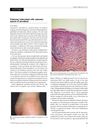
July 2002 in “Journal of the European Academy of Dermatology and Venereology”
9 citations
,
July 2002 in “Journal of the European Academy of Dermatology and Venereology” This article discusses multiple minute digitate hyperkeratosis in a dermatological context and reports no new clinical findings; the authors focus on a descriptive review.

In this case study, a 12-month-old girl presenting with apyretic seizure and congenital alopecia was diagnosed with hereditary vitamin D-resistant rickets, highlighting the importance of comprehensive evaluation for accurate diagnosis.
 9 citations
,
December 1978 in “Australian Journal of Biological Sciences”
9 citations
,
December 1978 in “Australian Journal of Biological Sciences” This study found that flumethasone administration in Merino wethers led to variations in wool shedding and initial reductions in wool growth, with full recovery generally observed within 60 days post-treatment.
 8 citations
,
April 2014 in “Anti-Cancer Drugs”
8 citations
,
April 2014 in “Anti-Cancer Drugs” In this study, PTH–CBD displayed dose-dependent effects in reducing hair loss and enhancing hair regrowth in a mouse model of chemotherapy-induced alopecia.
 5 citations
,
January 2018 in “Javma-journal of The American Veterinary Medical Association”
5 citations
,
January 2018 in “Javma-journal of The American Veterinary Medical Association” This case report documents the first successful management of accidental minoxidil toxicosis in a dog, resulting in full recovery after treatment with supportive care, including medications for blood pressure and potential toxicity mitigation.
 June 1996 in “Irish Journal of Medical Science (1971 -)”
 This study found a statistically significant increase in glycosylated hemoglobins among patients with adult-acquired panhypopituitarism undergoing long-term GH replacement therapy, with two developing diabetes requiring treatment.

This abstract provides no study findings; it outlines website features and permissions for accessing JAMA Network content.
 4 citations
,
February 2024 in “Scientific Reports”
4 citations
,
February 2024 in “Scientific Reports” This study found that Platelet Rich Plasma is effective as a direct pulp capping agent, comparable to Mineral Trioxide Aggregate, but with potentially better cellular dentinogenic responses and homogenous tissue formation in dogs.