7 citations
,
August 2025 in “European Journal of Endocrinology” The authors concluded that incorporating routine endocrinology consultations into transplant care could address CNI-related endocrine toxicities, but prospective studies are needed to assess the impact on graft and patient survival.
March 2024 in “INDIAN JOURNAL OF APPLIED RESEARCH” In this case report, the authors describe using Polarity Analysis for selecting homeopathic remedies to better match patient symptoms in treating alopecia areata, offering a potential alternative to corticosteroids, which are associated with significant side effects.
110 citations
,
November 1984 in “The American Journal of Medicine” This study observed that children with a genetically transmitted defect in the 1,25-dihydroxyvitamin D3 receptor experienced spontaneous healing of rickets as they aged, despite persistent mineral imbalances during treatment.
7 citations
,
April 1996 in “Archives of dermatological research” This study found that after topical application in rats, 1,24-dihydroxyvitamin D3 absorbed through both the stratum corneum and hair follicles, with about 30% excreted via the faeces.
 1 citations
,
May 2023 in “Annales d'Endocrinologie”
1 citations
,
May 2023 in “Annales d'Endocrinologie” In this study, researchers found that metformin improved glycaemic control and other metabolic parameters in non-diabetic patients on glucocorticoid treatment, also reducing pneumonia risk and hospital admissions, suggesting a potential advantage for routine use in this population.
1 citations
,
May 1992 in “Pharmacological Research” July 2023 in “Media Dermato Venereologica Indonesiana” In this study, researchers highlighted that in sarcoidosis, macrophages in granulomas can produce vitamin D, potentially leading to calcium imbalances, where vitamin D supplementation may cause hypercalcemia, necessitating careful laboratory assessment before supplementation.
 September 2025 in “Pakistan Journal of Science”
 This study observed that individuals with type 1 diabetes mellitus have notably lower levels of essential and trace elements like Calcium, Potassium, and Zinc in biological samples compared to non-diabetic controls.
5 citations
,
January 1995 in “Journal of Dermatological Treatment” This study suggests that topical calcipotriol did not significantly enhance hair growth when combined with SADBE in patients with severe alopecia areata.
9 citations
,
January 2019 in “International Journal of Trichology” In this study, combining topical calcipotriol with mometasone results in greater improvement in alopecia areata treatment compared to using mometasone alone, as evidenced by a more significant reduction in SALT score over 24 weeks.
1 citations
,
February 2022 in “Indian Journal of Nutrition and Dietetics/Indian journal of nutrition and dietetics” This study reported a significant association between cultural dress practices, reduced sunlight exposure, and symptoms of vitamin D and calcium deficiency among Muslim women in Coimbatore.
 27 citations
,
October 1945 in “Endocrinology”
27 citations
,
October 1945 in “Endocrinology” In this study, adrenalectomy in black rats on a vitamin B-deficient diet restored hair growth and melanin deposition, effects reversed using adrenal cortical hormones.
 December 2025 in “Cureus”
 In this case report, a 40-year-old woman with systemic lupus erythematosus developed calcinosis cutis, a rare complication characterized by calcified deposits in her legs, requiring surgical intervention and ongoing medical treatment due to infection.
1 citations
,
January 2021 in “Journal of clinical and diagnostic research” In this study, adding topical calcipotriol 0.005% to topical clobetasol 0.05% significantly improved treatment efficacy for Alopecia Areata compared to using clobetasol alone, as evidenced by a greater reduction in SALT scores over 24 weeks.
52 citations
,
August 1993 in “Clinical endocrinology” This study found that intravenous high dose calcium infusions followed by high dose oral calcium effectively treated vitamin D dependent rickets type II, leading to complete biochemical and radiological healing and improved growth in two patients.
8 citations
,
September 2014 in “Journal of X-Ray Science and Technology” This study found that hair analysis may be useful in early breast cancer detection by identifying distinct calcium and strontium concentration patterns before and during cancer development.
 28 citations
,
January 2003 in “Skin pharmacology and physiology”
28 citations
,
January 2003 in “Skin pharmacology and physiology” This study found that melatonin's effect on HaCaT keratinocyte proliferation varied with concentration and incubation time, with no cytotoxic effects observed at suitable concentrations for skin treatment.

This case study presented by the researchers describes the effective use of topical calcipotriene ointment in treating a 6-year-old girl with en coup de sabre scleroderma, resulting in normalization of the sclerotic skin, hair regrowth, and improved pigmentation.
 June 2021 in “Asian Journal of Medical Sciences”
 This case study highlights that vitamin B12 deficiency can cause reversible hyperpigmentation, illustrated by a vegetarian female patient whose skin lesions improved after treatment.
January 2026 in “Chemical Communications” This study found that calanthoside, a compound isolated from Calanthe species, promotes the proliferation of human hair follicle dermal papilla cells more effectively than minoxidil.
10 citations
,
April 1965 in “Journal of Nutrition” Changing mineral levels in rats' diets can prevent kidney stones, affect hair growth, and influence weight gain.
21 citations
,
June 1991 in “Journal of Inherited Metabolic Disease” This case report observed that a selenium-deficient diet in a child with propionic acidaemia led to macrocytosis and hair abnormalities, which improved with selenium supplementation.
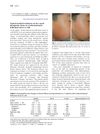 14 citations
,
July 2012 in “Journal of the American Academy of Dermatology”
14 citations
,
July 2012 in “Journal of the American Academy of Dermatology” This study found that topical tacalcitol improved roughness and scaling in erythromelanosis follicularis faciei et colli, although it was less effective for facial erythema.
October 2021 in “European Journal of Dermatology” In this study, the researchers reported that calcipotriol pre-treatment made photodynamic therapy more effective and safe than conventional treatment for actinic keratosis on the scalp, improving long-term clearance rates, especially for Grade II lesions. However, they suggested larger trials are necessary to corroborate these findings.
1 citations
,
December 2012 in “Clinical and Experimental Dermatology” This report describes a rare case of tumoral calcinosis presenting as a slow-growing mass on the scalp in an Afro-Caribbean man, with histopathology revealing calcium deposits and associated tissue changes.
119 citations
,
October 1998 in “Endocrinology” This study found that normalizing mineral ion levels in vitamin D receptor-ablated mice prevented hyperparathyroidism, rickets, and osteomalacia, but alopecia persisted, indicating a separate role for the receptor in hair growth.
This study reports that melatonin influenced HaCaT cell proliferation, with high concentrations reducing DNA synthesis and low concentrations enhancing it after 24 hours.
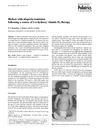 6 citations
,
August 1989 in “European journal of pediatrics”
6 citations
,
August 1989 in “European journal of pediatrics” This case study describes a child with rickets and alopecia who responded to a small dose of 1-a-hydroxyvitamin D3, but her alopecia remained unchanged despite treatment.
 May 2017 in “Journal of microscopy and ultrastructure”
 This notice states that the article has been withdrawn due to the journal's transfer to a new publisher and reports no research findings.