 June 2023 in “MPI (Media Pharmaceutica Indonesiana)”
 This systematic literature review identified kale leaf hair tonic (Ipomoea aquatica Forsk.) at 5% concentration as an effective herbal cosmeceutical preparation for enhancing hair growth, showing an average increase in hair length over 21 days, while meeting established pharmaceutical standards.
1 citations
,
November 2022 in “International Journal of Cosmetic Science” In this study, a topical application of Lotus corniculatus seed extract significantly reduced sebum production and skin oiliness in humans through inhibition of lipid synthesis pathways.
December 2025 in “DIET FACTOR (Journal of Nutritional & Food Sciences)” This paper reviews the bioactive properties and economic potential of common hop plants, especially female varieties, highlighting their applications in agriculture, food technology, and pharmacology along with their market significance in Europe and potential for rural development in northern Pakistan.
This study concluded that a formulated herbal suspension containing selected home remedial herbs was effective for the prevention and treatment of polycystic ovary syndrome in an animal model.
2 citations
,
September 2023 in “Journal of the American Academy of Dermatology” CTP-543 effectively promotes hair regrowth in adults with moderate to severe alopecia areata.
January 2022 in “Lumbung Farmasi: Jurnal Ilmu Kefarmasian/Lumbung Farmasi” In this experimental study, researchers found that a hair tonic combining celery leaf extract and honey, specifically Formula B, showed the highest potential for promoting hair growth in rabbits, with outcomes comparable to a minoxidil control.
This study found that bitter melon leaf extract, particularly at a 10% concentration, promoted hair growth in male rabbits, outperforming the effect of a 2% minoxidil solution.
 2 citations
,
August 2019 in “Asian journal of pharmaceutical and clinical research”
2 citations
,
August 2019 in “Asian journal of pharmaceutical and clinical research” This study found that in female breast cancer patients, supplementation with 400 mg IND02 (Cinnamon bark extract) thrice daily during chemotherapy significantly reduced severe weight loss and hair loss compared to placebo, with the treatment being well-tolerated and safe.
4 citations
,
May 2024 in “Genes” Among Merino × Southdown cross sheep, this study found that certain variants of the KRT81 gene were associated with differences in fleece weight, but not with staple length or fibre diameter traits.
October 2025 in “OPAL (Open@LaTrobe) (La Trobe University)” In a study on secondary hair follicle stem cells from Arbas cashmere goats, researchers found that 10 μg/mL quercetin for 48 hours enhances cell proliferation and inhibits apoptosis through multiple signaling pathways, potentially improving cashmere production.
January 2013 in “Annals of Ayurvedic Medicine” In this study, Abrus precatorius seed oil was found to promote hair growth and exhibit antifungal effects in female rats, supporting its traditional use for alopecia.
 November 2023 in “International Journal of Cosmetic Science”
 This study found that a wheat polar lipid complex supplement significantly reduced hair loss and improved hair growth and volume in women experiencing acute hair shedding, including postmenopausal women.
3 citations
,
May 2018 in “The Indian Journal of Animal Sciences” This study suggests that the KAP 7 gene may serve as a potential molecular marker for genetic selection to improve staple length and greasy fleece weight in Rambouillet sheep.
 13 citations
,
March 2021 in “British Journal of Pharmacology”
13 citations
,
March 2021 in “British Journal of Pharmacology” This study found that KY19382 can effectively promote hair regeneration and follicle neogenesis in mice and human hair models by activating Wnt/β-catenin signalling, suggesting potential use for alopecia treatment.
 2 citations
,
December 2021 in “ScienceRise”
2 citations
,
December 2021 in “ScienceRise” This study identified optimal parameters for extracting oil from Urtica dioica roots to maximize phytosterol content, using corn oil and a 1:5 raw material-extract ratio over a 6-hour maceration period.
 May 2023 in “Advancements in Homeopathic Research”
 This study investigated the effectiveness of a botanical formulation, Zauberӧl®, on testosterone-induced alopecia in Wistar rats, focusing on ingredients such as Arnica montana and Hibiscus Rosa sinensis. Results are not reported in the abstract.
 April 2006 in “Dermatologic Clinics”
 This study found that white wax and its extract significantly promoted hair growth in a mouse model of androgenetic alopecia, outperforming finasteride by inhibiting 5α-reductase activity and enhancing cellular proliferation.
This study found that an ethanolic extract of Semicarpus anacardium nuts reduced blood glucose levels and improved enzyme activities related to carbohydrate metabolism in normal rats.
October 2025 in “OPAL (Open@LaTrobe) (La Trobe University)” This study found that treating secondary hair follicle stem cells from Arbas cashmere goats with quercetin at 10 μg/mL for 48 hours significantly enhanced cell proliferation and reduced apoptosis, suggesting potential strategies to improve cashmere production through various signaling pathways.
38 citations
,
March 2012 in “Zhongxiyi jiehe xuebao” This review discusses the pharmacognosy, phytochemistry, and medicinal uses of Cuscuta reflexa but reports no new experimental results.
1 citations
,
June 2025 in “Biomolecules” This study found that extracts from Stauntonia hexaphylla leaves and fruits, particularly those with a higher leaf-to-fruit ratio, significantly enhanced osteogenic activity and inhibited osteoclast-related gene expression in vitro, suggesting potential for osteoporosis prevention.
6 citations
,
April 2025 in “Frontiers in Sustainable Food Systems” This review highlights the potential of valorizing vegetable waste by extracting valuable biomolecules for use in food, nutraceuticals, and energy, noting that while promising methods exist, several niche areas lack sufficient research on a global scale.
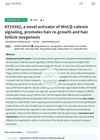
In this study, KY19382 was observed to promote hair regeneration and de novo hair follicle formation in mice by activating Wnt/β-catenin signaling, suggesting its potential as a therapeutic for alopecia.
This study found that a food supplement containing L-cystine, pantothenic acid, biotin, and millet extract significantly improved hair density and beauty parameters in healthy Japanese women with light diffuse hair loss after three months.
 December 2023 in “International Journal of Advanced Research in Science, Communication and Technology”
 The article reviews various medicinal properties of Semecarpus anacardium Linn., highlighting its traditional use for different diseases and noting its potential benefits as antiatherogenic, anti-inflammatory, antioxidant, antimicrobial, and hypoglycemic, among others.
 1 citations
,
August 2017 in “Journal of food and nutrition research”
1 citations
,
August 2017 in “Journal of food and nutrition research” This study found that the black bean-licorice-biotae folium extract may improve hair diameter, scalp moisture, and sebum secretion, although its effect on hair density was not significant.
 March 2026 in “Journal of Hunan University Natural Sciences”
 This study evaluated the antimicrobial activity of Albizia saponaria stem bark against microorganisms causing dandruff and fungal alopecia. It found that the hexane fraction exhibited potent antifungal effects comparable to ketoconazole, highlighting its potential as a natural therapeutic for dandruff.
6 citations
,
January 2009 This study found that topical application of Russelia equisetiformis methanol extract significantly increased hair growth in albino Wistar rats, potentially due to its triterpene and flavonoid content.
July 2026 in “Pharmaciana” This study found that the optimal characteristics for ulin seed oil extraction are fresh, mature, and resinous seeds, and that FTIR spectrophotometry with PCA can effectively detect adulteration of the oil, particularly at certain wavenumbers like 1745 cm⁻¹.
This study found that ethanolic extract and fractions of Ceiba leaf tonic may enhance rabbit hair growth similarly to 2% minoxidil.