October 2021 in “Journal of Investigative Dermatology” Pink berry extract effectively treats scalp issues from frequent head covering.
 March 2023 in “Journal of the American Academy of Dermatology”
 This review summarizes evidence that pityrosporum folliculitis in immunocompromised patients responds well to topical antifungals and treatment of underlying conditions, based on a limited number of studies with small sample sizes.
10 citations
,
January 2018 in “International journal of trichology” This case report highlights the importance of histopathological examination in accurately diagnosing eruptive vellus hair cyst due to its rarity and resemblance to other conditions.
 6 citations
,
September 2013 in “The Obstetrician & Gynaecologist”
6 citations
,
September 2013 in “The Obstetrician & Gynaecologist” This article reviews the physiological skin changes and unique dermatoses in pregnancy, discussing their causes and management, but reports no new clinical findings.
 December 2025 in “Cureus”
 This study reports a case of traumatic anserine folliculosis in a young male, where treatment with topical retinoids and keratolytics combined with avoiding friction significantly improved symptoms after nine months.
 November 2023 in “Clinical, Cosmetic and Investigational Dermatology”
 This case report identified a maculopapular rash in a 76-year-old male, occurring 2 months after starting Finasteride for prostatic hyperplasia, with clinical and histologic evidence suggesting a drug-induced skin eruption.
 1 citations
,
October 2019 in “مجله كليه طب الكندي”
1 citations
,
October 2019 in “مجله كليه طب الكندي” In this study, researchers highlight the role of androgens like dihydrotestosterone in the pathophysiology of acne, pointing to the enzyme 5a-reductase type 1 as potentially more active in individuals with acne, which may contribute to hormonal influences in the condition's development.
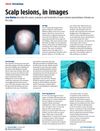 January 2015 in “Independent Nurse”
 Different scalp conditions can lead to hair loss or tumors, with treatments varying from creams to surgery; early detection is crucial.
3 citations
,
October 2024 in “Cancers” In this study, 37.5% of patients with nodal or metastatic cutaneous melanoma treated with immune checkpoint inhibitors developed skin adverse events, primarily low-grade rashes, vitiligo, and other dermatological symptoms, occurring mainly after 10 weeks of treatment.
 2 citations
,
May 2023 in “Experimental dermatology”
2 citations
,
May 2023 in “Experimental dermatology” In this study, researchers used advanced four-dimensional optical imaging techniques to observe changes in skin afflicted with acne, finding increased epidermal thickness, keratinized hair follicles, inflammation, and aggregated blood flow, helping to distinguish between inflammation and reparative phases of acne progression.
6 citations
,
July 1976 in “JAMA” This article discusses dermatological issues associated with black skin, such as postinflammatory pigmentation and keloids, and highlights the need for practitioners to understand these racial characteristics; it reports no new clinical results.
1 citations
,
January 2022 in “Clinical Cases in Dermatology” This case report describes a 22-year-old Asian man with erosive pustular dermatosis of the scalp, whose lesions improved after treatment with topical tacrolimus and oral isotretinoin.
62 citations
,
June 2023 in “Acta Dermato Venereologica” This observational study found that patients with various skin diseases across 17 European countries experience higher levels of perceived stigmatization than skin-healthy controls, particularly those with psoriasis, atopic dermatitis, alopecia, and bullous disorders, with factors such as disease severity and psychological distress influencing stigmatization levels.
 October 2025 in “World Journal of Biology Pharmacy and Health Sciences”
 This review highlights the role of sex hormones in skin health, observing that hormonal changes throughout a woman's life can affect skin conditions such as acne and hair loss, with treatments involving hormonal therapies and the importance of a multidisciplinary approach.
4 citations
,
October 2025 in “Journal of Cosmetic Dermatology” This study reported severe and persistent skin reactions, including inflammation and scarring, after intradermal injections of unregulated exosome-based products, highlighting potential risks in aesthetic dermatology.
September 2023 in “Journal of the American Academy of Dermatology” Bullous pemphigoid can look like erythema multiforme, so awareness is needed for proper treatment.
35 citations
,
February 1993 in “International Journal of Dermatology” This report describes two cases where pemphigus lesions developed at sites of cosmetic procedures, suggesting these treatments might trigger the disease and should be distinguished from other post-surgery complications.
 November 2022 in “Journal of Investigative Dermatology”
 This study demonstrated that hiPSC-derived hair-bearing skin organoids lacked sufficient type VII collagen at the epidermal-dermal junction, indicating a need for further maturation to model certain forms of epidermolysis bullosa effectively.
 17 citations
,
January 2010 in “Acta Dermato Venereologica”
17 citations
,
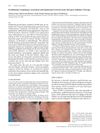
January 2010 in “Acta Dermato Venereologica” This report details a case of a 43-year-old woman developing yellowish papular eruptions alongside typical acneiform skin reactions on her cheeks and chest following a switch from cetuximab to panitumumab treatment.
 1 citations
,
January 2015 in “Springer eBooks”
1 citations
,
January 2015 in “Springer eBooks” Chemotherapy can cause skin side effects that affect patients' lives, but they can be managed to avoid interrupting cancer treatment.
 June 2026 in “International Journal of Innovative Technologies in Social Science”
 This source describes clascoterone, a new topical treatment for acne vulgaris that blocks androgen receptors to reduce sebaceous gland activity and inflammation, offering a lower risk of systemic side effects compared to oral treatments.
 September 2021 in “International Journal of Biomedicine”
 This study found that SNPs in the MVK, ARPC1B, and CA2 genes may indicate a genetic predisposition for severe acne related to steroidogenesis.
September 2025 in “Meditsinskiy sovet = Medical Council” This review provides current insights into the role of Demodex mites in acne and rosacea, detailing their involvement in sebaceous gland diseases due to their potential to cause inflammation and disrupt skin microbial balance, while suggesting methods to correct mite overgrowth.
In this case study, a 20-year-old man with dermatitis initially misdiagnosed as caused by Herpes simplex was found to have a fungal infection, Trichophyton mentagrophytes, and successfully treated with oral terbinafine and ketoconazole products.
 31 citations
,
June 2015 in “British Journal of Dermatology”
31 citations
,
June 2015 in “British Journal of Dermatology” Hormonal treatments are effective as a second-line option for moderate-to-severe acne in females, but should be used with caution due to health risks.
 1 citations
,
March 2022 in “Cureus”
1 citations
,
March 2022 in “Cureus” This case report discusses a 25-year-old woman diagnosed with acne necrotica varioliformis and highlights the diagnostic challenges and potential associations with systemic diseases.
 34 citations
,
July 1987 in “The Journal of dermatologic surgery and oncology”
34 citations
,
July 1987 in “The Journal of dermatologic surgery and oncology” This article reviews advanced dermabrasion techniques for acne scars and skin lesions, detailing patient selection and procedural steps to enhance therapeutic outcomes and avoid pitfalls, but reports no new findings.
2 citations
,
October 2019 in “Dermatologic Therapy” This study suggests using a handheld dermatoscope may allow for simple and efficient differentiation of eruptive vellus hair cysts by detecting vellus hair shafts, as demonstrated in a familial case involving five women.
20 citations
,
January 1998 in “Dermatology” This report highlights a case of acne neonatorum in a newborn boy, linking it to familial hyperandrogenism, and emphasizing the importance of family history and maternal hyperandrogenism in diagnosis.
August 2020 in “SKIN The Journal of Cutaneous Medicine” This case report describes a 70-year-old man's development of residual hidrocystomas and milia after resolving an acneiform eruption induced by cetuximab, marking a novel observation of this sequence.