September 2023 in “Pediatric Dermatology” This study highlights that dermatologists should be aware of the cultural norms of hair care in adolescents of color with textured hair, as these practices can influence acne distribution and treatment.
This article reviews the hormonal pathogenesis of acne vulgaris and androgenetic alopecia, emphasizing various hormonal factors beyond androgens, but reports no new clinical findings.
2 citations
,
May 2022 in “International Journal of Trichology” This study identified 43 patients with psoriasiform skin reactions associated with Brazilian Keratin Treatment, suggesting this adverse effect may be underdiagnosed and important to recognize through clinical and dermatoscopic features.
 138 citations
,
July 2015 in “Clinical, Cosmetic and Investigational Dermatology”
138 citations
,
July 2015 in “Clinical, Cosmetic and Investigational Dermatology” This review discusses how Western diet may contribute to acne vulgaris through insulin signaling and metabolomic changes, promoting a dietary approach for management, but reports no new experimental results.
January 2011 in “The Journal of Secondary Vocational Education” This study found that isotretinoin treatment in adolescents with nodulocystic acne may lead to changes in adrenal hormone levels, and hirsutism and menstrual irregularity can occur during treatment.
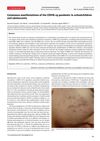 January 2023 in “Acta dermatovenerologica Alpina, Pannonica et Adriatica (Tiskana izd.)”
 This review details skin conditions in children and adolescents related to the SARS-CoV-2 pandemic, emphasizing mask-related acne and various cutaneous manifestations linked to infection and vaccination, with most being mild or nonspecific.
October 2021 in “European Journal of Dermatology” In this study, the researchers reported that calcipotriol pre-treatment made photodynamic therapy more effective and safe than conventional treatment for actinic keratosis on the scalp, improving long-term clearance rates, especially for Grade II lesions. However, they suggested larger trials are necessary to corroborate these findings.
12 citations
,
August 1997 in “Postgraduate medicine” Educating people about acne is key because many still believe old myths, even though treatments exist for almost all types.
 13 citations
,
June 1984 in “Postgraduate Medicine”
13 citations
,
June 1984 in “Postgraduate Medicine” This article discusses various pruritic dermatoses that can occur during pregnancy, emphasizing the importance of physician skill in diagnosing and treating these conditions; it reports no new findings.
 39 citations
,
January 2015 in “Annals of dermatology/Annals of Dermatology”
39 citations
,
January 2015 in “Annals of dermatology/Annals of Dermatology” This review discusses three newly identified forms of epidermolysis bullosa related to mutations in DST-e, EXPH5, and ITGA3, offering insights into their genetic and clinical characteristics but reports no new clinical results.
 4 citations
,
January 2016 in “Dermatology Review”
4 citations
,
January 2016 in “Dermatology Review” This review focuses on the various skin toxicities caused by chemotherapeutic and targeted tumor therapy drugs, including rashes, keratoacanthoma, and more severe conditions like Stevens-Johnson syndrome, without presenting new clinical results.
1 citations
,
October 2020 in “Research Square (Research Square)” This study found that abnormal Wnt signalling in stem cells may contribute to blackhead formation in acne by inhibiting cell differentiation and causing cell accumulation in the junctional zone.

This review outlines acne management strategies for individuals with polycystic ovary syndrome, but reports no new clinical results.
 5 citations
,
August 2011 in “Journal of the American Academy of Dermatology”
5 citations
,
August 2011 in “Journal of the American Academy of Dermatology” This report describes a rare case of cyclophosphamide-associated neutrophilic folliculitis, suggesting its inclusion in differential diagnoses for acneiform eruptions.
January 2026 in “IOSR Journal of Dental and Medical Sciences” In this cross-sectional study, researchers observed that acne vulgaris is highly prevalent among adults and found that inadequate sleep is significantly associated with more severe acne, while diet and stress showed no significant link. Additionally, acne negatively impacts psychosocial well-being, affecting individuals' social interactions.
In this case report, an 11-year-old girl with dissecting cellulitis of the scalp showed an excellent response to oral isotretinoin after other treatments failed, highlighting the treatment challenges and need for awareness in managing this rare condition.
 1 citations
,
September 2015 in “Serbian Journal of Dermatology and Venereology/Serbian Journal of Dermatology and Venerology”
1 citations
,
September 2015 in “Serbian Journal of Dermatology and Venereology/Serbian Journal of Dermatology and Venerology” This paper presents a case of a young male with a family history, showing overlap between ulerythema ophryogenes and keratosis follicularis spinulosa decalvans, affecting both eyebrows and scalp with cicatricial patchy alopecia.
 3 citations
,
January 1985 in “PubMed”
3 citations
,
January 1985 in “PubMed” This review discusses the complex dermatological effects of oral contraceptives, including both hormonal benefits and potential toxicities, but reports no new clinical results.
 6 citations
,
January 2013 in “Indian Journal of Paediatric Dermatology”
6 citations
,
January 2013 in “Indian Journal of Paediatric Dermatology” This study found that skin disorders were more common among schoolchildren in Kashmir Valley, North India, with eczema and acne vulgaris being the most prevalent conditions.
January 2022 in “Clinical Cases in Dermatology” This case report describes a middle-aged man with niacinamide-induced poikilodermatous flushing observed on the neck, established through clinical and dermatoscopic evaluation.
5 citations
,
February 2005 in “Journal of the American Academy of Dermatology” Focal palmoplantar callosities may help diagnose non-Herlitz junctional epidermolysis bullosa.
40 citations
,
July 2008 in “PROTEOMICS” This study introduced a bioengineered model that simulates acne's microenvironment in mice, enabling the exploration of host and P. acnes interactions and presenting a novel platform for anti-acne drug and vaccine screening.
 1 citations
,
August 2005 in “British Journal of Dermatology”
1 citations
,
August 2005 in “British Journal of Dermatology” This case report describes a 7-year-old girl who developed widespread erythroderma and systemic symptoms after ingesting clobetasone butyrate cream, despite previous psoriasis treatment.
1 citations
,
March 2006 in “Journal of Cosmetic Dermatology” This case report describes a 79-year-old woman whose skin lesions were attributed to a cosmetic product, with complete resolution following mechanical removal of material and metronidazole treatment.
22 citations
,
September 1993 in “Archives of Dermatology” This case report details a 4-year-old girl who developed a fever and widespread papular, pruritic rash resembling a heat rash, with a progression to thick, scaly patches but had sterile blood and urine cultures.
 32 citations
,
January 2012 in “International Journal of Dermatology”
32 citations
,
January 2012 in “International Journal of Dermatology” This study reported that the most common skin side effect of epidermal growth factor receptor inhibitors was a papulopustular rash, treatable with symptom-targeted therapies, while drug suspension was rarely needed.
 42 citations
,
September 2018 in “Journal der Deutschen Dermatologischen Gesellschaft”
42 citations
,
September 2018 in “Journal der Deutschen Dermatologischen Gesellschaft” This review discusses the distinct clinical and psychological aspects of adult female acne and reports no new clinical results, highlighting the need for a comprehensive management approach.
 1 citations
,
April 2019 in “Journal of Investigative Dermatology”
1 citations
,
April 2019 in “Journal of Investigative Dermatology” This study highlights that patients with pemphigus experiencing cutaneous involvement endure pruritus levels approaching those of bullous pemphigoid, impacting their quality of life alongside other autoimmune blistering diseases.
 24 citations
,
January 2013 in “Indian Journal of Dermatology, Venereology and Leprology”
24 citations
,
January 2013 in “Indian Journal of Dermatology, Venereology and Leprology” This review examines hormonal influences on acne development and available hormonal therapies but reports no new clinical results.
5 citations
,
February 2025 in “Drug Development Research” This review found that repurposing existing drugs with strong safety profiles may be an effective and cost-efficient strategy to treat acne, although challenges such as regulatory issues and clinical validation remain significant.