38 citations
,
January 2005 in “PubMed” This study found that dutasteride effectively improves symptoms of benign prostatic hyperplasia, showing benefits in urinary flow and quality of life, with only modestly elevated sexual side effects compared to placebo.
 1 citations
,
January 2011 in “Journal of Human Reproductive Sciences”
1 citations
,
January 2011 in “Journal of Human Reproductive Sciences” Finasteride may decrease semen quality but not harm sperm production, and stopping the drug can improve semen quality; hyperprolactinemia can cause infertility but is treatable with medication.
 21 citations
,
February 2021 in “Frontiers in Endocrinology”
21 citations
,
February 2021 in “Frontiers in Endocrinology” This review explores the potential impact of hormonal changes during aging on benign prostate hyperplasia-related urinary symptoms and metabolic syndrome, highlighting the hypothesis of a male PCOS-equivalent but reports no new clinical results.
 5 citations
,
September 2012 in “The Journal of Urology”
5 citations
,
September 2012 in “The Journal of Urology” This article discusses androgenetic alopecia as a potential early marker for benign prostatic hyperplasia but reports no new clinical findings.
 January 2026 in “Food Science and Human Wellness”
 This research examined krill oil's effects on benign prostatic hyperplasia and found that it inhibited the growth of prostate cells in vitro and reduced prostate size and weight in a BPH rat model, suggesting potential as a prophylactic or therapeutic agent for BPH.
This study found that PLX, a mixture of tomato extract and chitooligosaccharide, may reduce prostate weight in testosterone-induced BPH in rats, suggesting it could act as a 5α-reductase inhibitor.
 34 citations
,
January 1998 in “European Urology”
34 citations
,
January 1998 in “European Urology” This study concluded that finasteride may safely reduce prostate size and improve urinary symptoms for at least six years in men with benign prostatic hyperplasia, though further improvements beyond six months are unlikely.
 20 citations
,
June 2017 in “Hormone Molecular Biology and Clinical Investigation”
20 citations
,
June 2017 in “Hormone Molecular Biology and Clinical Investigation” This study found that long-term dutasteride therapy in men with benign prostatic hyperplasia worsened erectile dysfunction, reduced testosterone levels, and increased blood glucose and lipid profile, indicating negative metabolic impacts.
 20 citations
,
June 2015 in “Hormone Molecular Biology and Clinical Investigation”
20 citations
,
June 2015 in “Hormone Molecular Biology and Clinical Investigation” This study found that long-term finasteride therapy in men with BPH worsened erectile dysfunction and reduced testosterone levels, while these effects were not observed with tamsulosin.
 15 citations
,
November 2015 in “Pharmacopsychiatry”
15 citations
,
November 2015 in “Pharmacopsychiatry” This review discusses sexual dysfunction as a side effect of α-blockers and 5-ARIs for BPH/LUTS, highlighting methodological flaws in existing studies and the need for more rigorous research.
 14 citations
,
August 1997 in “The Journal of Urology”
14 citations
,
August 1997 in “The Journal of Urology” Finasteride can cause enlarged breasts.
 4 citations
,
June 2025 in “Current Urology Reports”
4 citations
,
June 2025 in “Current Urology Reports” This study found that while new treatments like Optilume, Rezum, and Aquablation have minimal risks of sexual dysfunction, they offer less improvement in lower urinary tract symptoms compared to traditional surgeries like TURP, though Aquablation does reduce ejaculatory dysfunction more effectively than TURP.
 2 citations
,
May 2023 in “Al Mustansiriyah Journal of Pharmaceutical Sciences”
2 citations
,
May 2023 in “Al Mustansiriyah Journal of Pharmaceutical Sciences” This study found that high-dose pterostilbene potentially reduced prostate hyperplasia and had strong antioxidant effects in male rats with benign prostatic hyperplasia, suggesting it might be more effective than vitamin C and resveratrol in similar contexts.
1 citations
,
March 2022 in “British Journal of Clinical Pharmacology” In this study, the use of 5-α reductase inhibitors was not associated with an increased risk of anaemia compared to α-blockers in men with benign prostatic hyperplasia.
 May 2024 in “KIU journal of health science”
 In this study, kolaviron and quercetin were found to reverse elevated biomarkers associated with testosterone-induced benign prostatic hyperplasia in Wistar rats, with both treatments effectively increasing HDL-c levels, though quercetin did not significantly affect triglyceride levels.
 137 citations
,
March 2006 in “Cns Drug Reviews”
137 citations
,
March 2006 in “Cns Drug Reviews” This review explores finasteride's effects on neuroactive steroid levels and their potential influence on disorders like depression and alcohol withdrawal but reports no new clinical findings.
 93 citations
,
February 2009 in “Annals of the New York Academy of Sciences”
93 citations
,
February 2009 in “Annals of the New York Academy of Sciences” This review describes the roles of 5α-reductase isozymes in prostate development and pathology and reports no new clinical results.
 23 citations
,
July 1993 in “Pharmacotherapy”
23 citations
,
July 1993 in “Pharmacotherapy” Finasteride treats enlarged prostate and baldness, but may cause limited urinary improvement and sex-related side effects.
 20 citations
,
January 2017 in “Nutrition Research and Practice”
20 citations
,
January 2017 in “Nutrition Research and Practice” In this study, corn silk extract treatment improved symptoms of testosterone-induced BPH by reducing specific mRNA expression and decreasing levels of 5α-R2, DHT, and PSA.
 7 citations
,
February 2016 in “Arab journal of urology”
7 citations
,
February 2016 in “Arab journal of urology” This study found that patients with androgenetic alopecia had a higher incidence of metabolic syndrome and benign prostatic hyperplasia compared to those without the condition.
6 citations
,
July 2021 in “Uro” This review discusses sexual dysfunction as a potential side effect of drugs for Benign Prostatic Hyperplasia and Lower Urinary Tract Symptoms and reports no new clinical results; it emphasizes the need for methodologically robust studies.
 August 2023 in “Malaysian Journal of Medicine and Health Sciences/Malaysian journal of medicine and health sciences”
 This study found that aqueous extract of Pueraria mirifica, when administered to a rat model, significantly reduced prostate weight, prostatic index, and serum dihydrotestosterone levels, while also improving prostate histomorphology, suggesting its potential as an anti-BPH treatment.
August 2021 in “The Journal of Urology” This study found a significant association between finasteride use and reports of sexual dysfunction, particularly greater in young men using it for alopecia compared to older BPH patients.
 1707 citations
,
December 2003 in “The New England Journal of Medicine”
1707 citations
,
December 2003 in “The New England Journal of Medicine” Combination therapy of doxazosin and finasteride safely and effectively reduces benign prostatic hyperplasia progression risk.
34 citations
,
December 2021 in “Journal of Clinical Medicine” This review details the prevalence and management of ejaculatory disorders in men with benign prostatic hyperplasia-related urinary symptoms and highlights the importance of preserving peri-montanal tissue during treatment to maintain antegrade ejaculation.
 19 citations
,
October 2018 in “PLOS ONE”
19 citations
,
October 2018 in “PLOS ONE” This study found that 5-alpha-reductase inhibitor monotherapy for symptomatic benign prostatic hyperplasia showed some clinical benefit over placebo but was linked to a higher incidence of sexual side effects.
 11 citations
,
April 2013 in “Journal of Agricultural and Food Chemistry”
11 citations
,
April 2013 in “Journal of Agricultural and Food Chemistry” This study found that Monascus cursory extraction reduced baldness, prostate hyperplasia, and tumor incidence in animal models of androgen-related diseases, suggesting it may be a promising new therapeutic candidate.
 2 citations
,
July 2025 in “Discover Chemistry.”
2 citations
,
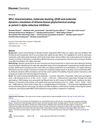
July 2025 in “Discover Chemistry.” This study explored the optimization of phytochemicals from Alstonia boonei to develop potential 5-alpha reductase inhibitors for Benign Prostatic Hyperplasia, finding promising analogs with enhanced binding affinity and stability compared to Finasteride, warranting further experimental validation.
 1 citations
,
July 2018 in “Current Sexual Health Reports”
1 citations
,
July 2018 in “Current Sexual Health Reports” This review discusses the occurrence of persistent sexual, physical, neurological, and psychiatric side effects known as post-finasteride syndrome after 5x-reductase inhibitor treatment, and emphasizes the importance of evaluating these risks for patients with benign prostatic hyperplasia or androgenic alopecia.
 295 citations
,
September 2006 in “Cell Cycle”
295 citations
,
September 2006 in “Cell Cycle” This review discusses the role of the TOR pathway in aging and suggests that rapamycin could potentially target age-related diseases, but reports no new clinical results.