18 citations
,
December 2005 in “Journal of Medicinal Chemistry” In this study, novel substituted benzoyl benzoic acids and phenylacetic acids were potent and selective inhibitors of human steroid 5alpha-reductase type 2, with one compound showing promising bioavailability in rats for potential clinical evaluation.
 2 citations
,
February 2004 in “Biopolymers”
2 citations
,
February 2004 in “Biopolymers” This study found that 4-(4-Phenoxybenzoyl)benzoic acid derivatives may act as antioxidants by scavenging certain reactive oxygen species but exhibit prooxidant behavior under specific conditions.

This study found that four synthesized thiazolidinone derivatives showed potential anticancer activity against MCF7 and HeLa cell lines, suggesting their further investigation for anticancer drug development.
 January 2004 in “Analytical Sciences: X-ray Structure Analysis Online”
 This study reports the crystal structure of C28H32O5, revealing its monoclinic symmetry, unit-cell dimensions, and molecular conformation.
 13 citations
,
May 2011 in “Bioorganic & Medicinal Chemistry”
13 citations
,
May 2011 in “Bioorganic & Medicinal Chemistry” This study identified certain benzopyran derivatives with a bulky tert-butyloxycarbonylamino group as effective KATP channel openers that inhibit insulin secretion in rat pancreatic islets.
15 citations
,
April 2011 in “The journal of investigative dermatology/Journal of investigative dermatology” This study found that A(3)B(5) downregulates melanin production and suppresses melanoma cell growth by promoting proteasomal degradation of TRP-2.
![Synthesis and Activity of 8-Substituted Benzo[c]quinolizin-3-ones as Dual Inhibitors of Human 5α-Reductases 1 and 2](/images/assets/efc54340-66d6-4f27-9930-045ac023f903/small/15248.jpg) 9 citations
,
November 2004 in “Bioorganic & Medicinal Chemistry Letters”
9 citations
,
November 2004 in “Bioorganic & Medicinal Chemistry Letters” This study identified potent dual inhibitors of 5α-reductases 1 and 2 that may aid in designing new drugs for related diseases.
June 2025 in “OPAL (Open@LaTrobe) (La Trobe University)” This study found that a synthetic polyphenol, dimeric 1,2,4-benzenetriol (diBTO), can coat gray hair and gradually oxidize, creating a resistant brown layer similar to apple browning, which offers a practical hair dyeing solution that withstands washing and reduces the need for long dyeing sessions.
23 citations
,
October 2008 in “Journal of medicinal chemistry” This study suggests that PF-0998425 is an effective androgen receptor antagonist for sebum control and androgenetic alopecia with rapid metabolism reducing the risk of systemic side effects.
 November 2022 in “Journal of Investigative Dermatology”
 This study developed a chalcone-based molecule that significantly increased tyrosinase inhibition and solubility, showing potential as a safe and effective skin depigmenting and antiaging agent, with supportive epigenetic and antioxidant properties observed in vitro.
 February 2026 in “Nature Synthesis”
 In this study, researchers introduced a visible-light-mediated intramolecular cycloaddition method that selectively forms 6-azabicyclo[3.1.1]heptanes, suggesting these structures could offer promising new scaffolds for drug discovery and medicinal chemistry.
 April 2017 in “Journal of Investigative Dermatology”
 This study found that 10% carbamide peroxide significantly reduced acne lesions compared to a vehicle solution, suggesting it as an effective and safe alternative to benzoyl peroxide for treating mild to moderate acne.
 14 citations
,
August 2007 in “Bioorganic & Medicinal Chemistry Letters”
14 citations
,
August 2007 in “Bioorganic & Medicinal Chemistry Letters” This study reported that the compound (1R, 2S)-4-(2-cyano-cyclohexyl-oxy)-2-trifluoromethyl-benzonitrile effectively stimulated hair growth in mice and reduced sebum production in hamsters.
 11 citations
,
March 2009 in “Bioorganic & Medicinal Chemistry Letters”
11 citations
,
March 2009 in “Bioorganic & Medicinal Chemistry Letters” This study reports that 4-(alkylthio)- and 4-(arylthio)-benzonitriles showed moderate sebum reduction as androgen receptor antagonists when applied topically in a validated animal model.
7 citations
,
March 1990 in “Pigment Cell Research” This animal study observed that while topical MBEH and intraperitoneal phenol induced hair graying in eumelanic mice, they had little effect on pheomelanic mice, and amcinonide reduced certain epidermal melanocytes in both.
August 2025 in “Anais Brasileiros de Dermatologia” This review details phenol's dermatological uses and underscores its potent skin rejuvenation effects but emphasizes the need for caution due to risks of serious complications, including cardiac arrhythmias and organ failure, particularly with improper use or large-area applications.
 2 citations
,
July 1982 in “British Journal of Dermatology”
2 citations
,
July 1982 in “British Journal of Dermatology” This study reports that retinol acetate inhibited the pro-oxidant effects of benoxaprofen on polymorphonuclear leucocytes in vitro.
![Patent Evaluation: Hexahydrobenzo[f]quinolines as 5α-Reductase Inhibitors](/images/assets/1634373b-f615-46c7-a157-21394e3366be/small/21095.jpg) June 1993 in “Current opinion in therapeutic patents”
June 1993 in “Current opinion in therapeutic patents” This study reports that novel hexahydrobenzoquinolin compounds fully inhibited 5α-reductase activity in human genital skin fibroblasts, suggesting their potential for treating conditions like benign prostatic hyperplasia and male pattern baldness.
 7 citations
,
March 2013 in “Tetrahedron Letters”
7 citations
,
March 2013 in “Tetrahedron Letters” This study reports a new one-pot method for synthesizing chromeno-pyrimidine-N-oxides with high yield from 4-chloro-3-formylcoumarin and aromatic carboximide oximes, confirmed by X-ray analysis.
 January 2011 in “Yearbook of Dermatology and Dermatologic Surgery”
 The adapalene-benzoyl peroxide gel works better and faster for acne treatment than using either ingredient alone, with manageable side effects.
September 2019 in “Journal of Investigative Dermatology” This study observed that PCE-DP may improve skin pigmentation by increasing epidermal turnover and inhibiting melanin uptake and inflammation in human epidermal keratinocytes.
 June 2016 in “The Egyptian Journal of Forensic Sciences and Applied Toxicology”
 In this study, long-term occupational exposure to benzene in fueling workers was associated with increased skin diseases, altered blood cell counts, and elevated liver enzyme levels compared to overseers.
February 2023 in “Reactions Weekly”  7 citations
,
April 2009 in “Bioorganic & Medicinal Chemistry Letters”
7 citations
,
April 2009 in “Bioorganic & Medicinal Chemistry Letters” Diphenyl ethers can potentially reduce excess oil production when applied on the skin, helping treat conditions like acne.
 3 citations
,
April 2010 in “Clinical Neuropharmacology”
3 citations
,
April 2010 in “Clinical Neuropharmacology” In this case report, a 75-year-old man with benign essential blepharospasm and Parkinson disease experienced significant symptom relief from dystonia after starting finasteride, suggesting it may be a potential therapeutic option.
34 citations
,
April 1982 in “BMJ” ![Effect of C-Ring Modifications in Benzo[c]quinolizin-3-ones, New Selective Inhibitors of Human 5α-Reductase 1](/images/assets/c687900f-ea40-4de1-8f0b-a5b818951b1c/small/15452.jpg) 12 citations
,
June 2001 in “Bioorganic & Medicinal Chemistry”
12 citations
,
June 2001 in “Bioorganic & Medicinal Chemistry” This study found that octahydrobenzo[c]quinolizin-3-one derivatives, particularly compound 3, were potent and selective inhibitors of the enzyme 5α-reductase type 1.
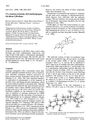 December 1998 in “Acta Crystallographica Section C-crystal Structure Communications”
 This study describes the molecular conformation and intermolecular interactions in the crystalline structure of the compound C24H31BrO4.
 October 2022 in “Journal of ophthalmology”
 This review discusses the implementation and mechanisms of photobiomodulation therapy in various medical fields, including ophthalmology, and reports no new clinical results.
 January 2016 in “International journal of advanced research in chemical sciences”
 This study developed a new spectrophotometric method to accurately measure finasteride levels in pharmaceutical formulations using a reaction with NBD-CL.