
This research found that keratin hydrogels derived from human hair may support cell viability and proliferation, indicating potential as 2D and 3D soft tissue culture scaffolds.
 21 citations
,
May 2016 in “The Cochrane library”
21 citations
,
May 2016 in “The Cochrane library” This review found that while topical minoxidil is effective for treating female pattern hair loss, finasteride showed no more effectiveness than placebo, and low-level laser therapy increased hair count but with inconsistent results.
 5 citations
,
January 2022 in “Scientific reports”
5 citations
,
January 2022 in “Scientific reports” This study identified distinct gene expression programs in keratinocytes responsible for forming hard scales and soft interscale epidermis in chickens, revealing conserved differentiation genes similar to those in human skin.
16 citations
,
February 2014 in “Iranian Red Crescent Medical Journal” This qualitative study revealed that women with PCOS often see themselves as less feminine, affected by symptoms like excess hair and irregular menstruation, which challenged their gender roles.
 4 citations
,
June 2021 in “Basic and Clinical Neuroscience Journal”
4 citations
,
June 2021 in “Basic and Clinical Neuroscience Journal” In this study, transplantation of rat hair follicle stem cells significantly improved sciatic nerve regeneration and muscle function in nerve-injured rats.
 January 2023 in “Fashion and textiles”
 This study found that hair dyed with anionic basic hair dye lost more color after shampooing compared to cationic and nonionic dyes, with alkaline shampoo increasing this effect.
 45 citations
,
February 2018 in “Journal of basic and clinical physiology and pharmacology/Journal of basic & clinical physiology & pharmacology”
45 citations
,
February 2018 in “Journal of basic and clinical physiology and pharmacology/Journal of basic & clinical physiology & pharmacology” This review summarizes the ethno-medicinal uses, phytochemical constituents, and biological activities of Acorus calamus, highlighting its potential therapeutic benefits and the importance of further scientific work on this plant.
 June 2023 in “LA Referencia (Red Federada de Repositorios Institucionales de Publicaciones Científicas)”
 Home photobiomodulation therapy can improve life quality and mobility for disabled individuals.
 December 2023 in “LA Referencia (Red Federada de Repositorios Institucionales de Publicaciones Científicas)”
 Both photobiomodulation and low-frequency treatments effectively reduce body measurements.
 March 2026 in “Journal of Clinical and Basic Psychosomatics”
 This review, sourced from expert panel discussions and literature analysis, suggests Tianmeng oral liquid may improve sleep, reduce anxiety and depression, and enhance well-being in psychosomatic disorder patients, though further research is necessary.
 January 2023 in “Book of Abstracts”
 COVID-19 can cause different types of hair loss, with telogen effluvium being the most common.
8 citations
,
October 2020 in “Stem cell research & therapy” This study found that DNMT1 promotes adipogenesis in hair follicle stem cells by regulating the miR-214-3p/MAPK1/p-ERK1/2 pathway, suggesting potential applications in stem cell therapy.
 116 citations
,
September 2020 in “Nature Communications”
116 citations
,
September 2020 in “Nature Communications” This study reports previously unrecognized cellular complexity in growing mouse incisors, suggesting species-specific differences in cell dynamics between mouse and human teeth related to growth and differentiation.
38 citations
,
January 2020 in “Cell Transplantation” This study found that ACE2 and TMPRSS2 genes were more highly expressed in tumors of elderly male cancer patients compared to healthy individuals, with notable differences across age and gender.
 8 citations
,
April 2022 in “The journal of investigative dermatology/Journal of investigative dermatology”
8 citations
,
April 2022 in “The journal of investigative dermatology/Journal of investigative dermatology” This study identified biallelic variants in the LSS gene as a possible genetic cause of palmoplantar keratoderma-congenital alopecia syndrome type 2, highlighting the role of cholesterol synthesis in skin cornification.
3 citations
,
January 2021 in “Oxidative Medicine and Cellular Longevity” In this study, Nrf-2-expressing hair follicle mesenchymal stem cells showed the most significant therapeutic effect in a rat model of ulcerative colitis, suggesting a new potential treatment for the disease.
August 2025 in “International Journal of Molecular Sciences” This study found that compounds isolated from Osmanthus fragrans var. aurantiacus demonstrated antioxidative and anti-inflammatory activities, potentially offering therapeutic benefits for inflammatory bowel diseases by inhibiting COX-2 and iNOS enzymes and blocking ERK 1/2 MAPK signaling.
 254 citations
,
September 2014 in “Menopause”
254 citations
,
September 2014 in “Menopause” The NAMS 2014 recommendations guide healthcare providers on treating health issues in midlife women, emphasizing individualized care and informed decision-making.
 21 citations
,
September 2013 in “Journal of circadian rhythms”
21 citations
,
September 2013 in “Journal of circadian rhythms” In this study, heavy nighttime physical exercise delayed the circadian phase of clock gene expression by 2 to 4 hours in a professional fighter, suggesting potential implications for managing circadian disorders.
 June 2024 in “Skin Research and Technology”
 In this study, researchers observed significant differences in microbial composition between UV-induced fluorescent and non-fluorescent scalp areas in patients with androgenetic alopecia, noting a higher abundance of Cutibacterium in the fluorescent regions.
This study identified a new gene in sheep, KRTAP36-2, discovering variants associated with wool yield. Variations in this gene were linked to the efficiency of fleece conversion from greasy to clean, which may enhance wool production.
Defective protein folding due to a mutation is key in ANE syndrome.
This study suggests that the ANE syndrome mutation in yeast Nop4, analogous to human RBM28, disrupts protein folding and protein-protein interactions, contributing to ribosomal dysfunction.
 November 2024 in “Cureus”
 In this case report, a 24-year-old male experienced severe vasoplegic shock after ingesting a large amount of minoxidil solution, requiring an unprecedented 180 hours of norepinephrine support for blood pressure maintenance, highlighting the need for extensive supportive care following minoxidil intoxication.
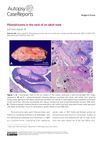 January 2022 in “Autopsy and Case Reports”
 This article describes a case of pilomatricoma in a 22-year-old male with successful surgical excision and no recurrence, highlighting its histopathological features and typical clinical presentation.
September 2021 in “Journal of the Dermatology Nurses' Association” This abstract discusses the 2021 virtual Dermatology Nurses' Association Convention, outlining key dermatological insights shared, but it presents no new research findings or clinical results.
2 citations
,
June 2024 in “Regenerative Therapy” In this study, ozone treatment was shown to increase the concentration of growth factors like EGF and TGF-β in PRP in vitro, suggesting that oxygen-rich PRP injections may provide an effective method for facial rejuvenation.
100 citations
,
December 2002 in “Journal of biological chemistry/The Journal of biological chemistry” This study identified a domain on human chromosome 21q22.1 containing various high glycine-tyrosine and high sulfur keratin-associated protein genes, revealing their diverse expression in hair-forming cells.
 90 citations
,
October 1996 in “Dermatologic Clinics”
90 citations
,
October 1996 in “Dermatologic Clinics” This study found that red ginseng oil may enhance hair growth and protect skin from UV damage in mouse models by promoting regenerative processes and reducing inflammation.
50 citations
,
February 2016 in “Journal of Investigative Dermatology” A mutation in the KRT25 gene causes a rare hair disorder with thin, woolly hair.