 13 citations
,
June 2007 in “Journal of Dermatological Science”
13 citations
,
June 2007 in “Journal of Dermatological Science” This study identified several genes regulated by dihydrotestosterone in an SV40T-transformed human dermal papilla cell line, which may play a role in androgen-mediated hair growth regulation.
421 citations
,
September 2003 in “Development” This study concluded that label-retaining cells in mouse epidermis differ in their sensitivity to proliferative stimuli, influencing their division and potential transdifferentiation without consistently depleting their population.
 April 2023 in “Journal of Investigative Dermatology”
 This study explores how chromatin differences between dermal papilla cells and papillary fibroblasts contribute to hair follicle inductivity and investigates the regulatory changes in androgenic alopecia.
 September 2023 in “Journal of The American Academy of Dermatology”
 This study aimed to describe the distribution of eyebrow and eyelash hair loss in patients with varying severities of scalp hair loss from alopecia areata but does not report results.
51 citations
,
November 1998 in “The journal of investigative dermatology/Journal of investigative dermatology” In this study, researchers found that while both beard and scalp dermal papilla cells release similar autocrine growth factors, only beard cells increased production and response with testosterone, suggesting these factors enhance androgen-induced hair growth.
 October 2005 in “Nature reviews. Molecular cell biology (Print)”
 This study suggests that the interaction between the hairless and wise proteins can help bald mice regrow fur, highlighting its essential role in hair-follicle regeneration.
 October 2023 in “Regular and Young Investigator Award Abstracts”
 This study found that Baricitinib significantly reduced hair loss and immune response in a mouse model of alopecia areata.
114 citations
,
October 2006 in “Journal of the European Academy of Dermatology and Venereology” In this study, clobetasol propionate foam demonstrated effectiveness and good patient compliance as a safe topical treatment for moderate to severe alopecia areata, with significant hair regrowth compared to placebo.
 April 2023 in “The journal of investigative dermatology/Journal of investigative dermatology”
 This study reports that CD200R expression is significantly reduced in an experimental mouse model of scarring alopecia, suggesting a potential role for this pathway in immune regulation and hair follicle protection.
 19 citations
,
October 1996 in “Dermatologic Clinics”
19 citations
,
October 1996 in “Dermatologic Clinics” This review discusses using cultured dermal papilla cells to investigate hair follicle biology, emphasizing their potential to inform treatments, but reports no new clinical results.
10 citations
,
May 2017 in “Wound Repair and Regeneration” In this study, targeted overexpression of the BMP receptor ALK2 in mouse hair follicle stem cells altered follicle structure and impaired cutaneous wound healing.
5 citations
,
May 2024 in “Developmental Cell” Lower GATA3 levels in mice help hair regrow by changing certain immune cells.
November 2022 in “Journal of Investigative Dermatology” This study generated a transcriptomic map of human hair follicle compartments, providing a database for identifying compartment-specific gene expression which may aid in developing targeted treatments for hair follicle disorders.
20 citations
,
February 2004 in “Clinical & Experimental Immunology” This study suggests that long-term treatment with the contact sensitizer SADBE in mice may reduce leucocyte traffic in alopecia areata through impaired leucocyte extravasation.
May 2003 in “Journal of clinical oncology”  54 citations
,
January 2016 in “Cell reports”
54 citations
,
January 2016 in “Cell reports” This study found that different epidermal stem cell populations contribute to the formation of various skin tumors and new hair follicles following β-catenin activation in the adult epidermis.
January 2000 in “Cambio 16” This study observed that overexpression of Bcl-2 in certain transgenic mice accelerates catagen progression and increases hair follicle apoptosis and alopecia, while Bcl-2 deficient mice show delayed hair growth and pigmentation changes.
 4 citations
,
February 2022 in “Experimental Dermatology”
4 citations
,
February 2022 in “Experimental Dermatology” This study found that mitochondrial dysfunction and higher oxidative stress in balding dermal papilla cells may contribute to androgenetic alopecia, with antioxidants potentially improving metabolite uptake.
4 citations
,
January 2025 in “The Journal of Cell Biology” This study found that deleting ceramide synthase 4 in skin epidermis stem cells disrupts hair follicle and skin barrier function, leading to immune responses similar to atopic dermatitis, due to imbalances in lipid composition affecting differentiation.
 18 citations
,
October 2012 in “Dermatologic Clinics”
18 citations
,
October 2012 in “Dermatologic Clinics” This article discusses primary cicatricial alopecias, a group of rare inflammatory scalp disorders resulting in permanent hair loss, and reports no new findings.
1 citations
,
August 2016 in “Journal of Investigative Dermatology” This study suggests that human dermal Vδ1+ γδ T-cells may contribute to alopecia areata pathogenesis by targeting stressed scalp hair follicles and inducing immune privilege collapse.
 4 citations
,
November 2016 in “Journal of Cutaneous Pathology”
4 citations
,
November 2016 in “Journal of Cutaneous Pathology” This letter discusses three plasmacytoid dendritic cell-related parameters that may help differentiate lupus alopecia from lichen planopilaris, but it reports no new study results.
 13 citations
,
September 2010 in “Journal of Dermatological Science”
13 citations
,
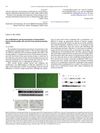
September 2010 in “Journal of Dermatological Science” Researchers made a cell line that grows quickly and can help with hair growth research.
January 2025 in “International Journal of Pharma Medicine and Biological Sciences” This study examined interactions between immune cells and dermal papilla cells in a patient with alopecia areata using single-cell RNA sequencing; it identified specific T cell subtypes and ligand-receptor pairs that may contribute to hair cycle disruption through inflammation.
 4 citations
,
August 2005 in “Archives of Dermatological Research”
4 citations
,
August 2005 in “Archives of Dermatological Research” This study detected higher expression of p63 in occipital scalp areas compared to frontal areas, with minimal changes in beta-catenin expression and a novel finding of CD34 positive cells in hair follicles' outer root sheath.
 15 citations
,
January 2014 in “Dermatology”
15 citations
,
January 2014 in “Dermatology” This case report describes alopecia universalis-like hair loss occurring in two patients with cutaneous T cell lymphoma, providing clinical, dermoscopic, and pathologic features to help differentiate it from alopecia areata universalis.
 5 citations
,
September 2015 in “BMC Medical Genetics”
5 citations
,
September 2015 in “BMC Medical Genetics” In this study, individuals with a c.1072C > T mutation in the EDAR gene showed more hair shaft deformations compared to non-mutation carriers, highlighting EDAR's role in hair follicle development.

Baricitinib helps regrow hair in teens with severe alopecia areata.
4 citations
,
January 2013 in “Stem cell discovery” This study reports the creation of a human dermal mesenchymal-like stem cell line from an androgenetic alopecia patient, which may serve as an in vitro model to explore alopecia mechanisms.