A Multi-Omics Approach to Identifying Factors Involved in Hair Follicle Growth and Development
April 2023
in “
Journal of Investigative Dermatology
”
mesenchymal hair follicle cells hair follicle growth dermal papilla cells Papillary fibroblasts chromatin level differences ATAC-seq RNA-seq transcription factors androgenic alopecia 5a-reductase androgen receptors balding scalp hair miniaturization mesenchymal niche regulation hair follicle cells hair growth DP cells PFi cells chromatin differences AGA 5-alpha reductase balding hair thinning
Studysummary This study explores how chromatin differences between dermal papilla cells and papillary fibroblasts contribute to hair follicle inductivity and investigates the regulatory changes in androgenic alopecia.
Our plain-language summary. Not medical advice or a treatment recommendation. Consult a qualified healthcare professional before changing treatment. Full disclaimer
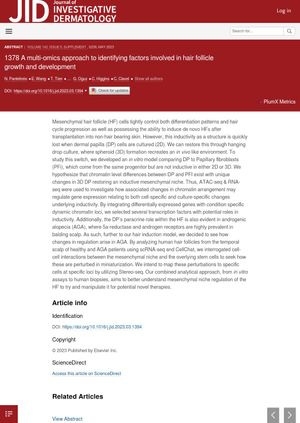
The study investigates the role of mesenchymal hair follicle (HF) cells in controlling hair growth and development. The researchers developed an in vitro model to compare dermal papilla (DP) cells and Papillary fibroblasts (PFi), hypothesizing that chromatin level differences between the two could influence hair growth. Using ATAC-seq & RNA-seq, they identified several transcription factors potentially involved in this process. The study also explored the role of DP cells in androgenic alopecia (AGA), finding that 5a-reductase and androgen receptors are prevalent in balding scalp. By analyzing human hair follicles from healthy and AGA patients, they examined cell-cell interactions and how they are affected in hair miniaturization. The ultimate goal is to better understand mesenchymal niche regulation of the HF to develop potential novel therapies for hair loss.