 April 2026 in “Nanomaterials”
 This perspective study suggests that plant-derived extracellular vesicles could advance the use of Ayurvedic medicinal plants in nanomedicine by enhancing their therapeutic potential and guiding future research.
December 2025 in “Pharmaceutics” This review highlights the potential of drug-loaded extracellular vesicles as a promising drug delivery platform but notes that clinical translation faces challenges due to variability in methods and the need for standardization and safety evaluation.
November 2025 in “Cosmetics” In this exploratory randomized controlled trial, participants using a combination of Centella asiatica-derived extracellular vesicles with recombinant growth factors showed significant improvements in hair thickness, density, length, and reduced hair loss and scalp sebum content after 56 days, compared to placebo.
 2 citations
,
December 2023 in “Advanced science”
2 citations
,
December 2023 in “Advanced science” This review discusses the roles and mechanisms of glycosaminoglycans in wound healing and presents challenges and potential applications for GAG-based biomaterials without reporting new experimental results.
1 citations
,
January 2023 in “Chemical Engineering Journal”  January 2024 in “Wiadomości Lekarskie”
 This review suggests that integrating artificial intelligence in diabetic foot management could significantly improve early diagnosis and wound healing by facilitating thermographic analysis and developing "smart dressings," though challenges in training, legal, and ethical aspects remain.
 January 2024 in “Wiadomości Lekarskie”
 This presentation will review neural networks and artificial intelligence basics, then explore their recent developments and applications in medical care, particularly in decision-making processes to enhance diagnostic accuracy and treatment strategies, ultimately improving patient outcomes in critical situations, as reported in this source.
 January 2024 in “Wiadomości Lekarskie”
 This source explores the integration of artificial intelligence in medicine, addressing critical questions about readiness among doctors and patients, regulatory measures, ethical issues, economic impact, legal considerations, and the potential replacement of physicians, based on current publications and over 40 years of professional experience.
 9 citations
,
December 2020 in “International Journal of Medical Sciences”
9 citations
,
December 2020 in “International Journal of Medical Sciences” This article reviews the development and use of induced pluripotent stem cell models and artificial organoids for studying neurodevelopmental disorders, but it reports no new clinical findings.
 93 citations
,
November 2018 in “Carbohydrate Polymers”
93 citations
,
November 2018 in “Carbohydrate Polymers” This study demonstrated that modified montmorillonites combined with bacterial cellulose enhanced antimicrobial, wound healing, and tissue regenerative activities in a burn mice model, suggesting potential as an artificial skin substitute for burn patients.
September 2025 in “International Journal of Molecular Sciences” This review examined the potential effects of Kampo medicine Hangeshashinto on oral mucositis, highlighting that several natural products in its composition may inhibit intracellular AGEs, reduce inflammation from extracellular AGEs, and suppress cytotoxicity in stomatitis.
 January 2024 in “Wiadomości Lekarskie”
 This research explores the impact of advanced technologies, such as machine learning and robotics, on cardiothoracic surgery, noting that innovations like artificial hearts and enhanced circulatory support systems may improve patient outcomes by aiding diagnostics, surgery planning, and postoperative care.
48 citations
,
March 2020 in “Stem Cell Research & Therapy” This study found that human adipose-derived stem cells co-cultured on a collagen sponge scaffold showed increased differentiation into keratinocytes, suggesting potential for improved skin wound healing.
March 2007 in “Journal of Plastic Reconstructive & Aesthetic Surgery” A new method was developed to create better skin models for healing and reconstruction.
110 citations
,
August 2011 in “Journal of Visualized Experiments” This research highlights the use of 3D human skin model reconstructs as a promising method to study human skin biology, showing that these models replicate natural melanocyte and melanoma behaviors accurately.
 February 2026 in “International Journal of Molecular Sciences”
 This paper reviews advancements in 3D human skin models using bioprinting, organoid, and organ-on-a-chip technologies, noting improvements in physiological realism through vascularization and multi-omics data, but also highlighting challenges such as cost and lack of standardization that hinder clinical adoption.
26 citations
,
October 2020 in “Biomedicines” This review discusses the applications and potential of Bioengineered Artificial Skin Substitutes in cosmetics and pharmacology research, with no new clinical findings reported.
11 citations
,
March 2023 in “Stem Cell Research & Therapy” In this study, epidermal stem cells were found to enhance blood vessel formation and support successful one-step transplantation of tissue-engineered skin in a rat model.
6 citations
,
May 2025 in “Cosmetics” This review synthesizes research on solar radiation's multifaceted effects on skin and recent advancements in sunscreen technology, including formulation, testing methods, and the use of AI, to inform future sun protection product development.
2 citations
,
December 2025 in “Nano Letters” This study developed a tannin-modified cellulose-polypyrrole dressing that accelerates wound healing by enhancing granulation tissue, optimizing collagen, and stimulating angiogenesis, while providing antibacterial protection against S. aureus and E. coli.

This study suggests that bio-nanovesicles, such as exosomes and microvesicles, may enhance skin and hair follicle regeneration by modulating key signaling pathways, potentially overcoming the limitations of conventional treatments for alopecia and chronic skin diseases.
December 2025 in “Pharmaceutics” This review highlights new perspectives in genomics and epigenomics for skin rejuvenation, comparing innovative strategies like senolytics and DNA repair modulators with classical treatments, and emphasizing the importance of tailoring therapies using individual genomic profiles for personalized anti-ageing approaches.
17 citations
,
October 2023 in “Molecules” In laboratory and artificial skin model experiments, this study found that plant-derived PDRN from Korean ginseng effectively promoted skin cell regeneration and strengthened the skin barrier, suggesting a sustainable alternative to animal-derived PDRN.

This review reports that exosome-based therapies, coupled with nanotechnology and AI, show promise in aesthetic medicine, notably in skin rejuvenation and hair restoration, but large-scale trials and clearer regulatory frameworks are needed for effective clinical adoption.
 January 2024 in “Wiadomości Lekarskie”
 This study discusses the development of AI in dermatology and cosmetology, noting its use in skin cancer diagnosis and personalized cosmetics, while highlighting uncertainties about whether recent advancements represent significant medical progress or are influenced by marketing strategies.
37 citations
,
February 2024 in “Military Medical Research” In this review, biomaterial-based mechanical strategies were highlighted for their potential to enhance skin regeneration and promote scarless repair, though a comprehensive understanding of their underlying mechanisms is still needed for broader application.
19 citations
,
September 2013 in “Molecular Medicine Reports” In this study, researchers developed a method to efficiently derive contractile smooth muscle cells from human hair follicle stem cells using TGF-β1 and PDGF-BB, which may advance vascular tissue engineering.
 December 2024 in “Cell Communication and Signaling”
 This study found that subcutaneous adipose tissue-derived extracellular vesicles (AT-EVs) protect skin from photodamage by enhancing fibroblast proliferation and reducing oxidative stress compared to those from adipose-derived stem cells.
 July 2024 in “ACS Biomaterials Science & Engineering”
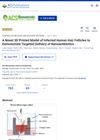
 In this study, researchers used a 3D in vitro organ culture system to show that rifampicin-loaded lipid nanocapsules can penetrate hair follicles more effectively than free rifampicin, highlighting the potential advantage of nanocarrier-based antibiotic treatments for follicular infections.
122 citations
,
April 2020 in “American Journal Of Pathology” This review discusses the multiple factors contributing to skin aging, including cellular changes and environmental influences, and highlights its recognition as a disease with significant implications beyond cosmetic concerns, without reporting new research results.