11 citations
,
July 2021 in “Genetics selection evolution” This study used whole-genome sequence data to identify numerous putative causal variants and genes affecting key wool traits and skin wrinkle in Merino sheep, highlighting their polygenic and pleiotropic nature.
January 2016 in “Journal of chemical and pharmaceutical research” The study reported that both ethanol and water extracts of pakis munding roots significantly promoted hair growth in male rabbits, showing better results than the marketed hair growth drug minoxidil.
July 2024 in “International Journal of Medical Science and Clinical Research Studies” The authors concluded that alopecia areata incognita, mainly affecting young females, generally has a more favorable prognosis than other types of alopecia areata.
 7 citations
,
March 2018 in “Asian-Australasian journal of animal sciences”
7 citations
,
March 2018 in “Asian-Australasian journal of animal sciences” This study observed that the OCIAD2 and DCN genes in Liaoning cashmere goats have opposite effects on hair growth by interacting with the TGF-β signaling pathway, influencing follicle morphogenesis and periodic changes.
24 citations
,
July 1994 in “Journal of Investigative Dermatology”  2 citations
,
June 2021 in “Immunopathologia Persa”
2 citations
,
June 2021 in “Immunopathologia Persa” This study observed that among Iranian patients with rheumatoid arthritis, methotrexate treatment was discontinued or reduced in nearly half of the cases due to side effects such as nausea, flu-like symptoms, hepatotoxicity, and hair loss, with hepatotoxicity linked to higher doses and longer treatment duration.
 October 2023 in “Al-Kauniyah”
 In this study of gibbons at the Tegal Alur Animal Rescue Center, researchers found that while the feeding schedule met natural requirements, the gibbons' body weights were lower compared to their counterparts in the wild, and some exhibited hair loss and depigmentation.
8 citations
,
July 1997 in “Archives of Gerontology and Geriatrics”  July 2025 in “Jurnal Farmasi Sains dan Praktis”
 This study found that breast cancer patients treated with the docetaxel-doxorubicin regimen experienced various adverse drug reactions, with nausea being the most common and mainly mild in severity.
 1 citations
,
September 2023 in “Journal of the American Academy of Dermatology”
1 citations
,
September 2023 in “Journal of the American Academy of Dermatology” This abstract introduces baricitinib as an approved treatment for adults with severe alopecia areata in the US, Europe, and Japan, but does not report any specific study results or findings.
April 2015 in “The FASEB Journal” In this study, NM exposure in mouse skin disrupted pilosebaceous units, initially decreasing markers of sebum production and cellular division, but showed signs of healing and marker recovery by day five.
 2 citations
,
January 2018 in “DOAJ (DOAJ: Directory of Open Access Journals)”
2 citations
,
January 2018 in “DOAJ (DOAJ: Directory of Open Access Journals)” In this study on Iranian patients with non-scarring alopecia, researchers found that androgenetic alopecia was the most common subtype, with perifollicular inflammation observed more in males. They reported that transverse sectioning is generally sufficient for diagnosis, but combining with vertical sectioning provides more comprehensive information.
 February 2025 in “Intisari Sains Medis”
 This article explores the potential mechanisms by which polydeoxyribonucleotide (PDRN) could improve skin quality, slow aging, and enhance skin regeneration, but reports no new clinical findings.
76 citations
,
January 1998 in “Mammalian Genome”  January 2021 in “Research Square (Research Square)”
 This study found that Wan strain Angora rabbits with high wool production exhibited higher hair follicle density and identified long noncoding RNAs that may regulate this trait.
 January 2024 in “Clinical and Experimental Dermatology”
 In this study, baricitinib treatment over an average of 18.5 months resulted in a 72% reduction in alopecia severity scores among patients aged 65 or older, with mild adverse effects and no severe complications reported.
 53 citations
,
January 2014 in “Journal of Cutaneous and Aesthetic Surgery”
53 citations
,
January 2014 in “Journal of Cutaneous and Aesthetic Surgery” Microneedling combined with triamcinolone can safely stimulate faster hair regrowth in people with Alopecia Areata.
 184 citations
,
February 2015 in “EBioMedicine”
184 citations
,
February 2015 in “EBioMedicine” This study observed that baricitinib treatment led to significant improvement in a patient's alopecia areata symptoms and suggests further clinical trials to explore its potential as a treatment.
11 citations
,
February 2022 in “JAAD case reports” This case report observed hair regrowth following the treatment of alopecia universalis and atopic dermatitis with tofacitinib, a JAK inhibitor.
 November 2024 in “EMJ Dermatology”
 In clinical studies, inhibiting androgen receptor expression using CosmeRNA ARI SAMiRNA micelles effectively treated androgenetic alopecia by significantly increasing hair growth, as reported in this research.
 July 2012 in “Medical Hypotheses”
 Artemis dysfunction might cause hair loss through telomere shortening.
 7 citations
,
June 2022 in “Czech Journal of Animal Science”
7 citations
,
June 2022 in “Czech Journal of Animal Science” This study identified 21 novel circular RNAs in cashmere goats, with nine significantly more expressed during the anagen phase of hair follicle growth, suggesting roles in hair regeneration and cashmere yield enhancement.
 17 citations
,
April 2015 in “Tropical Journal of Pharmaceutical Research”
17 citations
,
April 2015 in “Tropical Journal of Pharmaceutical Research” This review highlights the traditional use and potential therapeutic activities of Asiasari Radix in drug discovery, but it reports no new clinical results.
This study found that sarcoptic mange significantly decreased vicuña and guanaco populations in San Guillermo National Park, Argentina, likely originating from mange-infected llama introduced nearby, raising the risk of local extinction.
38 citations
,
September 2017 in “Journal of zoo and wildlife medicine” This study describes the successful management of Andean bear alopecia syndrome in three female bears using oclacitinib, leading to rapid pruritus resolution and fur regrowth without adverse effects.
 18 citations
,
April 2001 in “Bioorganic & Medicinal Chemistry Letters”
18 citations
,
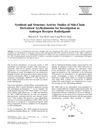
April 2001 in “Bioorganic & Medicinal Chemistry Letters” This study identified the N-(iodopropenyl) derivative 13 as a promising candidate for development as a radioiodinated androgen receptor ligand due to its binding affinity.
6 citations
,
July 1994 in “Journal of Dermatological Science” This study found that introducing the recombinant rat OTC gene into SPF-ASH mice restored normal hair growth and metabolic function, improving symptoms associated with OTC deficiency.
 211 citations
,
May 2013 in “Journal of Nutrition Health & Aging”
211 citations
,
May 2013 in “Journal of Nutrition Health & Aging” This study found that while MK-0773 significantly increased lean body mass in sarcopenic frail elderly women, it did not significantly improve muscle strength or physical function compared to placebo.
 66 citations
,
January 2001 in “Vitamins and hormones”
66 citations
,
January 2001 in “Vitamins and hormones” This chapter reviews the role of androgen receptors in mediating the actions of androgens in specific tissues and provides no new experimental findings.
 September 2025 in “Intisari Sains Medis”
 This case report from this study demonstrates the potential of treating severe alopecia areata with a combination of microneedling, minoxidil, desoximetasone, and methylprednisolone, noting initial hair regrowth after 14 days but emphasizing the need for further research to confirm long-term efficacy and safety.