 1 citations
,
January 2019 in “Journal of Embryology & Stem Cell Research”
1 citations
,
January 2019 in “Journal of Embryology & Stem Cell Research” This review discusses mesenchymal stem cells' role in tissue regeneration and skin anti-aging, highlighting their migration to damaged sites and secretome effects, but reports no new clinical results.
 April 2026 in “Brazilian Journal of Hair Health”
 This narrative review highlights current insights into how perifollicular fibrosis contributes to androgenetic alopecia, by hindering hair regrowth and treatment response, and outlines potential antifibrotic therapies, though conclusive evidence from randomized controlled trials is still needed.
 3 citations
,
January 2016 in “Annals of Dermatology”
3 citations
,
January 2016 in “Annals of Dermatology” This article discusses the multifactorial nature of acne, including its association with follicular hyperkeratosis, sebaceous lipids, Propionibacterium acnes, and perifollicular inflammation, but reports no new clinical findings.
This study found that coconut oil with turmeric is less effective than 2% ketoconazole shampoo at reducing itching, hair loss, and dandruff scales in adults with dandruff.
 119 citations
,
January 2012 in “Nutrition & Metabolism”
119 citations
,
January 2012 in “Nutrition & Metabolism” This article suggests that modern lifestyle changes, including diet, stress, and chronic anti-inflammatory medication use, may disrupt the natural process of inflammation resolution, increasing vulnerability to chronic disease.
4 citations
,
January 2019 in “Evidence-based Complementary and Alternative Medicine” This study found that the Yangyin Qingre Huoxue Prescription effectively reduced the progression of atherosclerosis in mice, with lipid-regulating and anti-inflammatory functions and lower hepatotoxicity than simvastatin.
1 citations
,
March 2022 in “Applied Sciences” This study found that fermented red ginseng marc alleviated atopic dermatitis-like symptoms in mice, demonstrating antioxidant and anti-inflammatory effects similar to those of dexamethasone.
June 2026 in “Immunity Inflammation and Disease” In this study, researchers observed that dandruff involves altered keratinocyte activity and a low-grade inflammatory response characterized by increased interleukin-17-producing T-cells and CCL17 levels, but without significant changes in immune cell populations or skin barrier lipids.
118 citations
,
April 2020 in “Stem Cell Research & Therapy” This study found that adipose-derived mesenchymal stromal cell secretome, particularly when preconditioned with IFNγ, significantly influences cell motility and anti-inflammatory responses, enhancing its potential as a regenerative therapy.
7 citations
,
June 2025 in “Nano Energy” This study reports that triboelectro-responsive DNA hydrogels, enhanced with conductive polymers and triboelectric stimulation, effectively accelerate wound healing and exhibit strong anti-bacterial and anti-inflammatory properties, achieving 99.8% closure of bacterium-infected diabetic wounds in 14 days.
 33 citations
,
October 2013 in “Journal of The American Academy of Dermatology”
33 citations
,
October 2013 in “Journal of The American Academy of Dermatology” In this study, pioglitazone treatment in patients with lichen planopilaris showed limited success, with significant improvement seen in only a minority of cases.
 434 citations
,
October 2003 in “PTR. Phytotherapy research/Phytotherapy research”
434 citations
,
October 2003 in “PTR. Phytotherapy research/Phytotherapy research” This review discusses the use of natural products in cosmetic preparations for skin and hair care, but reports no new research results.
9 citations
,
June 2021 in “Journal of Inflammation Research” This study found that Euph E and Euri A showed strong anti-inflammatory activity and modulated cytokine and immune functions in macrophages, related to specific signaling pathways.
2 citations
,
July 2022 in “The Kaohsiung Journal of Medical Sciences” This study demonstrated that the immunomodulatory drug FTY720 may enhance the survival of allogeneic fat grafts in mice by reducing immune rejection and improving neovascularization.
November 2025 in “OPAL (Open@LaTrobe) (La Trobe University)” In this study, researchers developed a hierarchically engineered microreactor that effectively combats infected wounds by releasing antimicrobials at acidic sites, eradicating MRSA while avoiding resistance, and enhancing tissue repair through immune system modulation.
 252 citations
,
April 2009 in “Seminars in Cell & Developmental Biology”
252 citations
,
April 2009 in “Seminars in Cell & Developmental Biology” This review discusses the complex role of the immune system in tissue repair and regeneration, highlighting its positive and negative influences but reports no new clinical findings.
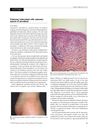 9 citations
,
July 2002 in “Journal of the European Academy of Dermatology and Venereology”
9 citations
,
July 2002 in “Journal of the European Academy of Dermatology and Venereology” This article discusses multiple minute digitate hyperkeratosis in a dermatological context and reports no new clinical findings; the authors focus on a descriptive review.

This review examines cepharanthine's antiviral potential against COVID-19 and finds no clinical results yet; it highlights cepharanthine as a potent inhibitor of coronavirus in preclinical models.
3 citations
,
January 2021 in “Oxidative Medicine and Cellular Longevity” In this study, Nrf-2-expressing hair follicle mesenchymal stem cells showed the most significant therapeutic effect in a rat model of ulcerative colitis, suggesting a new potential treatment for the disease.
2 citations
,
June 2025 in “Molecules” This review highlights that extracts from *Hamamelis virginiana* (witch hazel) exhibit antimicrobial, anti-inflammatory, antioxidant, and wound-healing properties in various studies, showing promise for future therapeutic use in dermatology and cosmetology, particularly for skin treatments.
 1 citations
,
June 2023 in “Cells”
1 citations
,
June 2023 in “Cells” This review highlights exosomes as a promising treatment for skin damage from UV light, infrared radiation, burns, and disorders due to their anti-inflammatory properties, ability to induce macrophage polarization, and acceleration of skin repair and regeneration.
 November 2025 in “Frontiers in Pharmacology”
 In this study, researchers found that gentamicin-loaded exosomes derived from a bovine leukocyte spleen extract significantly enhanced antimicrobial activity and tissue regeneration in infected diabetic wounds, showing potential as an effective therapeutic strategy for diabetic foot ulcers by improving infection control and promoting healing.
November 2025 in “OPAL (Open@LaTrobe) (La Trobe University)” This study found that gentamicin-loaded exosomes derived from bovine leukocyte spleen extract enhanced antimicrobial activity and promoted tissue regeneration in infected diabetic mouse wounds, suggesting a potential innovative therapeutic strategy for diabetic foot ulcers by combining infection control with pro-regenerative and immunomodulatory effects.
November 2025 in “OPAL (Open@LaTrobe) (La Trobe University)” In this study, gentamicin-loaded exosomes from a bovine leukocyte spleen extract were found to enhance tissue regeneration and antimicrobial activity, offering a promising therapeutic approach for infected diabetic foot ulcers by promoting wound healing and modulating inflammation in a diabetic mouse model.
 April 2024 in “Frontiers in cellular and infection microbiology”
 This review highlights evidence supporting the potential of blue light therapy as a non-invasive treatment for managing skin and hair conditions by modulating interactions between the skin microbiome and its host.
 February 2024 in “Journal of dermatology”
 In this case report, a 36-year-old woman with systemic lupus erythematosus and alopecia related to discoid lupus erythematosus showed hair regrowth following treatment with concentrated growth factor, suggesting its potential as a cosmetic therapy for DLE.
 120 citations
,
April 2009 in “Food Chemistry”
120 citations
,
April 2009 in “Food Chemistry” This review examines the pharmacological evidence and bioactive compounds in Hibiscus plants, supporting their potential importance for developing treatments for chronic and degenerative diseases, though more research is needed.
40 citations
,
January 2013 in “Clinical Cosmetic and Investigational Dermatology” In this study, niacinamide 4% and desonide 0.05% emulsions significantly improved axillary hyperpigmentation in women, with desonide demonstrating a superior depigmenting effect compared to niacinamide and placebo.
 14 citations
,
December 2010 in “Dermatologica Sinica”
14 citations
,
December 2010 in “Dermatologica Sinica” This article reviews recent advances and therapeutic approaches in treating alopecia areata, highlighting new potential treatments like pulse corticosteroid therapy, but reports no new research findings.
5 citations
,
January 2024 in “Advances in Pharmacological and Pharmaceutical Sciences” This review explored the biological properties of Punica granatum, noting its antioxidant, anti-inflammatory, and antimicrobial activities, and highlighted its potential as a therapeutic agent for various conditions; however, more extensive clinical trials are needed to confirm its effectiveness and safety.