 2 citations
,
August 2011 in “Revista Medica De Chile”
2 citations
,
August 2011 in “Revista Medica De Chile” This case report describes a woman with virilization syndrome who experienced a reduction in androgen levels and reversal of alopecia after removal of a Leydig cell tumor from her ovary.
8 citations
,
December 1997 in “International Journal of Dermatology” This case report describes a 30-year-old man's scleroderma-like skin changes and segmental thrombosis in the left leg, along with elevated blood sugar and advised weight management and limb care.
 March 2017 in “BIRDEM Medical Journal”
 This report discusses two cases of sarcoidosis with cutaneous manifestations that posed a diagnostic challenge, without presenting new clinical results.
 42 citations
,
April 2012 in “Seminars in Oncology”
42 citations
,
April 2012 in “Seminars in Oncology” This review discusses the skin side effects associated with targeted cancer therapies and reports no new clinical results; it emphasizes the need for empirical management based on expert opinion.
 October 2023 in “Clinical case reports”
 This case study reports the first Palestinian case of an ovarian steroid cell tumor with virilization in a young female, highlighting the challenges in diagnosis and varied chemotherapeutic responses.
January 2017 in “Anais do 5º Encontro Brasileiro para Inovação Terapêutica” This study found that Dysphania ambrosioides oil exhibited cytotoxicity against U-937 lymphoma cells, indicating potential activity that warrants further investigation.
 2 citations
,
May 2012 in “Annals of Oncology”
2 citations
,
May 2012 in “Annals of Oncology” This study found that patients with ovarian metastases from breast cancer had a better prognosis after tumor debulking if they exhibited high estrogen and progesterone receptor expression in both the primary tumor and metastases.
 4 citations
,
December 2019 in “Minerva Urology and Nephrology”
4 citations
,
December 2019 in “Minerva Urology and Nephrology” This study found that patients with non-muscle invasive bladder cancer who were treated with 5-alpha reductase inhibitors had lower recurrence rates and higher recurrence-free survival rates compared to untreated patients.
1 citations
,
March 2022 in “Frontiers in Medicine” This case report highlights a rare instance of esophageal carcinoma in a patient with Cronkhite-Canada syndrome, emphasizing the importance of endoscopic surveillance for malignant gastrointestinal tumors in these patients.
 December 2021 in “Research Square (Research Square)”
 In this study, high expression of S100A4 in glioblastoma was associated with worse patient survival and promoted tumor progression by enhancing pro-tumorigenic vascular functions.
January 2011 in “Junshi yixue” This study established a murine chronic graft-versus-host disease model with scleroderma features, showing typical skin changes and cellular infiltrates associated with the condition.
 April 2020 in “Journal of the Endocrine Society”
 This case report describes a 58-year-old woman whose virilization symptoms were linked to a steroid tumor of the ovary, emphasizing the importance of prompt diagnosis and treatment to improve her quality of life.
August 2026 in “Cancer Science” In this study, researchers observed that nestin-expressing cells in mice can differentiate into blood-vessel-like and nerve-like structures within human melanoma tumors, while bevacizumab treatment altered the origin of these structures to trans-differentiated melanoma cells without significantly impacting tumor growth.
 January 2016 in “대한피부과학회지”
 This case report describes two patients experiencing a bortezomib-induced skin eruption as multiple plaques on the trunk, with the lesions resolving spontaneously in about a week.
 68 citations
,
September 2003 in “British Journal of Dermatology”
68 citations
,
September 2003 in “British Journal of Dermatology” This study found that in thin cutaneous melanomas, tumor regression is associated with a higher risk of sentinel lymph node involvement.
 May 2025 in “The Journal of Rheumatology”
 This case report highlights a rare instance of diffuse alveolar hemorrhage in a patient with catastrophic antiphospholipid syndrome, emphasizing the importance of early recognition and multidisciplinary management.
 2 citations
,
November 2017 in “Journal of Endocrinological Investigation”
2 citations
,
November 2017 in “Journal of Endocrinological Investigation” The painting of an 18th-century Sicilian baroness shows she had hair loss, possibly due to ovarian issues, insulin resistance, or a specific type of tumor.

This article discusses the causes and experiences of alopecia due to cancer treatment and provides no new clinical findings; it emphasizes the cosmetic and emotional impact of hair loss.
1 citations
,
March 2023 in “Medicine” This study found that albumin-bound paclitaxel combined with nedaplatin shows promise as neoadjuvant therapy for esophageal squamous cell carcinoma, achieving a high complete response rate with manageable side effects.
4 citations
,
December 2023 in “Medicine” This study found that the genes MYLK and CALD1 were expressed at lower levels in bladder cancer and osteosarcoma tissues compared to normal tissues, and their expression levels appeared to correlate with poorer survival outcomes, suggesting they may be important in disease progression and prognosis.
January 2020 in “International Journal of Trichology” This case study reported two instances of female androgenetic alopecia with male pattern reversed after surgical removal of an ovarian tumor.
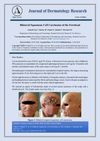
A 70-year-old man with skin cancer on both sides of his forehead was treated with surgery and cryotherapy, highlighting the need for early detection and prevention.
5 citations
,
May 2022 in “Lara D. Veeken” This study reports the first case of diverse medium-sized visceral arterial aneurysms in a patient with functionally impaired A20, potentially linked to HA20, and its atypical presentation in East Asia.
11 citations
,
August 2017 in “Supportive care in cancer” This study highlights the significant impact of eyebrow and eyelash loss during chemotherapy on women's quality of life, noting both emotional and physical challenges.
 June 2018 in “Surgical Case Reports”
 S-1 treatment led to a complete response in pancreatic cancer with manageable side effects.

This report describes a complex case of postmenopausal hyperandrogenism with virilization and concurrent rare ovarian tumors, highlighting the critical role of interdisciplinary collaboration in diagnosing and managing such challenging scenarios.
9 citations
,
October 2015 in “Cutaneous and ocular toxicology” This case report observed vemurafenib-induced pityriasis amiantacea, a scalp scaling reaction, in a patient with metastatic melanoma, which was managed symptomatically without altering vemurafenib treatment.
January 1975 in “NJEA Review” This Phase II study found that BAY 43-9006, given at 400 mg orally twice daily, led to stable disease in 30% and tumor reduction in 40% of renal cell carcinoma patients.
April 2019 in “Journal of the Endocrine Society” This case study highlights the importance of considering broad causes when evaluating hot flashes in middle-aged men, as it detailed a pituitary macroadenoma causing secondary hypogonadism in a man presenting with such symptoms.
 2 citations
,
April 2018 in “Journal of Investigative Dermatology”
2 citations
,
April 2018 in “Journal of Investigative Dermatology” This case study in a renal transplant patient observed that eruptive KA-type SCCs exhibited aggressive behavior and genetic expression changes following intralesional chemotherapy, indicating potential caution against routine use of such treatments in similar cases.