
In this study, the researchers reported that the optimized compound 39 demonstrated potent AR antagonism and favorable pharmacokinetics in a hair-growth mouse model, achieving similar efficacy to pyrilutamide with faster onset and preserved safety, offering promise for next-generation topical AR antagonist development.
4 citations
,
May 2023 in “Cells” In this study, baricitinib treatment improved the differentiation of skin-derived precursors into adipocytes for diseases like Hutchinson-Gilford progeria syndrome, suggesting potential benefits when combined with lonafarnib.
4 citations
,
January 2025 in “Dermatologica Sinica” This consensus from the Taiwanese Dermatological Association suggests that for mild to moderate alopecia areata, first-line treatments may include topical or intralesional corticosteroids, possibly with topical minoxidil, while severe cases might require systemic corticosteroids or Janus kinase inhibitors.
21 citations
,
September 2019 in “International Journal of Nanomedicine” RADA16-I can effectively deliver and release mangiferin, improving its solubility and bioavailability.
13 citations
,
January 2024 in “Journal of Nanobiotechnology” This research reported that a newly developed adhesive wound dressing (SIS/PAA/LAP) demonstrated higher tissue adhesion and burst strength compared to conventional products, and improved tissue repair outcomes in animal models, suggesting potential for enhanced wound healing applications.
21 citations
,
October 2023 in “Journal of Dermatological Treatment” The abstract provides a brief mention of alopecia areata (AA) being a chronic immune-mediated disorder causing non-scarring hair loss, but specific study results or findings relating to this are not reported.
 3 citations
,
February 2022 in “Frontiers in Genetics”
3 citations
,
February 2022 in “Frontiers in Genetics” This study found that overexpression of the lncRNA AC010789.1 in hair follicle stem cells may suppress androgen alopecia progression by modulating several molecular pathways, suggesting a potential new treatment strategy.
 October 2022 in “ACS Applied Materials & Interfaces”
 This study reports that the newly developed SA-Ca(II) hydrogel has tunable mechanical properties, high biocompatibility, and potential applications in wearable protections and stimuli-responsive electronics.
June 2020 in “Zenodo (CERN European Organization for Nuclear Research)” This study suggests that the DNMT3B -579 G>T polymorphism may be a genetic risk factor for colorectal cancer in the Azerbaijani population.
April 2017 in “bioRxiv (Cold Spring Harbor Laboratory)” This study introduced the dual-flow-RootChip platform to demonstrate that Arabidopsis roots exhibit non-autonomous adaptations, such as hair growth regulation, when subjected to varied environmental conditions on opposite sides.
10 citations
,
August 2024 in “Chemical Engineering Journal” This study found that a microenvironment-responsive ATAN-Met hydrogel system improved infective diabetic wound healing by enhancing re-epithelialization, neurovascular and hair follicle regeneration, and exhibited antibacterial and immunoregulatory effects, activated beneficial pathways, and responded to glucose/ROS for drug release.
 May 2025 in “Journal of Nanobiotechnology”
 This study reported that an ATRA-loaded nanostructured lipid carrier gel (ATRA-NLC-Gel) improved symptoms of alopecia areata in mice by enhancing transdermal drug delivery, reducing skin irritation, and promoting hair regrowth through targeted follicle enrichment and pathway activation.
September 2025 in “Jurnal Penelitian Pendidikan IPA” In this study, researchers identified two significant genetic polymorphisms in the 3'-UTR of the HSP70 gene in Moa buffalo, which may play an important role in heat adaptation, providing insights for conservation and performance improvement in tropical climates.
 24 citations
,
April 2007 in “European Journal of Pharmaceutics and Biopharmaceutics”
24 citations
,
April 2007 in “European Journal of Pharmaceutics and Biopharmaceutics” This study found that artocarpin delivered via alginate/chitosan microparticles effectively suppressed the growth of hamster flank organs compared to artocarpin in solution form, without significant systemic effects.
 40 citations
,
January 2017 in “Intestinal Research”
40 citations
,
January 2017 in “Intestinal Research” This study found that among Japanese IBD patients, the NUDT15 p.Arg139Cys variant was significantly associated with thiopurine-induced leukopenia and severe hair loss, suggesting its genotyping is important for predicting these adverse events.
August 2021 in “The journal of investigative dermatology/Journal of investigative dermatology” This article reviews current treatments for alopecia areata, discussing the potential role of JAK inhibitors and noting the need for further clinical trials, but it reports no new results.
April 2011 in “The FASEB Journal” This research found that prolonged doses of Amlodipine at 5mg/kg BW or higher impaired fertility indicators in adult male rats, affecting sperm morphology, count, and motility.
50 citations
,
December 2017 in “Nanoscale” This study found that polymeric micelle formulations significantly improved the targeted delivery of adapalene to hair follicles compared to standard Differin® products, which suggests potential advantages in treating hair follicle-related conditions and reducing side effects.
 1 citations
,
May 2025 in “Frontiers in Medicine”
1 citations
,
May 2025 in “Frontiers in Medicine” In this case series, dual-targeted therapy was observed to provide promising clinical responses in refractory inflammatory bowel disease, with 88.23% to 100% response rates across 9 months and an endoscopic response in 88.89% of evaluated patients, though some adverse events occurred.
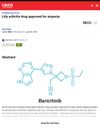 June 2022 in “C&EN global enterprise”
 This source notes that Olumiant (baricitinib), a rheumatoid arthritis drug by Eli Lilly and Company, has been approved as the first systemic treatment for severe alopecia areata.
 1 citations
,
April 2017 in “Journal of Investigative Dermatology”
1 citations
,
April 2017 in “Journal of Investigative Dermatology” This study found that the novel IPC analog SIG-1451 may inhibit inflammatory cytokine release in cell-based assays relevant to allergic dermatitis.
4 citations
,
October 2021 in “Journal of Clinical Medicine” This study found that individuals with heterozygous truncation-type variants in the *DSP* gene exhibit lower skin temperature and higher transepidermal water loss, with specific microscopic skin changes and pseudomonilethrix.
71 citations
,
May 2024 in “New England Journal of Medicine” This study investigated the impact of the JAK inhibitor ruxolitinib on APS-1 patients, reporting that treatment decreased excessive T-cell-derived interferon-γ, normalized inflammatory markers, and led to remission of several autoimmune symptoms without serious adverse effects.
12 citations
,
July 2016 in “Journal of dermatology” This study found that intramuscular triamcinolone acetonide may be an effective and safe treatment option for managing refractory alopecia areata, showing a 63% response rate in patients and hair regrowth negatively correlated with initial scalp involvement.
 1 citations
,
September 2023 in “Dermatology and Therapy”
1 citations
,
September 2023 in “Dermatology and Therapy” In this phase 3 trial analysis, baricitinib improved scalp hair growth in adults with severe alopecia areata, with a faster and higher response in those receiving 4 mg compared to 2 mg, but response varied with severity at baseline and continued through week 52.
18 citations
,
June 2017 in “Oncotarget” This study found that digoxin treatment was significantly associated with anemia adverse reactions in patients with atrial fibrillation and heart failure, suggesting a need for caution in its clinical use.
January 2026 in “Clinical and Experimental Dermatology” In this case report, complete hair regrowth was observed in a patient with autoimmune-related alopecia areata after treatment with a Janus kinase inhibitor, suggesting its potential effectiveness for both genetic and sporadic forms of the condition.
 September 2017 in “The journal of investigative dermatology/Journal of investigative dermatology”
 This study found that orally administering the CCR5 inhibitor Maraviroc improved hair loss in 4 out of 5 mice with alopecia areata and also reduced the development of the condition, evidenced by decreased CCR5+ T-cell infiltration in treated mice.
14 citations
,
March 2025 in “Nano Today” The hydrogel dressing speeds up and improves diabetic wound healing.
February 2020 in “Oncology Times” This article reviews antibody drug conjugates for cancer treatment, describing their mechanism, recent approvals, and ongoing research efforts, but reports no new clinical results.