 16 citations
,
July 2000 in “Dermatologic surgery”
16 citations
,
July 2000 in “Dermatologic surgery” This paper contains author contact information and disclosures without reporting new research findings or results.

This study found that follicular unit extraction can be safely performed without bupivacaine and nerve blocks, using lignocaine with adrenaline as an effective anesthetic for patients with certain grades of androgenetic alopecia.
 July 2026 in “Advanced Healthcare Materials”
 This study developed ultrasound-responsive sutures that generate reactive oxygen species to kill bacteria without antibiotics, showing over 80% bacterial reduction and promoting healing in a rat model, though more validation is needed.
December 2022 in “Ecological Chemistry and Engineering S” This study synthesized indole-acenaphthylene compounds using a magnetic nanocatalyst and explored their photoluminescence properties for detecting copper ions in a mixed solvent system, achieving a detection limit of 9.5 ∙ 10 –6 M.
13 citations
,
January 2024 in “Journal of Nanobiotechnology” This research reported that a newly developed adhesive wound dressing (SIS/PAA/LAP) demonstrated higher tissue adhesion and burst strength compared to conventional products, and improved tissue repair outcomes in animal models, suggesting potential for enhanced wound healing applications.
 May 2025 in “The Journal of Rheumatology”
 In this case report, two patients with polyautoimmunity and difficult-to-treat lupus erythematosus experienced significant symptom improvement after adding anifrolumab to their regimen, suggesting its potential as an effective add-on therapy for refractory cutaneous symptoms in autoimmune conditions characterized by elevated interferon alpha activity.
 83 citations
,
June 2020 in “Materials & Design”
83 citations
,
June 2020 in “Materials & Design” In this study, ACF sponges with 10% fucoidan significantly promoted wound healing and hair follicle regeneration in rats, showing improved hemostatic and antibacterial performance compared to other formulations.
 September 2024 in “Journal of the American Academy of Dermatology”
 This study highlights the limited knowledge about using iron infusions to treat alopecia in patients intolerant to oral iron, suggesting a need for further research.
7 citations
,
December 2024 in “Journal of Functional Biomaterials” This review discusses the role of advanced platelet-rich fibrin (A-PRF) in oral and maxillofacial surgery, highlighting its potential benefits for healing, pain relief, and graft integration, with a need for more clinical trials to confirm long-term effects.
 October 2020 in “International Journal of Medical Arts (Print)”
 This study found that for anterior cervical discectomy fusion in patients with degenerative cervical disc disease, the PEEK cage resulted in greater pain reduction, while the dynamic cervical implant maintained a slightly better range of motion.
 4 citations
,
April 2024 in “Cellular and Molecular Biology”
4 citations
,
April 2024 in “Cellular and Molecular Biology” In this study, injectable platelet-rich fibrin (i-PRF) was found to enhance the proliferative, migratory, and hair-inducing abilities of dermal papilla cells more effectively than platelet-rich plasma through the TGF-β/Smad pathway.
 March 2026 in “Collagen and Leather”
 This study found that a newly developed supramolecular FPC hydrogel effectively promotes wound healing through its anti-inflammatory and angiogenic properties, making it a promising material for wilderness first aid due to its storage convenience, sprayability, and ability to speed up wound recovery.
June 2022 in “International Journal of Research in Dermatology” This study found that injectable platelet-rich fibrin significantly improved hair growth and patient satisfaction as a cost-effective adjuvant treatment for androgenetic alopecia.

This case study reports a rare instance of both alopecia areata and fixed drug eruption occurring in the same area on a 40-year-old man's beard, triggered by oral paracetamol, highlighting potential shared pathogenic pathways and the isotopic phenomenon.
 41 citations
,
December 2008 in “Current Opinion in Ophthalmology”
41 citations
,
December 2008 in “Current Opinion in Ophthalmology” This review describes techniques to manage intraoperative floppy iris syndrome linked to alpha-1 blocker use in cataract surgery, highlighting the need for patient disclosure of medication use but reports no new clinical results.
June 2026 in “Frontiers in Medicine” This study evaluated the 308-nm excimer laser as an adjuvant treatment for frontal fibrosing alopecia and found it may stabilize hairline recession and improve erythema and perifollicular hyperkeratosis, with transient erythema as the only reported adverse effect.
This case report describes how anifrolumab, used beyond trial-eligible populations, led to significant clinical and serological recovery in a 45-year-old woman with organ-threatening systemic lupus erythematosus complicated by infection and resistant to conventional treatments like cyclophosphamide and rituximab.
 41 citations
,
December 2015 in “JAMA Dermatology”
41 citations
,
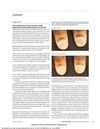
December 2015 in “JAMA Dermatology” Tofacitinib citrate improved nail dystrophy and pain in patients with alopecia universalis without causing side effects.
 September 2024 in “Skin Appendage Disorders”
 This case report describes a 21-year-old woman with circumscribed alopecia areata incognita, who experienced a sustained positive response to treatment with oral tofacitinib after conventional treatments frequently failed to provide lasting effects.
April 2016 in “The journal of investigative dermatology/Journal of investigative dermatology” This study demonstrated that the Alopecia Areata Disease Activity Index (ALADIN), a new biomarker, strongly correlates with treatment response in patients using JAK inhibitors for alopecia areata.
 July 2020 in “CRS 2020 Virtual Annual Meeting”
 This study found that the newly developed microarray patches for intradermal delivery of finasteride showed high drug content and significantly improved skin deposition compared to existing methods.

This study found that finite element analysis-guided design improved bubble microneedles' controlled tip separation and insertion strength, supporting effective transdermal and sublingual drug delivery.
October 2024 in “International Journal of Pharmaceutics” This study aimed to develop a new transdermal patch for treating androgenetic alopecia using finasteride, combined with chemical permeation enhancers to improve drug delivery through the skin, but results of pharmacokinetics and pharmacodynamics evaluations are not reported.
28 citations
,
September 2002 in “The Journal of Comparative Neurology” This study found that presynaptic inhibition of Aαβ cutaneous primary afferents in cats is mostly mediated by GABAergic interneurons that also contain glycine.

This study reports that in a rat model of myocardial infarction, Zn-Cu ion sequential therapy improved cardiac function and cardiomyocyte metabolic activity by precisely regulating ion concentrations and maintaining elevated levels of the Per2 protein, important for cellular repair.
 January 2024 in “Wiadomości Lekarskie”
 This research by Dr. Lester Fehmi suggests that exercises to shift attention from focused to dispersed may enhance alpha wave synchronization in the brain, potentially reducing pain perception.
 44 citations
,
October 2017 in “Scientific Reports”
44 citations
,
October 2017 in “Scientific Reports” This study found that far-infrared radiation preconditioning significantly enhanced the proliferation, survival, and migration of bone marrow-derived stem cells in vitro, indicating potential therapeutic benefits for cardiac ischemia treatment.
 17 citations
,
April 2017 in “International Journal of Biological Macromolecules”
17 citations
,
April 2017 in “International Journal of Biological Macromolecules” This study found that alginate beads containing monoolein demonstrated promising potential for managing wet wounds by better absorbing excess exudate and delivering adenosine locally, favoring drug localization in damaged porcine skin compared to an aqueous solution without affecting skin viability.
June 2026 in “Journal of Pharmaceutical Innovation”  9 citations
,
March 2024 in “Journal of Biomaterials Applications”
9 citations
,
March 2024 in “Journal of Biomaterials Applications” This study developed dissolving microneedles using specific polymers for transdermal delivery of rizatriptan benzoate, demonstrating improved drug skin penetration and significant alleviation of migraine symptoms in vivo compared to passive diffusion, suggesting potential advantages over conventional treatment methods for acute migraine.