 February 2010 in “Journal of The American Academy of Dermatology”
 A woman with Degos disease managed her condition for nine years with medications and had two healthy pregnancies, while a separate finding suggests a possible link between female pattern hair loss and high blood pressure.
 February 2010 in “Journal of The American Academy of Dermatology”
 Women with androgenetic alopecia may have higher blood pressure levels.
15 citations
,
May 1999 in “Journal of Investigative Dermatology” Alopecia areata is complex, with genetic and immune factors, and animal models are key for future treatment research.
 20 citations
,
May 2013 in “International Journal of Molecular Medicine”
20 citations
,
May 2013 in “International Journal of Molecular Medicine” This study identified a novel missense MAFB variant in a family with some unaffected members, suggesting incomplete penetrance and the potential influence of modifier genes, epigenetic mechanisms, or environmental factors on MCTO phenotype.
2 citations
,
July 2021 in “UNC Libraries” This study suggests that residues Val-889 and Arg-752 in the androgen receptor's steroid binding domain are crucial for NH2-/carboxyl-terminal interaction, affecting receptor stability and function.
 January 2023 in “International Journal of Zoological Investigations”
 This study identified that certain genetic polymorphisms in IL-16 are associated with an increased risk of alopecia areata in an Iraqi population.
 February 2017 in “Cancer Causes & Control”
 In this study, Swedish men carrying the AR haplotype H2 were found to have a significantly lower risk of prostate cancer compared to those with the more common H1 variant.
April 2018 in “Journal of Investigative Dermatology” In this study, researchers observed that alopecia areata patients showed higher Th1 and Th2 responses against specific melanogenesis-related protein epitopes, suggesting a role in disease activity and potential targets for diagnostics and therapies.
1 citations
,
January 1998 in “Cosmetics and toiletries” Both amodimethicone and dimethicone copolyol amine are effective hair conditioners.
4 citations
,
July 2022 in “The Journal of Clinical Endocrinology & Metabolism” This study identified a novel homozygous mutation in the 5'-UTR of the POMC gene, suggesting a new molecular mechanism for the syndrome of adrenal insufficiency, obesity, and red hair.
 403 citations
,
December 2018 in “Cell stem cell”
403 citations
,
December 2018 in “Cell stem cell” This study suggests that phenotypic plasticity, including processes like dedifferentiation and transdifferentiation, plays a crucial role in cancer initiation, progression, and therapy resistance, broadening our understanding of cancer dynamics and potential treatment strategies.
June 2025 in “British Journal of Dermatology” This case study describes an uncommon variant of coudability hair in alopecia areata, where intermittent inflammatory processes result in alternating bands of lighter color and reduced hair shaft calibre.
 89 citations
,
August 2008 in “Human genetics”
89 citations
,
August 2008 in “Human genetics” This study found that the EDAR 1540T/C genetic variant is significantly associated with hair thickness variation in Japanese populations, enhancing previously observed associations in Southeast Asian groups.
7 citations
,
June 2022 in “Biology” In this study, researchers observed that male COVID-19 patients with more than 23 CAG repeats in the androgen receptor gene and lower testosterone levels experienced more severe disease outcomes.
 6 citations
,
May 2012 in “Archives of Dermatological Research”
6 citations
,
May 2012 in “Archives of Dermatological Research” This study reports a novel missense mutation in the HR gene in a 68-year-old Hungarian woman with alopecia universalis and limb deformities, suggesting a need for further research on its role in these conditions.
 7 citations
,
January 2015 in “Dermatology”
7 citations
,
January 2015 in “Dermatology” This study found that specific CYP19A1 gene SNPs were significantly associated with female pattern hair loss risk in a Chinese Han population.
7 citations
,
June 2015 in “EMBO Reports” This article discusses how DNA-based phenotyping is used by police to create visual profiles of suspects from crime scene samples, but reports no new research findings.
 40 citations
,
February 2005 in “Fertility and Sterility”
40 citations
,
February 2005 in “Fertility and Sterility” This study suggests that although the G972R variant of the IRS1 gene might increase AA excess risk in heterozygous carriers with CYP21 mutations, both variations play a limited role in PCOS development.
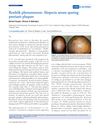 July 2018 in “Our Dermatology Online”
 In this study, researchers examined the under-studied mechanisms behind specific dermatological phenomena such as co-localization, Wolf's isotopic phenomenon, Koebner's isomorphic phenomenon, and the recently described Renbök phenomenon, noting that only a few cases have been reported so far.
November 2020 in “Дерматовенерология, косметология” This study found that among men with androgenetic alopecia, the M-type pattern, either isolated or combined with others, was observed most frequently, using the BASP classification.
 1 citations
,
October 2025 in “Scientific Reports”
1 citations
,
October 2025 in “Scientific Reports” This study investigated the Mandarin duck as a model for understanding lifelong developmental changes, finding that male sail feather morphogenesis involves a combination of local morphogenetic programs, epigenetic regulation, and hormonal cues, with increased female estrogen levels observed before the mating season.
 May 2025 in “Egyptian Journal of Dermatology and Venerology”
 This study found that specific SNPs in the CYP19A1 gene were associated with Female Pattern Hair Loss in Egyptian women, with altered CYP19A1 gene expression and higher frequencies of related genotypes observed in patients compared to controls.
 3 citations
,
July 2019 in “Experimental Dermatology”
3 citations
,
July 2019 in “Experimental Dermatology” This study reported that polyamine levels, especially N-acetyl polyamines, were higher in the vertex region of the scalp than in the occipital region in patients with male and female pattern hair loss.
January 2015 in “Hair transplant forum international” This abstract introduces a historical perspective on Dorothy Osborn's research about the hereditary nature of common baldness but reports no new study results.
13 citations
,
September 2007 in “International Journal of Dermatology” This study suggests no significant association between vitamin D receptor gene polymorphisms and alopecia areata.
8 citations
,
May 2005 in “Fertility and Sterility” In this study, women with the GG polymorphism of the MMP1 gene promoter were found to have a higher likelihood of being diagnosed with polycystic ovary syndrome.
 45 citations
,
July 2009 in “Journal of human genetics”
45 citations
,
July 2009 in “Journal of human genetics” This study found that an SNP in the FGFR2 gene, rs4752566, was significantly associated with hair thickness in Asian populations, suggesting an effect on hair morphology through altered FGFR2 expression levels.
 3 citations
,
February 2020 in “The journal of gene medicine”
3 citations
,
February 2020 in “The journal of gene medicine” This study found a recurrent nonsense mutation in the HR gene linked to atrichia with papular lesions in two Kashmiri families, suggesting whole exome sequencing as an efficient method for diagnosis and genetic counseling.
26 citations
,
October 2002 in “Journal of Investigative Dermatology” This study identifies a mutation in the hairless gene that may impact thyroid receptor interaction, contributing to alopecia universalis congenita in an Arab Israeli patient.
3 citations
,
July 2023 in “Biomolecules” This study reports that some human cell surface HLA-I molecules (including HLA-B27) can appear without their usual peptide component, potentially altering immune interactions, influencing arthritis development in specific mice models, and exhibiting upregulation in certain cancer cells.