 January 2020 in “bioRxiv (Cold Spring Harbor Laboratory)”
 This study identified novel genetic variants in APOE ε4 non-carriers associated with Alzheimer's disease age-of-onset, linking them to regulatory mechanisms like the unfolded protein response in the pathology of Alzheimer's and other degenerative diseases.

In this study, the researchers reported that the optimized compound 39 demonstrated potent AR antagonism and favorable pharmacokinetics in a hair-growth mouse model, achieving similar efficacy to pyrilutamide with faster onset and preserved safety, offering promise for next-generation topical AR antagonist development.
In this case series, researchers reported an unexpectedly rapid and positive response to a topical, hydrogel-based botanical treatment for androgenetic alopecia in both male and female volunteers, achieving significant improvement in hair loss within 90 days instead of the planned 270 days.
This study found that the optimized AR antagonist candidate 39, in a hair-growth mouse model, achieved similar efficacy to pyrilutamide with faster onset and favorable safety, suggesting a promising approach for developing topical treatments with low systemic toxicity for androgenetic alopecia.
 February 2009 in “Journal of The American Academy of Dermatology”
 AGA patients have higher rates of metabolic syndrome and carotid atheromatosis, suggesting early screening and prevention is important.
 3 citations
,
July 2015 in “European Journal of Dermatology”
3 citations
,
July 2015 in “European Journal of Dermatology” This abstract discusses the role of advanced glycation end-products in aging-related skin damage, but does not provide new findings on their impact on alopecia.
August 2022 in “Facial Plastic Surgery Clinics of North America” This review discusses nonsurgical and surgical treatments for androgenetic alopecia and highlights platelet-rich plasma injections as a promising option, but reports no new clinical results.
November 2025 in “Transfusion Medicine and Hemotherapy” This study found that platelet-rich plasma therapy significantly promoted hair growth in androgenetic alopecia model mice by enhancing autophagy, with effects similar to rapamycin treatment.
June 2020 in “Acta medica Philippina” This research review suggests that topical adenosine could improve hair thickness and user satisfaction in adults with androgenetic alopecia, with minimal side effects reported, but concludes that further studies are necessary to confirm these findings.
July 2022 in “Journal of Investigative Dermatology” This review discusses recent clinical trials on the use of platelet rich plasma for treating androgenetic alopecia and reports mixed findings on its effectiveness compared to standard treatments.
 1 citations
,
January 2023 in “Annals of Dermatology”
1 citations
,
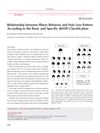
January 2023 in “Annals of Dermatology” The BASP classification helps predict patient behavior and improve treatment for hair loss.
 June 2023 in “Food frontiers”
 In this animal study, researchers observed that ginsenoside CK significantly reduced hair loss, improved sexual organ health, and encouraged hair growth in mice with androgenetic alopecia by modulating key signaling pathways and normalizing hormone metabolism, highlighting its potential as a therapeutic agent.
 24 citations
,
April 2007 in “European Journal of Pharmaceutics and Biopharmaceutics”
24 citations
,
April 2007 in “European Journal of Pharmaceutics and Biopharmaceutics” This study found that artocarpin delivered via alginate/chitosan microparticles effectively suppressed the growth of hamster flank organs compared to artocarpin in solution form, without significant systemic effects.

This review compiles existing information on the pathogenesis of androgenetic alopecia, highlighting its genetic, hormonal, and environmental factors, but reports no new clinical findings.
August 2024 in “Cosmetics” This review discusses genetic and pharmacogenetic insights, along with RNA interference technologies, for developing personalized therapies for androgenetic alopecia, yet presents no new clinical results.
 60 citations
,
September 2016 in “Dermatologic Surgery”
60 citations
,
September 2016 in “Dermatologic Surgery” This article proposes a mechanistic model for how platelet-rich plasma therapy may stimulate hair growth in androgenetic alopecia by promoting vascularization and activating specific signaling pathways, but it reports no new experimental results.
1 citations
,
August 2018 in “Madridge journal of dermatology & research” This study observed that the Pilogics Hairegen device increased total hair count by 23.2% and terminal hair count by 21.1% in 289 patients with androgenetic alopecia after approximately 20 weeks of use, with no adverse effects reported.
 November 1999 in “Journal of Cutaneous Medicine and Surgery”
 Treatments for hair loss include hormone modifiers, minoxidil, and hair transplant surgery.
October 2025 in “JURNAL BIOLOGI TROPIS” This literature review found that androgenetic alopecia has a complex multifactorial etiology and effective management should be tailored to individual severity and gender to improve patients' quality of life.
 November 2021 in “Revista Ibero-Americana de Humanidades, Ciências e Educação”
 This paper evaluates the therapeutic response of androgenetic alopecia to topical application of specific compounds using digital drug delivery but reports no new clinical results.

This study found that CPA-loaded nanoparticles, particularly SLN formulations, increased CPA epidermal penetration compared to a conventional cream and may reduce side effects in treating androgen-dependent conditions.
 December 2022 in “Research Square (Research Square)”
 In this study, the researchers developed a quantum algorithm, QuantAnts machines, which identified complexes of CD9, CD34, and CD74 as potential targets for certain cancers involving the RAS pathway.
 51 citations
,
January 2012 in “Annals of Dermatology”
51 citations
,
January 2012 in “Annals of Dermatology” This review discusses characteristics of androgenetic alopecia in Asian patients and includes algorithmic management guidelines, but reports no new clinical findings.
 October 2025 in “JEADV Clinical Practice”
 This study found that patients using GLP-1 receptor agonists, specifically liraglutide, dulaglutide, and semaglutide, had a higher likelihood of being diagnosed with androgenetic alopecia, while those on exenatide showed increased odds for both androgenetic alopecia and telogen effluvium.
March 2021 in “Türk plastik cerrahi dergisi” In this study, activated platelet-rich plasma injections significantly increased hair count, density, and the anagen/telogen ratio in men with androgenetic alopecia, compared to placebo, suggesting it as a safe alternative to medical treatments for early-stage alopecia.
12 citations
,
August 2001 in “PubMed” This study found that contrast enhanced phototrichogram (CE-PTG) significantly improved detection of various hair types and growth stages in androgenetic alopecia compared to standard PTG and was comparable to biopsy analysis.
 May 2024 in “British journal of dermatology/British journal of dermatology, Supplement”
 In this study, researchers found that frontal hair follicles in individuals with androgenetic alopecia show a higher biological age compared to occipital follicles, possibly due to decreased expression of the transcriptional repressor TRPS1 in frontal dermal papillae, which may influence follicle miniaturization.

In a mouse hair-growth model, this study found that the optimized compound 39 matched the efficacy of pyrilutamide for androgenic alopecia, with faster response and maintained safety, suggesting it as a promising topical AR antagonist with reduced systemic toxicity risk.
January 2025 in “Journal of College of Physicians And Surgeons Pakistan” In this case report, a 36-year-old woman with GAPO syndrome underwent successful XEN gelatin micro-stent implantation in both eyes to control primary open-angle glaucoma that was unresponsive to medical treatment, marking the first documented use of this minimally invasive glaucoma surgery in such a patient.
 September 2023 in “Frontiers in Medicine”
 This study observed that in the bald scalps of male patients with androgenetic alopecia, there was a significant downregulation of the PPAR signaling pathway, suggesting reduced adipogenesis potentially influencing hair cycling processes.