 October 2024 in “Journal of the Endocrine Society”
 This case report highlights a patient with Ayme-Gripp syndrome, revealing an association between the syndrome and hypothyroidism, and underscores the importance of considering rare genetic conditions in differential diagnoses of endocrinopathies.
7 citations
,
April 2020 in “JIMD Reports” In this follow-up of three siblings with ATP6AP1 deficiency, the researchers observed progression to total hearing loss, hair loss, and proteinuria.
8 citations
,
January 2024 in “Current Research in Food Science” This study found that using composite alginate hydrogels containing Aloe vera, CMC, and tragacanth can improve the encapsulation efficiency and protect pumpkin seed protein hydrolysates from degradation during simulated gastrointestinal digestion, potentially increasing their applicability as functional food components.
January 2012 in “Faculty of Health; Institute of Health and Biomedical Innovation” This study found six new genetic factors linked to early-onset androgenetic alopecia and its association with increased risk of Parkinson's disease and decreased fertility.
 January 2019 in “Przegląd Dermatologiczny”
 This report presents a case of a 57-year-old woman with APS-4, generalized alopecia, and rheumatoid arthritis, emphasizing the need to screen for other autoimmune disorders in patients with a single organ-specific autoimmune disease.
September 2021 in “CRC Press eBooks” This review discusses the diagnostic features of androgenetic alopecia through trichoscopy and reports no clinical results; it emphasizes hair shaft variability and yellow dots as key indicators.
September 2023 in “Journal of the American Academy of Dermatology” This study evaluated the effect of guselkumab on moderate to severe plaque psoriasis and found that median PASI improvements increased from around 60% at week 4 to over 90% by week 12 of treatment across multiple clinical trials.
 June 2023 in “Journal of General Procedural Dermatology and Venereology Indonesia”
 This study explores the risk factors for androgenetic alopecia in women residing in Pasar Ambacang Sub-district, Padang City, emphasizing its potential impact on their quality of life and psychological well-being.
February 2023 in “Research Square (Research Square)” In this study, autologous cellular micrografts significantly improved hair parameters in androgenic alopecia patients, showing promise as an effective treatment without dangerous side effects.
October 2022 in “The Korean Journal of Physiology and Pharmacology” This review discusses the roles of prostaglandins in hair loss and highlights their potential as targets for new alopecia treatments, but reports no new clinical findings.
 September 2024 in “LUTS Lower Urinary Tract Symptoms”
 This study found that among patients over 45 with lower urinary tract symptoms due to benign prostatic hyperplasia, those with androgenic alopecia had worse symptoms and higher testosterone levels than those without baldness.
September 2023 in “Journal of the American Academy of Dermatology” Dermatologists should consider alpha-gal syndrome in patients with unexplained chronic skin issues.
 January 2017 in “Clinical approaches and procedures in cosmetic dermatology”
 This review explores the role of advanced glycation end products in skin aging and their interaction with oxidative stress, but reports no new clinical findings.
November 2006 in “評価・診断に関するシンポジウム講演論文集” This study found that KSR1 is essential for v-Ha-ras-mediated skin tumor formation in mice but not for MT-driven mammary tumor genesis, suggesting its potential as a therapeutic target in Ras/MAPK signaling.
 July 2026 in “Zenodo (CERN European Organization for Nuclear Research)”
 This study used a multi-layer in silico framework to evaluate Korean herbal compounds for androgenetic alopecia, identifying Biochanin A, Saponin Re, and Emodin as potential topical candidates with distinct safety and affinity profiles, although these findings remain purely computational without experimental validation.
 January 2022 in “International Journal of Health Science”
 The authors of this study aim to evaluate the strategies for using topical products in treating androgenetic alopecia, highlighting topical applications as potentially more effective and convenient compared to oral medications, which often suffer from poor patient adherence.
 April 2026 in “Zenodo (CERN European Organization for Nuclear Research)”
 This study utilized computational approaches to screen natural compounds targeting a non-androgen pathway involving PIEZO1 and MLCK for treating androgenetic alopecia, identifying several potential candidates for further validation but making no clinical claims.

This abstract contains subscription and access information for Wolters Kluwer Health journals but reports no research findings.
 18 citations
,
May 2017 in “Experimental Dermatology”
18 citations
,
May 2017 in “Experimental Dermatology” This article discusses a potential link between adipocyte-myofibroblast transition and androgenetic alopecia, suggesting AMT may play a role in fibrosis associated with the condition but presents no new results.
 46 citations
,
May 2018 in “Dermatologic Surgery”
46 citations
,
May 2018 in “Dermatologic Surgery” In this study, subdermal platelet-rich plasma injections significantly increased hair count and shaft caliber in individuals with androgenetic alopecia, with monthly treatments potentially offering greater benefits.
August 2025 in “Bioactive Materials” In a murine model of androgenetic alopecia, this study found that the newly designed IGF-1 biomimetic peptide Ac-GFFY-IGF led to faster and superior hair regrowth compared to minoxidil, suggesting potential for improved human therapies.
 10 citations
,
January 2012 in “International Journal of Trichology”
10 citations
,
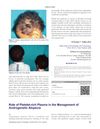
January 2012 in “International Journal of Trichology” PRP helps hair growth in common hair loss disorder.
March 2022 in “Benha Journal of Applied Sciences” This study found that serum PGRN levels and HOMA-IR were significantly higher in male AGA patients compared to controls, suggesting a link to insulin resistance and metabolic syndrome.
 March 2024 in “CRC Press eBooks”
 This article discusses the psychosocial impact of androgenetic alopecia and does not report new findings; it highlights the perceived effects of hair loss on self-esteem and confidence.
14 citations
,
March 2025 in “Nano Today” The hydrogel dressing speeds up and improves diabetic wound healing.
This study identified that α-ketobutyrate (α-KB) extends lifespan and improves health markers in Caenorhabditis elegans and aged mice by modulating pyruvate metabolism and activating AMPK pathways, with potential implications for human anti-aging treatments.
January 2021 in “Brazilian Journal of Development” This study found that women with androgenic alopecia in Patos, Brazil, experienced significant psychological and social impacts, including feelings of frustration, low self-esteem, and social withdrawal.
 January 2026 in “Zenodo (CERN European Organization for Nuclear Research)”
 This study reports the discovery of LX-38, a new high-affinity non-steroidal antagonist that could provide the therapeutic benefits of current BPH and AGA treatments without the hormonal side effects, utilizing a distinct "Orthogonal T-Stacking" scaffold for binding.
January 2006 in “OpenCommons at University of Connecticut (University of Connecticut)” This study found that double transgenic Arabidopsis plants overexpressing both AVP1 and AtNHX1 showed improved salt tolerance and enhanced root hair and hypocotyl growth compared to single transgenic lines.
3 citations
,
February 2019 in “Molecular genetics and metabolism” This study found that coadministration of tadalafil and finasteride improved lower urinary tract symptoms and erectile function in men with benign prostatic hyperplasia better than finasteride alone over 26 weeks.