110 citations
,
October 2019 in “Translational Andrology and Urology”
110 citations
,
October 2019 in “Translational Andrology and Urology” This review discusses current and emerging treatments for benign prostatic hyperplasia and emphasizes the need for further research to optimize treatment selection, but reports no new clinical results.
 1 citations
,
January 2019 in “PubMed”
1 citations
,
January 2019 in “PubMed” This study found no correlation between androgenic alopecia and lower urinary tract symptoms or prostate volume in men who underwent a Green Light Laser Vaporization Procedure of the prostate.
 1 citations
,
December 2017 in “Journal of The European Academy of Dermatology and Venereology”
1 citations
,
December 2017 in “Journal of The European Academy of Dermatology and Venereology” This study found that men with vertex baldness had higher serum dihydrotestosterone levels compared to those with frontal baldness, suggesting different hormonal profiles between these two groups in androgenetic alopecia.
 7 citations
,
October 2017 in “Urologic Oncology: Seminars and Original Investigations”
7 citations
,
October 2017 in “Urologic Oncology: Seminars and Original Investigations” This meta-analysis found that male pattern baldness is associated with an increased risk of aggressive prostate cancer and benign prostatic hyperplasia.
 3 citations
,
January 2015 in “DOAJ (DOAJ: Directory of Open Access Journals)”
3 citations
,
January 2015 in “DOAJ (DOAJ: Directory of Open Access Journals)” This study found no relationship between androgenic alopecia and parameters such as PSA level, IPSS, and prostate volume in men over 50.
May 2013 in “Springer eBooks”  16 citations
,
May 2013 in “Urology”
16 citations
,
May 2013 in “Urology” The authors concluded that components of metabolic syndrome were strongly associated with severe lower urinary tract symptoms in Latin American men, while alopecia was not an independent predictor.
 88 citations
,
January 2013 in “Indian Journal of Dermatology, Venereology and Leprology”
88 citations
,
January 2013 in “Indian Journal of Dermatology, Venereology and Leprology” This article reviews recent advancements in understanding and treating androgenetic alopecia, focusing on new genetic insights, stem cell roles, and diagnostic tools, without reporting new clinical results.
 28 citations
,
August 2011 in “Journal of The American Academy of Dermatology”
28 citations
,
August 2011 in “Journal of The American Academy of Dermatology” This study found that men with early-onset androgenetic alopecia had significantly larger prostate volumes and lower urinary flow rates compared to healthy controls, suggesting a possible link between AGA and prostate-related urinary symptoms.
 44 citations
,
July 2011 in “Dermatologic Therapy”
44 citations
,
July 2011 in “Dermatologic Therapy” This study found that finasteride 1 mg was effective in improving androgenetic alopecia over 10 years in men, particularly those older than 30, with some reporting beneficial results even after 5 years.
 87 citations
,
March 2011 in “Australasian Journal of Dermatology”
87 citations
,
March 2011 in “Australasian Journal of Dermatology” This review explores the current understanding of genetic and hormonal influences on male androgenetic alopecia and female pattern hair loss, providing guidance for clinicians but reports no new results.
 38 citations
,
February 2009 in “Journal of The European Academy of Dermatology and Venereology”
38 citations
,
February 2009 in “Journal of The European Academy of Dermatology and Venereology” This study found that patients with severe vertex pattern androgenetic alopecia had significantly higher carotid intima-media thickness, suggesting an increased risk of subclinical atherosclerosis compared to other alopecia patterns and healthy controls.
 30 citations
,
January 2008 in “The Aging Male”
30 citations
,
January 2008 in “The Aging Male” This study found no difference in male pattern baldness between patients with benign prostate hyperplasia and prostate cancer, and no correlation with serum androgen levels.
 33 citations
,
October 2004 in “Archives of Dermatological Research”
33 citations
,
October 2004 in “Archives of Dermatological Research” This study suggests that a larger prostate is associated with a higher prevalence of androgenetic alopecia, although the prostate size did not correlate with alopecia severity.
 174 citations
,
November 2002 in “Expert Reviews in Molecular Medicine”
174 citations
,
November 2002 in “Expert Reviews in Molecular Medicine” This review discusses the genetic factors contributing to androgenetic alopecia and highlights the potential for developing more effective therapies based on recent discoveries, but reports no new clinical results.
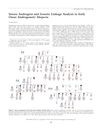 32 citations
,
August 1999 in “Journal of Investigative Dermatology”
32 citations
,
August 1999 in “Journal of Investigative Dermatology” This study found that individuals with early onset extensive androgenetic alopecia have an elevated ratio of DHT to testosterone, but no significant genetic linkage to markers on chromosomes 2 or 5 was detected.
 59 citations
,
August 1998 in “International Journal of Dermatology”
59 citations
,
August 1998 in “International Journal of Dermatology” Genetics and hormones cause hair loss; finasteride treats it safely.
 54 citations
,
May 1998 in “Urology”
54 citations
,
May 1998 in “Urology” This study demonstrates that patients with benign prostatic hyperplasia have a higher severity and frequency of male pattern baldness compared to a control group.
 416 citations
,
September 1997 in “Journal of Investigative Dermatology”
416 citations
,
September 1997 in “Journal of Investigative Dermatology” People with hair loss have more androgen receptors and enzymes in certain follicles, with men and women showing different patterns.
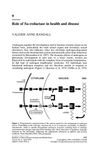 101 citations
,
April 1994 in “Baillière's clinical endocrinology and metabolism”
101 citations
,
April 1994 in “Baillière's clinical endocrinology and metabolism” This review discusses the role of 5α-reductase enzymes in androgen action and related disorders, noting that their specific inhibitory drugs show promise for conditions like benign prostatic hypertrophy; it reports no new clinical results.