 17 citations
,
June 2016 in “Australasian Journal of Dermatology”
17 citations
,
June 2016 in “Australasian Journal of Dermatology” In this case report, a 46-year-old woman with familial frontal fibrosis alopecia experienced initial stabilization of hair loss with dutasteride and minoxidil, but artificial hair transplantation led to implant folliculitis, requiring removal of the fibers.
 24 citations
,
April 2017 in “Aesthetic plastic surgery”
24 citations
,
April 2017 in “Aesthetic plastic surgery” In this study, micro-autologous fat transplantation (MAFT) for frontal augmentation using the MAFT-GUN showed high patient satisfaction and no complications among 178 patients, suggesting it may be a reliable method for forehead contouring.
2 citations
,
September 2015 in “Dicle Medical Journal” This study found that women with diffuse alopecia exhibited higher anxiety and depression scores compared to controls, suggesting a bidirectional relationship between alopecia and psychological symptoms.
16 citations
,
January 2021 in “Journal of the American Academy of Dermatology” In this study, researchers piloted an asynchronous telemedicine program for isotretinoin management in acne patients, finding that dosing outcomes were similar to synchronous visits and clinicians were comfortable adjusting doses remotely.
March 2016 in “Experimental Dermatology” This study reported that EGFR activation leads to suppression of Stathmin, which may promote synchronized entry into catagen in hair follicles, highlighting potential mechanisms involving EGFR in hair cycle transitions.
November 2025 in “Journal of Investigative Dermatology”  April 2016 in “The Journal of Sexual Medicine”
 This report analyzed an FDA adverse event database and aimed to evaluate and describe post-finasteride syndrome potentially related to dutasteride, but it does not report new clinical findings.
 28 citations
,
July 2007 in “Development”
28 citations
,
July 2007 in “Development” In this study, inactivating the TAF4 subunit of transcription factor TFIID in mouse epidermis disrupted gene expression linked to skin and hair function, and increased tumor risk.
25 citations
,
March 2004 in “Regulatory Toxicology and Pharmacology” Using testosterone-stimulated weanling rats can effectively replace castrated rats for anti-androgen testing, reducing animal stress.
 12 citations
,
June 2013 in “The Prostate”
12 citations
,
June 2013 in “The Prostate” This study found that dutasteride more effectively inhibited androgen receptor signaling and reduced cell growth compared to finasteride in prostate cancer cell models, with varying sensitivities across different cell lines.
February 2026 in “Journal of Psychosexual Health” This case report describes a 26-year-old man who experienced persistent sexual dysfunction and other symptoms for 19 months after stopping finasteride for androgenetic alopecia. The authors highlight post-finasteride syndrome's impact on quality of life and stress the need for careful risk-benefit assessment before prescribing.
December 2023 in “JEADV Clinical Practice” This study found that dermoscopy of the axilla in patients with frontal fibrosing alopecia revealed significantly higher odds of brownish peripillary halos, suggesting a diagnostic clue for the condition in this region.
 32 citations
,
April 2006 in “The Journal of Urology”
32 citations
,
April 2006 in “The Journal of Urology” Using finasteride with TIP extends time off period for prostate cancer patients.
June 2026 in “Journal of Investigative Dermatology” Retinoic acids temporarily change skin stem cells to a slower cycle and more differentiated state.
1 citations
,
May 2024 in “The Journal of Sexual Medicine” This case report suggests that clomiphene citrate can effectively restore fertility in some men with a long history of anabolic steroid abuse, though individual responses to treatment vary.
2 citations
,
January 2021 in “Journal of The American Academy of Dermatology” This pilot study found that examining changes in scalp scales after scraping may effectively distinguish seborrheic dermatitis associated with androgenetic alopecia from fibrosing alopecia in a pattern distribution.
 6 citations
,
January 2017 in “British Journal of Dermatology”
6 citations
,
January 2017 in “British Journal of Dermatology” This article reviews frontal fibrosing alopecia, exploring its characteristics, demographics, and associated conditions, and calls for controlled trials due to an increase in worldwide cases; it reports no new findings.
January 2021 in “Figshare” This study used Density Functional Theory to calculate finasteride's molecular properties, finding the GGA/PW91 method aligns well with experimental data and identifying key reactive sites for chemical interactions.
 January 2025 in “Dermatology Review”
 This paper outlines the clinical features of artefactual skin disorder, emphasizing the complexities in diagnosing the self-inflicted lesions that patients deny, and underscores the importance of integrating dermatological, psychiatric, and psychological treatment approaches.
May 2024 in “Reactions weekly”  January 2026 in “Frontiers in Public Health”
 This study observed distinct post-marketing safety signal patterns for baricitinib and tofacitinib in adult AA, influenced by their differing regulatory uses and real-world contexts, and emphasizes the need for future studies to validate these findings.
 June 2018 in “The Journal of Sexual Medicine”
 In this study, finasteride was found to significantly reduce DHT levels and affect spermatogenic markers in rats, while DA-9401 co-treatment indicated potential ameliorative effects.
April 2019 in “Journal of Investigative Dermatology” This study found that the gut microbiota in alopecia areata patients showed distinct dysbiosis, with an overrepresentation of Firmicutes and underrepresentation of Bacteroides, aligning with patterns seen in other autoimmune disorders.

This study found that 23.2% of surveyed dermatologists in Saudi Arabia prescribe Tofacitinib for alopecia areata, with 72.4% reporting its effectiveness, while 47.7% cited unavailability as the main reason for not prescribing.
 6 citations
,
January 2019 in “The American Journal of Dermatopathology”
6 citations
,
January 2019 in “The American Journal of Dermatopathology” This study discovered that adipose tissue infiltration at the isthmus level appears significantly more often in frontal fibrosing alopecia cases compared to controls, suggesting a potential role in the condition's pathology.
 August 2018 in “Journal of The American Academy of Dermatology”
 This study examined epidemiological data on patients with frontal fibrosing alopecia in Greece and found demographic patterns consistent with international studies.
December 2022 in “Scientific Reports” This study found that caffeic acid amide derivative, compound 4, effectively inhibited steroid 5α-reductase type 1 in vitro, suggesting potential for development as a treatment for androgenic alopecia.
 17 citations
,
December 2018 in “The World Journal of Men s Health”
17 citations
,
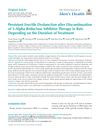
December 2018 in “The World Journal of Men s Health” This study concluded that administering dutasteride for more than 8 weeks in rats could lead to irreversible erectile dysfunction, even after stopping the medication.
May 2019 in “Hair transplant forum international” In this study, the authors reported no significant difference in sexual dysfunction between finasteride users and non-users among men with androgenetic alopecia, suggesting that finasteride does not cause sexual dysfunction. This finding aligns with other large survey-based studies.