 August 2016 in “Journal of Investigative Dermatology”
 This study found that adverse effects of finasteride were more common among right-handed heterosexuals and left-handed homosexuals with androgenic alopecia.
 1 citations
,
December 2024 in “Dermatology and Therapy”
1 citations
,
December 2024 in “Dermatology and Therapy” This study found that the STRIAA scoring tool provides a rapid and highly reliable assessment of alopecia areata severity, showing a significant correlation with the traditional SALT score, thus enhancing clinical evaluation in patients with this condition.
September 2023 in “Journal of the American Academy of Dermatology” This study examined the application of new clinical guidelines for diagnosing frontal fibrosing alopecia in 18 men, highlighting that current diagnostic criteria may often overlook early beard involvement and sideburn recession.
36 citations
,
February 1998 in “Journal of Anatomy” This study used fibre optic confocal imaging to visualize subsurface structures in live mouse skin, revealing cellular details and blood vessel networks that dynamic events could be studied in vivo.
April 2019 in “Journal of Investigative Dermatology” Targeting immune pathways like JAK/STAT may help treat frontal fibrosing alopecia.
1 citations
,
January 2010 in “uO Research (University of Ottawa)” This research found that the widely used herbicide atrazine may alter Northern leopard frog development, affecting metamorphosis success, sex ratio, and hormone-related gene expression.
65 citations
,
September 2014 in “Orphanet Journal of Rare Diseases” This study identified mutations in the STUB1 gene linked to hereditary cerebellar ataxia with cognitive impairment, revealing potential effects on protein function and patient symptoms, including accelerated aging.
3 citations
,
January 2025 in “Journal of Cutaneous Medicine and Surgery” Many patients with alopecia areata relapse after stopping tofacitinib.
January 2021 in “Research Portal Denmark” This case report describes a 43-year-old male patient with alopecia totalis successfully regaining all his hair after six months of treatment with tofacitinib, with no relapse observed after one year.
10 citations
,
November 2017 in “Letters in drug design & discovery” This paper discusses a structure-based analysis to find new BRD4 inhibitors, identifying finasteride and amentoflavone as promising candidates for BET inhibition.
 May 2026 in “Scientific Reports”
 This study explored the potential of stigmasterol as a treatment for androgenetic alopecia through various simulation techniques, finding promising interactions with key genes involved in hair loss, but further experimental validation is needed before clinical application.
12 citations
,
December 2011 in “Journal of Dermatological Science” This study suggests that the C-terminal of AHF is crucial for its binding to keratin bundles and modulating the keratin meshwork in hair follicles.
 14 citations
,
December 2016 in “Sexual Medicine”
14 citations
,
December 2016 in “Sexual Medicine” This study identified differences in adverse symptoms among patients with post-finasteride syndrome based on short and long androgen receptor gene polymorphisms.
 August 2020 in “Ugeskrift for Læger”
 This case report describes a 43-year-old male with alopecia totalis who successfully regrew all his hair after six months of treatment with tofacitinib, with no relapse at one year.
1 citations
,
August 2023 in “Journal of Investigative Dermatology” Farudodstat may help treat alopecia areata by protecting hair follicles.
 23 citations
,
April 2021 in “Journal of Clinical Medicine”
23 citations
,
April 2021 in “Journal of Clinical Medicine” This review compiles existing data on frontal fibrosing alopecia and highlights the promise of 5-alpha reductase inhibitors as a treatment option, while noting the need for clarity on its cause and progression.
9 citations
,
March 1998 in “PubMed” This study describes a 4-year-old spayed female ferret diagnosed with adrenocortical carcinoma, where surgical removal of the mass resulted in complete hair regrowth and improvement of clinical symptoms within four weeks.
January 2006 in “Bohn Stafleu van Loghum eBooks” This article discusses the prevalence and patterns of androgenic alopecia in men and women, highlighting its progression and differences in hair loss distribution between the sexes, but reports no new data.
1 citations
,
April 2025 in “Skin Health and Disease” This study is collecting real-world data to evaluate abrocitinib and conventional systemic treatments in moderate-to-severe atopic dermatitis across five European registers over a three-year period.
September 2025 in “Skin Research and Technology”  April 2023 in “World Journal Of Advanced Research and Reviews”
 This study in Morocco found that all women with frontal fibrosing alopecia presented frontotemporal hairline recession, with trichoscopic features such as perifollicular erythema and follicular hyperkeratosis being indicative of the condition, and suggested a potential link between cosmetic products or emotional factors and the disease.
 November 1998 in “Hair transplant forum international”
 This article discusses the American Board of Hair Restoration Surgery certification process and its role in recognizing physicians' knowledge and skills, but it reports no new results.
 45 citations
,
January 2012 in “The Journal of Steroid Biochemistry and Molecular Biology”
45 citations
,
January 2012 in “The Journal of Steroid Biochemistry and Molecular Biology” This study found that overexpression of AKR1C3 in prostate cancer cells redirected androgen metabolism towards testosterone production, which facilitated cell proliferation, potentially reducing the effectiveness of finasteride treatment.
January 2009 in “Xiandai huagong” This research outlines a chemical synthesis process for Finasteride, detailing the conversion of pregnadienolone acetate through various chemical reactions and modifications.
13 citations
,
December 2007 in “The Journal of Dermatology” This study reports two cases of alopecia areata that responded to the antihistamine fexofenadine.
January 2008 in “프로그램북(구 초록집)” 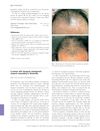 13 citations
,
February 2007 in “British Journal of Dermatology”
13 citations
,
February 2007 in “British Journal of Dermatology” EF and PXE not closely related.
 April 2024 in “International journal of women's health”
 This review explores adult female acne, focusing on its multifactorial causes, treatment options, and impact on quality of life, but reports no new clinical results.
 1 citations
,
November 2020 in “Journal of The American Academy of Dermatology”
1 citations
,
November 2020 in “Journal of The American Academy of Dermatology” In this study, oral dutasteride treatment for at least 12 months was associated with either stabilization or improvement of male-pattern hair loss in the majority of patients.
 7 citations
,
December 2017 in “Journal of the European Academy of Dermatology and Venereology”
7 citations
,
December 2017 in “Journal of the European Academy of Dermatology and Venereology” This study found that dutasteride use is associated with increased reports of sexual dysfunction, based on data from the U.S. Food and Drug Administration Adverse Event Reporting System.