 16 citations
,
March 2005 in “Journal of The American Academy of Dermatology”
16 citations
,
March 2005 in “Journal of The American Academy of Dermatology” This report describes a case of Birt-Hogg-Dube syndrome with manifestations including multiple fibrofolliculomas, acrochordons, and renal oncocytoma.
7 citations
,
May 1978 in “Acta Dermato Venereologica” This case report details a 36-year-old man with atypical necrobiosis lipoidica on his face, characterized by annular lesions and prominent giant cells without clear granuloma formation.
 24 citations
,
November 1992 in “Journal of the American Academy of Dermatology”
24 citations
,
November 1992 in “Journal of the American Academy of Dermatology” This report on a case of cutaneous lymphomatoid granulomatosis underscores the pivotal role dermatologists have in its early diagnosis, which could potentially improve the otherwise poor prognosis.
 January 2011 in “Journal of The American Academy of Dermatology”
 Treating generalized granuloma annulare is difficult, with PUVA being the most effective option, but relapses are common.
 June 2018 in “Journal of Clinical Periodontology”
 A patient with "strawberry gingivitis" improved after correct treatment for Granulomatosis with polyangiitis, highlighting the need for early diagnosis.
 November 2022 in “JAAD case reports”
 This case study reports a rare presentation of cutaneous sarcoidosis on the scalp, evidenced by scarring alopecia linked to non-caseating granulomas in a 48-year-old female with uveitis.
 March 2026 in “Dermatopathology”
 In this case report, a rare instance of a primary cutaneous granular cell tumor with prominent overlying terminal hair growth in an adult is described, highlighting the importance of recognizing atypical presentations to accurately diagnose similar uncommon neoplasms.
May 2023 in “Zenodo (CERN European Organization for Nuclear Research)” This study reports a case of pyoderma gangrenosum in a patient with rheumatoid arthritis, emphasizing the need to consider it as a differential diagnosis when ulcerative skin lesions resemble vasculitis.
 4 citations
,
February 2011 in “Dermatology reports”
4 citations
,
February 2011 in “Dermatology reports” In this study, oral acitretin therapy for psoriasis was associated with excess granulation tissue in the nail sulcus and noncicatricial universal alopecia.
31 citations
,
June 1997 in “International Journal of Dermatology” In this case report, a patient with Hodgkin's disease treated with ABVD chemotherapy became disease-free, and accompanying granuloma annulare skin lesions also improved.
 February 2026 in “Journal of Cutaneous and Aesthetic Surgery”
 In this study, a case of a 20-year-old woman revealed ectopic acanthosis nigricans at a post-syndactyly-release surgical site, suggesting this rare condition could result from epidermal–dermal mismatch and altered growth factor signaling in grafted skin, without indicating any metabolic or malignancy concerns.
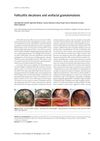 January 2018 in “Advances in Dermatology and Allergology”
 Treatment with dapsone, topical corticosteroids, and antibiotics improved the man's skin conditions.
October 2024 in “Dermatologica Sinica” This case report describes a 21-year-old male diagnosed with Crohn's disease and ulcerative pyoderma gangrenosum presenting with diverse extraintestinal symptoms, and highlights the success of a multi-drug treatment regimen including steroids and infliximab in improving clinical outcomes, though hematochezia was initially persistent.
 January 2025 in “Indian Journal of Paediatric Dermatology”
 In this case report, researchers described a rare instance of granuloma annulare in a six-year-old child mimicking alopecia mucinosa, highlighting the importance of clinicopathologic correlation in diagnosing dermatological conditions. Treatment with topical mometasone furoate led to a satisfactory improvement and complete resolution within seven months.
 October 2024 in “Journal of the Endocrine Society”
 This case report highlights a patient with Ayme-Gripp syndrome, revealing an association between the syndrome and hypothyroidism, and underscores the importance of considering rare genetic conditions in differential diagnoses of endocrinopathies.
January 2024 in “Ankara City Hospital Medical Journal” This case report details a 42-year-old woman with Rhupus, a rare overlap syndrome of rheumatoid arthritis and systemic lupus erythematosus, emphasizing diagnostic challenges due to non-specific clinical criteria and documenting symptoms like inflammatory arthritis, malar rash, and hematological abnormalities.
 5 citations
,
January 1985 in “The Journal of Dermatologic Surgery and Oncology”
5 citations
,
January 1985 in “The Journal of Dermatologic Surgery and Oncology” This study reports that multiple pyogenic granuloma-like lesions can occur at punch graft sites following hair transplantation, highlighting a potential complication for physicians to be aware of.
64 citations
,
August 1977 in “PubMed” This article describes the skin changes seen in acute and chronic graft-vs-host reactions after bone marrow transplantation, highlighting the potential for early recognition due to the visibility of these changes, but reports no new clinical results.
1 citations
,
January 2016 in “Australasian Journal of Dermatology” This case study describes a 54-year-old man with an E600A mutation in the NOD-2 gene associated with Blau syndrome, who presented with skin involvement, differing from typical cases, and initially responded to colchicine treatment.
 14 citations
,
September 2015 in “Ophthalmic plastic and reconstructive surgery”
14 citations
,
September 2015 in “Ophthalmic plastic and reconstructive surgery” This case report concludes that the presence of distinctive histiocytic responses in a Cambodian woman's eyelid lipogranulomas suggests surreptitious silicone injections despite her denial of prior procedures.
4 citations
,
August 2006 in “The Journal of Dermatology” This case report describes the first known association of hypertrichosis lanuginosa acquisita with autoimmune hepatitis, expanding the list of conditions linked to this rare disorder.
 January 2024 in “Ankara City Hospital Medical Journal”
 This case report describes a 42-year-old woman with Rhupus, a rare overlap syndrome of rheumatoid arthritis and systemic lupus erythematosus, highlighting challenges in diagnosis due to non-specific clinical criteria and documenting specific symptoms such as inflammatory arthritis, malar rash, and hematological abnormalities observed during follow-up.
 February 2016 in “Acta Medica Marisiensis”
 This case study presents what is reportedly the first association of Graham Little-Lassueur Syndrome with chronic hepatitis C, observed in a 47-year-old female patient.
 14 citations
,
March 2014 in “Journal of The American Academy of Dermatology”
14 citations
,
March 2014 in “Journal of The American Academy of Dermatology” In this study, symmetrical acrokeratoderma was observed to frequently occur alongside ichthyosis vulgaris, with no specific therapy available for the condition.
4 citations
,
July 2017 in “Journal of Medical Case Reports” This case report highlights a rare presentation of acute lupus hemophagocytic syndrome with initially negative antinuclear antibodies, underscoring the higher sensitivity of the 2012 Systemic Lupus International Collaborating Clinics criteria for diagnosis.
2 citations
,
May 2011 in “International Journal of Dermatology” This case report details a 12-year-old boy from rural south India diagnosed with syringolymphoid hyperplasia, which presented with alopecia and anhidrosis.
32 citations
,
August 2003 in “Journal of the European Academy of Dermatology and Venereology” This article reviews the clinical aspects and potential mechanisms of chronic graft vs host disease skin manifestations, describing a novel form of premature skin aging, but presents no new research findings.
 June 2026 in “Indian Dermatology Online Journal”
 This study observed a rare case of alopecia areata with granulomatous inflammation, successfully treated with intralesional triamcinolone, leading to complete hair regrowth within two months, highlighting the need for careful diagnosis to distinguish it from other granulomatous alopecias.
 1 citations
,
April 2016 in “Journal of The American Academy of Dermatology”
1 citations
,
April 2016 in “Journal of The American Academy of Dermatology” A man developed a rare skin condition and drug-induced lupus, highlighting the need for biopsy in diagnosing skin issues caused by sunlight.
 May 2025 in “The Journal of Rheumatology”
 This case report highlights the rare occurrence of overlapping syndromes including SLE, RA, and AAV in a patient with discoid lupus erythematosus, noting the persistent role of prior viral infection remains unclear.