12 citations
,
January 2021 in “Journal of Cutaneous and Aesthetic Surgery” This systematic review describes current findings on the use of recombinant epidermal growth factor (rhEGF) for skin aging and wound healing, emphasizing its potential benefits but highlighting the need for more controlled studies to optimize dosing and treatment protocols.
1 citations
,
April 2023 in “The Egyptian Journal of Hospital Medicine” This review found that combining platelet-rich plasma with microneedling may enhance recovery and reduce toxicity in treating atrophic post-acne scars.
In this study, chitosan hydrogels and delivery systems showed promise in supporting skin recovery post-laser procedures, enhancing topical treatments for acne and melasma, and improving hair density in scalp applications, but limited study sizes and formulation variability restrict generalizability.
 92 citations
,
June 2017 in “Journal of Plastic Reconstructive and Aesthetic Surgery”
92 citations
,
June 2017 in “Journal of Plastic Reconstructive and Aesthetic Surgery” This review found that microneedling appears to be a safe and effective option for treating scars and wrinkles, with fewer side effects and shorter recovery time than some other treatments.
 August 2025 in “The American Journal of Medical Sciences and Pharmaceutical Research”
 This study suggests that noninvasive carboxytherapy methods, like gel formulations and device-assisted delivery, can significantly improve skin conditions with high safety and no recovery time, particularly in sensitive areas.
January 2025 in “中医药研究与应用(Research and application of traditional Chinese medicine)” In this study involving acne patients, researchers compared the effects of combined fire needle and salicylic acid therapy with conventional treatment, measuring improvements in skin lesion severity, skin barrier function, and microbiota diversity; results are not reported in the abstract.
 January 1981 in “The Journal of Toxicological Sciences”
 In this study, beagle dogs treated with hydrocortisone 17-butyrate 21-propionate ointment showed various toxic effects, including acne-like skin changes and organ atrophy, which returned to normal after a recovery period.
 January 2026 in “International Journal of Veterinary Sciences and Animal Husbandry”
 This study reports that ivermectin-based therapy, combined with antibiotics, anti-inflammatory drugs, and supportive treatments, effectively led to clinical recovery within 10-21 days in six dogs with varying severity of demodicosis.
This overview highlights the effectiveness of fractional lasers, particularly fractional erbium:YAG, in treating various skin conditions with customizable settings and a short recovery time, while noting potential risks and the importance of tailored applications for different skin types.
6 citations
,
October 2023 in “Clinical Cosmetic and Investigational Dermatology” This study found that combining ultrapulsed fractional CO2 laser with bovine basic fibroblast growth factor significantly improved acne scars more effectively and safely compared to laser therapy alone.
 126 citations
,
October 1983 in “Journal of The American Academy of Dermatology”
126 citations
,
October 1983 in “Journal of The American Academy of Dermatology” This report verifies isotretinoin's significant efficacy in treating severe acne over the past year in the U.S., highlighting the need for careful patient selection and monitoring due to potential side effects.
3 citations
,
July 2025 in “Journal of Cosmetic Dermatology” In this study, both Endo-RF subcision and the combination of Endo-RF subcision with PRP were shown to be safe and effective for improving post-acne scars, with the combination therapy potentially offering more desirable outcomes.
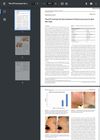 October 2023 in “Skin research and technology”
 This study evaluated the effectiveness of a 675 nm laser device on facial acne scars in patients with darker skin types, finding that 67% reported excellent improvement and 33% reported good improvement, with significant enhancements in skin texture and appearance after five treatments.
3 citations
,
November 2022 in “Separations” This study successfully established and validated a method using LC-MS/MS to measure multiple androgens in plasma, finding that individuals with acne had higher levels of certain androgens compared to those with obesity.
1 citations
,
December 2023 in “Life” This article discusses the potential role of telocytes in skin regeneration and the need to understand their interaction with platelet-rich plasma, reporting no new experimental results.
 May 2026 in “Journal of the Egyptian Womenʼs Dermatologic Society”
 This review discusses microneedling radiofrequency in cosmetic dermatology, particularly for skin texture improvement and various conditions, and reports no new clinical results.
 January 2024 in “RSC pharmaceutics”
 This source discusses using stratum corneum ablation as a promising method to enhance transdermal drug delivery by temporarily removing the skin's outermost barrier to improve medication absorption.
 113 citations
,
July 2015 in “Journal of Cosmetic Dermatology”
113 citations
,
July 2015 in “Journal of Cosmetic Dermatology” This review discusses the cosmetic applications of platelet-rich plasma in dermatology, highlighting its potential benefits and the need for more controlled studies.
 31 citations
,
January 2019 in “Journal of Cutaneous Medicine and Surgery”
31 citations
,
January 2019 in “Journal of Cutaneous Medicine and Surgery” This review found that three monthly PRP injections improved hair density in patients with androgenetic alopecia compared to placebo, but more rigorous studies are needed for broader dermatological applications.
19 citations
,
June 2021 in “The world journal of men's health” This review examines the negative effects of anabolic-androgenic steroid use on the male reproductive system, including impaired testosterone production, sperm production issues, and adverse metabolic consequences without reporting new clinical results.
7 citations
,
July 2004 in “Endocrine practice” This case report highlights how persistent hyperphosphatemia, albeit often overlooked, can precede clinical acromegaly symptoms in women, complicating diagnosis due to overlapping features with oral contraceptive use and polycystic ovary syndrome.
6 citations
,
September 2025 in “Cosmetics” This study introduced laser-assisted exosome delivery and observed early signs of clinical improvement in two patients, though causality cannot be inferred from these preliminary, uncontrolled cases.
 4 citations
,
September 2011 in “American Journal of Clinical Dermatology”
4 citations
,
September 2011 in “American Journal of Clinical Dermatology” This case series suggests that EE/CMA 0.03mg/2mg may help manage dermatological disorders related to androgen excess, as evidenced by symptomatic improvements in the four patients treated.
 1 citations
,
January 2017 in “Springer eBooks”
1 citations
,
January 2017 in “Springer eBooks” This chapter reviews the hair follicle's role in drug and chemical penetration through the skin but does not present new experimental findings.
 1 citations
,
March 1997 in “Journal of Chromatography B: Biomedical Sciences and Applications”
1 citations
,
March 1997 in “Journal of Chromatography B: Biomedical Sciences and Applications” This study discovered that the disposition of LY191704 enantiomers in rats and dogs is both stereoselective and species specific.
This chapter reviews the combined use of platelet-rich plasma and microneedling for cosmetic enhancement but reports no clinical results; the authors highlight existing uses and suggest potential synergistic benefits in dermatology.
 March 2023 in “Bagcılar medical bulletin”
 This case report highlights a rare diagnosis of an androgen-secreting adrenal tumor in a patient with hyperandrogenism and virilization symptoms, emphasizing the role of gynecologists in early detection.
 May 2016 in “Endocrine Abstracts”
 The removal of the adrenal tumor improved the patient's symptoms and reduced androgen levels, indicating successful surgery.
 January 2025 in “Facial Plastic Surgery”
 In this research, preclinical and early clinical studies on exosomes indicate their potential to modulate wound healing, skin rejuvenation, and hair growth in facial plastic surgery, but these treatments remain experimental until receiving FDA approval and robust clinical validation.
 April 2023 in “Journal of Investigative Dermatology”
 This review discusses randomized trials on PRP and laser therapy for vitiligo, acne scars, and skin rejuvenation, finding combination therapy may yield clinical improvements but calls for more diverse studies.