 July 2023 in “Deleted Journal”
 In this case report from Cipto Mangunkusumo Hospital Jakarta, alopecia areata was identified as the most common type of baldness in the facility's skin and genital polyclinics from 2009 to 2011, representing 39.7% of cases.
 January 2012 in “Yearbook of Dermatology and Dermatologic Surgery”
 Alopecia areata is a hair loss condition that often starts before age 30 and can affect various body parts, with unpredictable hair regrowth chances.
24 citations
,
February 2011 in “The American journal of pathology” This study found that AIRE, a usually nuclear protein, is expressed in the cytoplasm of human epidermal and follicular keratinocytes and associates with the intermediate filament protein cytokeratin 17, potentially impacting ectodermal abnormalities in APECED syndrome.
 31 citations
,
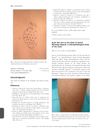
April 2010 in “British journal of dermatology/British journal of dermatology, Supplement”
31 citations
,
April 2010 in “British journal of dermatology/British journal of dermatology, Supplement” This report describes two patients with frontal fibrosing alopecia who developed acute hair loss on their limbs, revealing that the limb alopecia had similar histological features to scalp alopecia.
2 citations
,
June 2009 in “Journal of the American Academy of Dermatology” This case report describes a healthy 27-year-old woman with progressive alopecia and hyperpigmentation on her forehead and frontal scalp, with limited response to triamcinolone acetonide treatment.
17 citations
,
December 2013 in “Journal of Investigative Dermatology Symposium Proceedings” The excimer laser may help hair regrow in alopecia areata patients.
This case study observed that a patient with multiple refractory inflammatory conditions, including psoriasis, alopecia areata, and psoriatic arthritis, experienced significant improvements after three months of treatment with upadacitinib. The report suggests potential benefits of upadacitinib for similar conditions, recommending further clinical trials.
8 citations
,
August 2023 in “Lasers in Surgery and Medicine” This study observed that treating acne scars with fractional ablative laser concurrently with isotretinoin improved outcomes more effectively compared to applying the laser 6 months after isotretinoin treatment ended, as measured by the Quantitative Global Acne Scarring Grading System.
 2 citations
,
February 2009 in “Journal of the American Academy of Dermatology”
2 citations
,
February 2009 in “Journal of the American Academy of Dermatology” Injecting triamcinolone into the eyebrow area may help eyelash regrowth in alopecia areata patients.
 May 2013 in “Proceedings of SPIE”
 In this study, the researchers demonstrated an automatic alignment method for beams in an electron pumped excimer laser system that achieved high precision and accuracy, with a reported alignment accuracy of 0.63μrad.
 September 2025 in “The health sciences AUS.”
 This review discusses the efficacy and safety of intralesional triamcinolone acetonide for treating acne keloidalis nuchae, highlighting its significant effectiveness with rare side effects when used properly.
 May 2023 in “Australasian Journal of Dermatology”
 Results are not reported in this source. The abstract does not provide a summary or findings from the Australasian Journal of Dermatology regarding contact dermatitis.
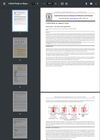 April 2024 in “International Journal of Research Publication and Reviews”
 This source highlights that alopecia areata is a complex autoimmune disorder leading to patchy, nonscarring hair loss with variable treatment responses, reflecting unmet clinical needs. Advances in genetic research are improving understanding, yet current treatments often lead to persistent relapses.
 September 2024 in “Journal of Cosmetic Dermatology”
 In this study, seven patients with refractory alopecia areata treated with concentrated growth factor and microneedling-assisted betamethasone experienced significant hair regrowth, with one achieving over 50% regrowth and six showing complete recovery, without adverse effects.
 8 citations
,
May 2017 in “IUBMB life”
8 citations
,
May 2017 in “IUBMB life” This review discusses the role of astrotactins in development and their genetic mutations' links to a variety of human diseases, but reports no new clinical results.
88 citations
,
July 2001 in “British journal of dermatology/British journal of dermatology, Supplement” This study reported that antimicrobial and topical retinoid therapies led to significant changes in the lipid profiles of sebaceous follicular infundibulum, with increased triglycerides and ceramide subfractions observed.
 January 2017 in “Journal of clinical & experimental dermatology research”
 This report describes a case of HAIR-AN syndrome in a young woman, characterized by acanthosis nigricans, insulin resistance, and polycystic ovaries, highlighting its rarity and multisystem nature.
 August 2025 in “BMJ Open”
 In this randomized controlled trial, researchers are assessing the efficacy and safety of acupoint catgut embedding combined with topical 5% minoxidil in treating androgenetic alopecia among 70 men, with primary outcomes focusing on changes in hair count after 24 weeks of treatment.
 11 citations
,
May 2015 in “Stem Cells Translational Medicine”
11 citations
,
May 2015 in “Stem Cells Translational Medicine” This study found that megestrol acetate increases the proliferation, migration, and adipogenic differentiation of adipose-derived stem cells through glucocorticoid receptor phosphorylation.
4 citations
,
August 2006 in “The Journal of Dermatology” This case report describes the first known association of hypertrichosis lanuginosa acquisita with autoimmune hepatitis, expanding the list of conditions linked to this rare disorder.
1 citations
,
January 2004 in “Linchuang pifuke zazhi” This study found that topical cyclosporin-A may lead to moderate recovery in patients with severe or refractory alopecia areata, particularly in focal type cases.
September 1996 in “Journal of the American Academy of Dermatology” July 2024 in “Journal of the American Academy of Dermatology”  1 citations
,
June 2017 in “Skin”
1 citations
,
June 2017 in “Skin” This study is the first to report that apremilast may be effective in treating refractory lichen planopilaris and frontal fibrosing alopecia, though some patients experienced adverse effects leading to discontinuation.
March 2023 in “Journal of Cosmetic Dermatology” The researchers in this study described the use of trichoscopy to assist in diagnosing aplasia cutis congenita of the scalp in a dark-skinned newborn, noting that trichoscopic findings can differ from those seen in light-skinned patients, yet remain a valuable diagnostic tool.
October 2023 in “Journal of the American Academy of Dermatology”  April 2012 in “Journal of the American Academy of Dermatology”
 Clofazimine may be effective for treating ashy dermatosis.
 97 citations
,
November 1986 in “Journal of Steroid Biochemistry”
97 citations
,
November 1986 in “Journal of Steroid Biochemistry” This review discusses the pharmacological properties and clinical applications of cyproterone acetate and similar antiandrogens, noting previous failures in local applications due to concentration limitations; it reports no new empirical results.
 19 citations
,
February 2016 in “Journal of The American Academy of Dermatology”
19 citations
,
February 2016 in “Journal of The American Academy of Dermatology” This study found that the presence of CD3(+) T-cells within empty follicular fibrous tracts is a reliable indicator for diagnosing diffuse alopecia areata instead of pattern hair loss.