 June 2023 in “Journal of cosmetic dermatology”
 This study concluded that both DPCP alone and combined with PRP are effective and safe for treating severe alopecia areata, with no significant difference between the two treatment methods.
 December 2015 in “Vascular Pharmacology”
 Prasugrel is better than clopidogrel at preventing heart damage and improving blood flow in small heart vessels during heart artery procedures.
 July 2023 in “Aesthetic Plastic Surgery”
 Both types of Platelet-Rich Plasma (PRP) treatments work well for hair loss.
 May 2024 in “Journal of the Egyptian Women's Dermatologic Society /Journal of the Egyptian Women's Dermatologic Society”
 In this split-scalp study, researchers observed that combining fractional CO2 laser and PRP treatment was significantly more effective in improving hair parameters in women with female pattern hair loss than using each intervention alone or placebo.
28 citations
,
February 2010 in “Experimental Dermatology” This study concluded that the frizzy mutation in mice is linked to a T to A transversion in Prss8 and is orthologous to the 'hairless' mutation in rats.
 June 2023 in “GLOBAL JOURNAL FOR RESEARCH ANALYSIS”
 This review discusses platelet-rich plasma as a treatment for androgenetic alopecia and explains its mechanisms, but presents no new clinical results.
February 2024 in “Cancers” This review highlights recent progress in developing androgen receptor degraders, such as PROTACs, for treating castration-resistant prostate cancer, and notes that several have entered phase I or II clinical trials, showcasing potential to address drug resistance challenges.
 4 citations
,
April 2018 in “Journal of Investigative Dermatology”
4 citations
,
April 2018 in “Journal of Investigative Dermatology” This study suggests that hydroxypinacolone retinoate (HPR) may be an effective alternative to tretinoin for anti-aging skin treatments, offering similar collagen production benefits without increased skin irritation.
 September 2023 in “Journal of Education, Health and Sport”
 This review examines the potential uses of platelet-rich plasma in dermatology, noting its growing therapeutic applications, but highlights the need for more standardized procedures and larger studies to confirm its effects.
 December 2021 in “Current Issues in Pharmacy and Medical Sciences”
 This review discusses the use of platelet-rich plasma therapy in aesthetic anti-aging treatment, highlighting its reported safety and effectiveness in skin regeneration, but presents no original clinical results.
 September 2025 in “Cureus”
 In this case study, a 24-year-old female with Parry-Romberg syndrome showed significant craniofacial asymmetry, delayed dental development, and other symptoms without neurological deficits; orthodontic treatment is used to improve occlusion and facial balance.
 2 citations
,
June 2019 in “Serbian Journal of Dermatology and Venereology/Serbian Journal of Dermatology and Venerology”
2 citations
,
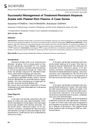
June 2019 in “Serbian Journal of Dermatology and Venereology/Serbian Journal of Dermatology and Venerology” This study reported remarkable improvement in three patients with treatment-resistant alopecia areata after receiving autologous platelet-rich plasma injections, suggesting the potential for this approach and a need for further randomized, placebo-controlled trials.
January 2021 in “Journal of cosmetology & trichology” This review discusses platelet-rich plasma treatment for androgenetic alopecia, addressing its effectiveness, challenges, and future directions, but reports no new clinical results.
September 2024 in “Revista Foco” This review discusses the applications of platelet-rich plasma in aesthetic medicine, highlighting its potential for facial rejuvenation, scar treatment, and combating alopecia, but reports no new results.
3 citations
,
March 2013 in “PubMed” This study found that applying 10% platelet-rich plasma significantly increased hair follicle density and reduced the time for hair formation in a mouse model compared to no PRP treatment.
 4 citations
,
June 2017 in “Anais Brasileiros De Dermatologia”
4 citations
,
June 2017 in “Anais Brasileiros De Dermatologia” This study demonstrates that miniaturized hair follicles in female pattern hair loss overexpress nuclear aryl hydrocarbon receptors, suggesting a potential role for environmental pollutants in this condition.
 June 2026 in “Zenodo (CERN European Organization for Nuclear Research)”
 This article discusses the popularity and mechanisms of Platelet Rich Plasma therapy for skin rejuvenation and hair loss, but it reports no new clinical results.
October 2016 in “Journal of Dermatology and Cosmetic”  12 citations
,
June 2020 in “Journal of The American Academy of Dermatology”
12 citations
,
June 2020 in “Journal of The American Academy of Dermatology” This article discusses platelet-rich plasma therapy for cicatricial alopecias like lichen planopilaris and reports no confirmed new clinical results; the authors highlight ongoing uncertainty about its effectiveness and potential risks.
October 2022 in “Journal of Drugs in Dermatology” This study observed that both PRP and 1550 nm fractional erbium-glass laser improved AGA, with greater hair density in patients receiving the combination therapy and no side effects reported.
 4 citations
,
December 2019 in “Skin appendage disorders”
4 citations
,
December 2019 in “Skin appendage disorders” In this study, manually prepared platelet-rich plasma did not show significant improvement in hair count or anagen hair proportion for men with androgenetic alopecia.
15 citations
,
March 2021 in “EMBO Reports” PRSS35 enzyme may help start skin tumors and could be a target for cancer treatment.
4 citations
,
October 2019 in “Acta Médica Costarricense” This study highlights that while platelet-rich plasma is showing promise across multiple medical fields like dentistry and sports medicine, a lack of standardized protocols and robust clinical trials limits its routine clinical application.
November 2024 in “Siriraj Medical Journal/San Sirirat” In this study, a single platelet-rich plasma injection for facial rejuvenation improved patient satisfaction and skin elasticity, with the most notable effects occurring 1-2 weeks post-treatment.
1 citations
,
May 2021 in “Clinical Nuclear Medicine” In this study, 18F-FDG PET/CT revealed increased FDG uptake in the scalp of a woman after platelet-rich plasma therapy, indicating potential inflammatory changes.
 June 2020 in “Acta Scientific Otolaryngology”
 This case study presents a patient with male-pattern alopecia who received PRP treatment with calcium chloride after ruling out other potential causes.
 5 citations
,
December 2015 in “Dermatologic Therapy”
5 citations
,
December 2015 in “Dermatologic Therapy” In this study, topical phenylephrine significantly reduced hair shedding and increased the force needed to pluck hair in women undergoing cosmetic procedures, suggesting its potential utility for traction alopecia.
 June 2023 in “Research Square (Research Square)”
 This study found that among male Han Chinese, a higher polygenic risk score was linked to increased risk and poorer treatment outcomes for benign prostatic hyperplasia.
 18 citations
,
January 2020 in “Indian Dermatology Online Journal”
18 citations
,
January 2020 in “Indian Dermatology Online Journal” This review summarizes available evidence on the dermatological use of platelet-rich plasma, particularly noting its efficacy for androgenetic alopecia and skin rejuvenation, but highlights significant gaps due to limited high-quality studies.
March 2023 in “The Journal of Urology” This study found that higher baseline expression of SRD5A2 in prostate tissue was associated with a better response to finasteride in men with benign prostatic hyperplasia.