 August 2025 in “ACS Omega”
 This study synthesized and evaluated hydroxycinnamate derivatives for their ability to inhibit human SRD5A1, finding that three compounds showed significant inhibitory activity and low cytotoxicity. Compound 10a notably reduced SRD5A1 protein expression in cells, suggesting potential for nonsteroidal treatment of androgen-related conditions.
August 2025 in “OPAL (Open@LaTrobe) (La Trobe University)” This study found that hydroxycinnamate derivatives, especially a compound named 10a, effectively inhibited SRD5A1 activity and protein expression in cell assays, suggesting potential for treating androgen-related conditions.
![Benzo[c]quinolizin-3-ones: A Novel Class of Potent and Selective Nonsteroidal Inhibitors of Human Steroid 5α-Reductase 1](/images/assets/ff6e6cbe-cb9c-4d11-87ef-671d28ffd4fa/small/15506.jpg) 28 citations
,
September 2000 in “Journal of Medicinal Chemistry”
28 citations
,
September 2000 in “Journal of Medicinal Chemistry” This study identified novel compounds as selective inhibitors of the type 1 isoenzyme of 5α-reductase, displaying promising potential for treating DHT-dependent disorders such as acne and androgenic alopecia.
 18 citations
,
February 2012 in “Experimental Dermatology”
18 citations
,
February 2012 in “Experimental Dermatology” This study found no significant association between selected gene variants and female pattern hair loss, suggesting these genes might not be involved in its development.
January 2005 in “Fuzhou daxue xuebao. Ziran kexue ban” This study developed a rapid and efficient in vitro method using high-performance liquid chromatography to screen for steroid 5 alpha-reductase inhibitors, determining inhibition constants for Finasteride and Epristeride.
 14 citations
,
February 2018 in “Psychoneuroendocrinology”
14 citations
,
February 2018 in “Psychoneuroendocrinology” This study found that male 5α-reductase 2 knockout mice showed deficits in social dominance behaviors and reduced dopamine receptor binding in a brain region related to social ranking.
 4 citations
,
June 2015 in “Journal of Genetics/Journal of genetics”
4 citations
,
June 2015 in “Journal of Genetics/Journal of genetics” This abstract reports funding sources for ongoing research and does not present any study results.
 14 citations
,
April 2021 in “Biology”
14 citations
,
April 2021 in “Biology” This study found that ethanol extract of Tubtim Chumphae rice bran downregulates SRD5A gene expression, similarly to finasteride, suggesting potential use as an anti-hair loss product.
 6 citations
,
August 2013 in “한국응용생명화학회지”
6 citations
,
August 2013 in “한국응용생명화학회지” This study found that among eleven tested polymethoxyflavones, 5-hydroxy-7,4′-dimethoxyflavone was the strongest steroid 5α-reductase inhibitor and suggests potential use for benign prostatic hyperplasia treatment.
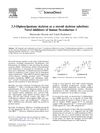 13 citations
,
August 2007 in “Bioorganic & medicinal chemistry letters”
13 citations
,
August 2007 in “Bioorganic & medicinal chemistry letters” This study developed a new competitive 5alpha-reductase inhibitor with an IC(50) of 0.84 microM using a novel chemical structure.
 November 2023 in “Scientific reports”
 This study presents the first report on cloning and characterizing the full-length cDNA of SRD5A1 in Indian catfish (Clarias magur), revealing expression differences across reproductive phases and increased expression post-Ovatide administration in ovaries and testis.
 15 citations
,
June 1995 in “The Journal of Clinical Endocrinology and Metabolism”
15 citations
,
June 1995 in “The Journal of Clinical Endocrinology and Metabolism” This study found that finasteride significantly reduced dihydrotestosterone levels but did not provide clear evidence of impaired libido or erectile function compared to placebo in men.
 13 citations
,
January 2017 in “Chemical & Pharmaceutical Bulletin”
13 citations
,
January 2017 in “Chemical & Pharmaceutical Bulletin” This study found that a synthetic avicequinone C analogue, 5e, was significantly more potent in inhibiting steroid 5α-reductase type 1 activity in human keratinocytes compared to the original isolated compound.
![Synthesis of Spiro[cyclohexane-1,2'-[2H]indene] Derivatives as Inhibitors of Steroid 5α-Reductase](/images/assets/d91300a7-4d66-4d2c-90ac-293b0dbc5ff5/small/21048.jpg) 8 citations
,
June 1995 in “Helvetica Chimica Acta”
8 citations
,
June 1995 in “Helvetica Chimica Acta” This article outlines the synthesis of spiro[cyclohexane‐1,2′‐[2 H ]indene] derivatives similar to known steroid 5α‐reductase inhibitors, but it does not report experimental findings.
 3 citations
,
February 2021 in “Molecules”
3 citations
,
February 2021 in “Molecules” In this study, researchers developed a sensitive assay to measure the inhibition of steroid 5-α reductase (5AR) by chemicals like finasteride and dutasteride, revealing species-specific differences in inhibitor efficacy between human and fish cell lines.
April 2011 in “Journal of Medicinal Plants Research” This study found that Ocimum basilicum L. showed the highest 5α-reductase inhibitory activity among ten Thai plants, despite no correlation between enzyme inhibition and total phenolic content.
193 citations
,
June 2007 in “The Plant Journal” This study found that the GhDET2 gene plays a crucial role in cotton fiber initiation and elongation, suggesting that modifying brassinosteroid biosynthesis may enhance fiber quality or yield.
 20 citations
,
June 1995 in “Tetrahedron Letters”
20 citations
,
June 1995 in “Tetrahedron Letters” This study reported that newly synthesized phenanthridin-3-one derivatives effectively inhibit human steroid 5-α-reductase.
 8 citations
,
March 2002 in “Archiv Der Pharmazie”
8 citations
,
March 2002 in “Archiv Der Pharmazie” In this study, 4-(4-(phenylaminocarbonyl)benzoyl) benzoic acid exhibited the strongest inhibitory activity against the human type 2 steroid 5α-reductase isozyme among the compounds tested.
November 2025 in “ACS Omega” This study found that compounds from *Tectona grandis* leaves showed moderate inhibition of steroid 5α-reductase, a factor in androgenetic alopecia, and exhibited anti-inflammatory properties by inhibiting nitric oxide and pro-inflammatory cytokines IL-1β and IL-6 in vitro, suggesting potential dual-action benefits for AGA management.
November 2025 in “OPAL (Open@LaTrobe) (La Trobe University)” This study found that the leaf extract of Tectona grandis and its major bioactive constituents moderately inhibit the 5α-reductase enzyme, which is linked to androgenetic alopecia, and also possess anti-inflammatory properties, showing promise as dual-action candidates for managing this condition.
3 citations
,
June 2018 in “Bioorganic & medicinal chemistry” This study identified that derivatives 4, 4b, and 4c strongly inhibited the enzyme type 1 5α-reductase and decreased reproductive organ weights in hamsters, suggesting potential as prodrugs for prostate tumor growth inhibition.
 53 citations
,
June 1993 in “Proceedings of the National Academy of Sciences of the United States of America”
53 citations
,
June 1993 in “Proceedings of the National Academy of Sciences of the United States of America” This study identified LY191704 as a specific noncompetitive inhibitor of human 5 alpha-reductase type 1, which may be useful in treating endocrine disorders related to DHT overproduction.
January 2004 in “Pharmaceutical biotechnology” This study found that finasteride effectively inhibits the enzymatic activity of human steroid 5 alpha reductase type II in newly established CHO cell lines.
 April 1992 in “Current opinion in therapeutic patents”
 This study reports the development of novel 4-amido-Δ4,6-steroids as potential inhibitors of 5α-reductase, showing promising in vitro results for conditions like acne and benign prostatic cancer.
 72 citations
,
January 2011 in “Current Pharmaceutical Design”
72 citations
,
January 2011 in “Current Pharmaceutical Design” This review discusses the potential role of steroid 5α-reductase inhibitors in treating neuropsychiatric disorders related to dopaminergic hyperreactivity but reports no new clinical results.
13 citations
,
June 2017 in “Biochimie open” This study determined that the human steroid 5α-reductase enzymes localize to the endoplasmic reticulum in HeLa cells, with protein tagging affecting expression and inducing protein aggregates for some isoforms.
 30 citations
,
October 2020 in “Nature Communications”
30 citations
,
October 2020 in “Nature Communications” This study provides the first crystal structure of the human SRD5A2 enzyme, revealing key insights into its function and inhibition which may aid future drug development.
30 citations
,
June 2010 in “Endocrine Related Cancer” In this study, dutasteride more effectively reduced prostate cancer cell viability than finasteride in vitro, but did not significantly alter the angiogenic response.
 21 citations
,
January 2020 in “General and Comparative Endocrinology”
21 citations
,
January 2020 in “General and Comparative Endocrinology” This review examines the diverse roles of SRD5α enzymes across species, focusing on their involvement in steroid synthesis, sexual development, and various physiological processes, but reports no new clinical results.