38 citations
,
January 2005 in “PubMed” This study found that dutasteride effectively improves symptoms of benign prostatic hyperplasia, showing benefits in urinary flow and quality of life, with only modestly elevated sexual side effects compared to placebo.
 38 citations
,
October 2014 in “Current Opinion in Endocrinology, Diabetes and Obesity”
38 citations
,
October 2014 in “Current Opinion in Endocrinology, Diabetes and Obesity” This review discusses the clinical and molecular history of 5-alpha reductase deficiency, highlighting its role in male sexual differentiation and potential therapeutic applications, but reports no new research outcomes.
 36 citations
,
October 2009 in “Journal of Investigative Dermatology”
36 citations
,
October 2009 in “Journal of Investigative Dermatology” This study suggests that in SZ95 sebocytes, a pathway for DHT biosynthesis does not require testosterone as an intermediate, potentially impacting the treatment of androgen-sensitive skin conditions.
34 citations
,
January 2004 in “PubMed” In this study, finasteride treatment for 56 days in adult rats led to sloughing of immature germinal cells and reduced sperm content in the epididymis, indicating its importance for maintaining spermatogenesis.
 34 citations
,
September 2013 in “Urology”
34 citations
,
September 2013 in “Urology” Long-term use of a certain medication can worsen erectile function in aged rats by damaging penile muscle cells.
 29 citations
,
July 2009 in “BJU international”
29 citations
,
July 2009 in “BJU international” This review examines the pharmacological properties and potential clinical benefits of 5α‐reductase inhibition in prostate cancer but reports no new research findings.
 25 citations
,
November 2015 in “Journal of Ethnopharmacology”
25 citations
,
November 2015 in “Journal of Ethnopharmacology” This study found that Cacumen platycladi extract significantly promoted hair growth and reduced dihydrotestosterone levels by inhibiting 5α-reductase activity in an androgen-sensitive mouse model.
17 citations
,
December 2015 in “Bioorganic & Medicinal Chemistry” 3-tetrazolo steroidal analogs can strongly inhibit the enzyme linked to hair loss.
 15 citations
,
March 1997 in “International Journal of Dermatology”
15 citations
,
March 1997 in “International Journal of Dermatology” This article discusses the potential use of 5α-reductase inhibitors in dermatology and reports no new clinical results; the authors suggest further exploration of their dermatological applications.
 14 citations
,
February 2018 in “Psychoneuroendocrinology”
14 citations
,
February 2018 in “Psychoneuroendocrinology” This study found that male 5α-reductase 2 knockout mice showed deficits in social dominance behaviors and reduced dopamine receptor binding in a brain region related to social ranking.
10 citations
,
March 2023 in “Journal of Chemistry” This study identified ten novel compounds that may effectively target steroid 5 alpha-reductase 2 (5αR-2) for potential treatment of benign prostate hyperplasia, exhibiting comparable binding energies to existing drugs like finasteride and dutasteride.
8 citations
,
July 2021 in “F1000Research” This review discusses the potential of plant-derived phytochemicals as alternatives to 5-alpha-Reductase inhibitors in treating prostate cancer, highlighting possible benefits like reduced side effects, but it reports no new findings.
7 citations
,
January 2004 in “Drugs of today” This review discusses the established efficacy and safety of finasteride and dutasteride for benign prostatic hyperplasia, their use with alpha adrenergic blockers, and the potential unclear role in cancer prevention.
 7 citations
,
July 1995 in “PubMed”
7 citations
,
July 1995 in “PubMed” Finasteride, a drug that changes testosterone to a different hormone, was studied and its effects over time were modeled successfully.
6 citations
,
January 2003 in “PubMed” Finasteride reduces prostate size and symptoms with few side effects.
3 citations
,
December 2000 in “PubMed” This study reports that the compound CS-891 can inhibit 5alpha-reductase activity in the dermal papillae of human hair follicles, suggesting potential for treating androgenetic alopecia.
 2 citations
,
January 2025 in “Frontiers in Pharmacology”
2 citations
,
January 2025 in “Frontiers in Pharmacology” In a rat model of benign prostatic hyperplasia, this study found that purple corn extract may improve symptoms by inhibiting prostate enlargement, reducing androgen receptor signaling, and exerting anti-inflammatory effects.
1 citations
,
January 2002 in “PubMed” The researchers reported that both finasteride and PM-9 competitively inhibit the 5 alpha-reductase enzyme in P. crustosum broth.
 August 2025 in “ACS Omega”
 This study synthesized and evaluated hydroxycinnamate derivatives for their ability to inhibit human SRD5A1, finding that three compounds showed significant inhibitory activity and low cytotoxicity. Compound 10a notably reduced SRD5A1 protein expression in cells, suggesting potential for nonsteroidal treatment of androgen-related conditions.
June 2019 in “Journal of Drug Delivery and Therapeutics” This review highlights the use of finasteride, a 5alpha-reductase inhibitor, for treating benign prostatic hyperplasia and male pattern hair loss, noting that it may cause male sexual dysfunction but usually with tolerable side effects that decrease over time, not requiring treatment discontinuation.
64 citations
,
June 1995 in “Steroids” This review discusses biochemical studies on 5 alpha-reductase and its inhibitors, comparing IC50 and Ki values for various compounds, but reports no new experimental results.
54 citations
,
November 1995 in “The Journal of Clinical Endocrinology & Metabolism” In this study, females with 5 alpha-reductase-2 deficiency exhibited decreased body hair, normal sebum production, and delayed menarche, suggesting a role for DHT in hair growth and menstrual function.
 November 2023 in “Scientific reports”
 This study presents the first report on cloning and characterizing the full-length cDNA of SRD5A1 in Indian catfish (Clarias magur), revealing expression differences across reproductive phases and increased expression post-Ovatide administration in ovaries and testis.
124 citations
,
January 1996 in “Dermatology” This article reviews the biochemical properties of 5 alpha-reductase isoforms and highlights the limited dermatological use of inhibitors like finasteride, especially for type 1 isozyme-targeting agents, while suggesting further clinical exploration.
 124 citations
,
September 1992 in “Endocrinology”
124 citations
,
September 1992 in “Endocrinology” This article discusses the structure of the human type II 5 alpha-reductase gene and reports no new experimental results.
 101 citations
,
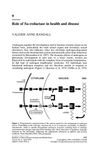
April 1994 in “Baillière's clinical endocrinology and metabolism”
101 citations
,
April 1994 in “Baillière's clinical endocrinology and metabolism” This review discusses the role of 5α-reductase enzymes in androgen action and related disorders, noting that their specific inhibitory drugs show promise for conditions like benign prostatic hypertrophy; it reports no new clinical results.
 89 citations
,
February 1993 in “Journal of Medicinal Chemistry”
89 citations
,
February 1993 in “Journal of Medicinal Chemistry” This research article focuses on nonsteroidal inhibitors of human type I steroid 5-alpha-reductase but reports no new results.
78 citations
,
December 2008 in “The Journal of Sexual Medicine” This review highlights that sexual dysfunction associated with 5-alpha-reductase inhibitors is recognized in clinical literature, with erectile dysfunction being the most common adverse effect, followed by ejaculatory dysfunction and decreased libido.
 73 citations
,
January 1994 in “European Urology”
73 citations
,
January 1994 in “European Urology” This study found that finasteride significantly reduced serum dihydrotestosterone levels, confirming its efficacy as a 5a-reductase inhibitor, while Permixon showed no effect in healthy male volunteers.
 70 citations
,
June 1993 in “Biochemistry”
70 citations
,
June 1993 in “Biochemistry” This study found that the binding of finasteride to the enzyme 5a-reductase occurs at a slower rate than previously assumed, complicating the estimation of its real inhibitory constant.