 April 2018 in “Journal of Investigative Dermatology”
 This study found that elevated STAT5 levels are linked to improved hair-inducing capabilities in human dermal papilla cells, and reducing STAT5 impairs hair follicle induction.
 May 2024 in “Journal of the Egyptian Women's Dermatologic Society /Journal of the Egyptian Women's Dermatologic Society”
 In this split-scalp study, researchers observed that combining fractional CO2 laser and PRP treatment was significantly more effective in improving hair parameters in women with female pattern hair loss than using each intervention alone or placebo.
 April 2024 in “arXiv (Cornell University)”
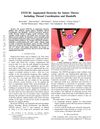
 In this study, the researchers developed an advanced robotic system called STITCH for performing suture tasks, which completed an average of 2.93 sutures autonomously and 4.47 sutures with human intervention in physical trials.
November 2024 in “Journal of Investigative Dermatology” ATP-sensitive potassium channels are important for hair growth.
January 2018 in “Belarusian State Pedagogical University repository (Belarusian State Pedagogical University)” The study suggests that culturing adipose-derived mesenchymal stem cells into spheroids with Wnt exposure can result in cell clusters resembling hair follicle dermal papilla cells, potentially aiding hair follicle generation.
2 citations
,
November 2019 in “FEBS open bio” This study found that stimulating dermal papilla cells with specific adipo-osteogenic factors and growth factors helped maintain their viability and restored their hair-forming activity in vitro.
 87 citations
,
March 2020 in “Australian Dental Journal”
87 citations
,
March 2020 in “Australian Dental Journal” This review discusses different preparation and application methods of platelet-rich plasma in dental regenerative medicine and reports no new results, highlighting its potential and associated controversies.
 14 citations
,
May 2021 in “Marine Drugs”
14 citations
,
May 2021 in “Marine Drugs” This review discusses the therapeutic properties of polydeoxyribonucleotides derived from marine organisms for wound healing and inflammation, but it reports no new clinical results.
January 2019 in “CLINICAL AND EXPERIMENTAL MORPHOLOGY”  51 citations
,
August 2013 in “Journal of Investigative Dermatology”
51 citations
,
August 2013 in “Journal of Investigative Dermatology” This study demonstrated that cultured human dermal papilla cells can induce full hair follicle formation when combined with neonatal foreskin keratinocytes in a grafted dermal-epidermal construct on mice.
11 citations
,
January 2022 in “Brazilian Oral Research” This study found that XP-endo Finisher R was approximately twice as effective as passive ultrasonic irrigation in removing root filling material from curved mesiobuccal canals of maxillary molars.
August 2026 in “Cell Biomaterials” D-chiral biomaterial scaffolds enhance tissue and hair regeneration by activating the body's immune system.
 26 citations
,
February 2012 in “Journal of Investigative Dermatology”
26 citations
,
February 2012 in “Journal of Investigative Dermatology” This study found that dermal papilla cells from human hair follicles can be reprogrammed into induced pluripotent stem cells, but their efficiency is similar to that of fibroblasts, unlike in mice.
 149 citations
,
July 2014 in “Cold Spring Harbor Perspectives in Medicine”
149 citations
,
July 2014 in “Cold Spring Harbor Perspectives in Medicine” This article provides contact information for Bruce A. Morgan and features no new research findings.
 28 citations
,
March 2010 in “Histochemistry and cell biology”
28 citations
,
March 2010 in “Histochemistry and cell biology” Skin cells can help create early hair-like structures in lab cultures.
3 citations
,
March 2013 in “PubMed” This study found that applying 10% platelet-rich plasma significantly increased hair follicle density and reduced the time for hair formation in a mouse model compared to no PRP treatment.
28 citations
,
September 2011 in “Stem Cell Reviews and Reports” September 2022 in “World Journal of Advanced Research and Reviews” This study introduced a Density-Calibrated Airtouch Protocol (DCAP) that suggests customizing the Airtouch hair coloring technique based on client hair density to optimize color blend, pigment longevity, and hair health.

This study explored the structure and function of lipocalin prostaglandin D synthase, revealing its dual role in substrate catalysis and as a lipophilic ligand carrier, potentially informing future drug delivery design.
3 citations
,
June 2025 in “Gyemyeong uidae haksulji” This review suggests that PDRN shows promise as a safe and versatile regenerative agent for wound healing and other dermatological applications, based on its dual mechanisms and clinical evidence of efficacy.
 2 citations
,
January 2022 in “Lasers in Medical Science”
2 citations
,
January 2022 in “Lasers in Medical Science” This pilot study reported significant improvement in hair restoration and patient satisfaction with the use of fractional carbon dioxide laser followed by platelet-rich plasma, showing greater hair density increases using higher laser pulse energy settings in individuals with androgenetic alopecia.
 3 citations
,
June 2023 in “Nano today”
3 citations
,
June 2023 in “Nano today” This study reported that bioinks containing calcium molybdate nanoparticles and dermal papilla cells can promote hair regrowth in vivo by creating an anti-inflammatory environment and activating the mTOR signaling pathway in macrophages.
3 citations
,
November 2020 in “PubMed” This study observed that bone marrow mesenchymal stem cells cultured in three-dimensionally bioprinted hydrogels with higher stiffness, like 3A8G, tend to differentiate more into hair follicle cells compared to those in less stiff hydrogels, like 1A4G.
April 2026 in “Clinical and Experimental Dermatology” This study found that treating moderate-to-severe prurigo nodularis with dupilumab significantly improved itch severity, skin condition, and quality of life over 104 weeks, with a favorable safety profile, even in elderly and comorbid patients.
October 2022 in “Frontiers in Bioengineering and Biotechnology” This study demonstrated that in a mouse model of androgenic alopecia, PLGA-DUT/siAR@DPCM nanoparticles effectively delivered drugs to hair follicles, suppressed androgen-related targets, promoted cell proliferation, and showed significant therapeutic effects with minimal adverse effects, suggesting their potential for clinical application.
 April 2018 in “The journal of investigative dermatology/Journal of investigative dermatology”
 This study demonstrated that prevascularized human skin constructs containing engineered hair follicles can successfully induce human hair growth when grafted onto mice by promoting blood supply to the grafted skin.
December 2024 in “Biochemical and Biophysical Research Communications” LMWP-PDGFA shows promise for improving hair health and treating hair loss with fewer side effects.
This review highlights the potential of 3D bioprinting in developing functional, patient-specific artificial skin, addressing limitations of traditional skin grafts and advancing regenerative medicine applications.
12 citations
,
September 2020 in “Nanomaterials” This study found that centrifugally spun scaffolds with higher concentrations of platelet-derived bioactive molecules enhanced melanocyte metabolic activity and proliferation, suggesting potential for improving vitiligo treatment.
January 2025 in “Fìzìologìčnij žurnal” This study found that in patients with elevated fibrinogen levels undergoing revision rhinoplasty, PDRN decreased M1 cytokines and increased M2 cytokines, potentially offering a new therapeutic approach, but further research is needed to understand its mechanisms and effects fully.