114 citations
,
May 2001 in “Development” This study found that overexpressing the Hoxc13 gene in mice causes hair loss and a skin condition similar to ichthyosis, identifying several gene targets that may regulate hair growth.
December 2021 in “INDIGO (University of Illinois at Chicago)” This study used single-cell RNA sequencing to characterize 19 distinct cell populations in sheep hair follicles, uncovering differentiation signatures and intercellular communication that may influence wool curvature and sheep breeding.
November 2022 in “Journal of Investigative Dermatology” This study provides evidence that ILC1-like cells can induce alopecia areata in previously healthy human hair follicles, challenging the view that it is solely an autoantigen-dependent autoimmune disease.
8 citations
,
November 2020 in “Journal of Cosmetic Dermatology” This preclinical study observed that a nanoencapsulated ingredient complex, AcPi, may prevent hair follicle aging and hair loss by reducing oxidative stress, enhancing mitochondrial activity and WNT/β-catenin signaling, and controlling androgenic metabolism when tested on human scalp cultures.
September 2025 in “International Journal of Dermatology” February 2025 in “International Journal of Dermatology” August 2020 in “International Journal of Dermatology” September 2023 in “Journal of the American Academy of Dermatology” Risankizumab effectively treats and maintains skin clearance in moderate-to-severe psoriasis.
November 2025 in “Journal of Investigative Dermatology” TEC kinases may help cause inflammation in vitiligo and could be targeted for treatment.
18 citations
,
January 2017 in “PloS one” This study identified 295 genes with differential expression in Yangtze River Delta White Goats that produce high-quality brush hair, suggesting these genes and the MAPK signaling pathway may influence hair quality traits.
December 2021 in “Figshare” This study found that BBS7 is important for Sonic hedgehog signaling activity, which may be crucial for maintaining periodontal ligament homeostasis in occlusal hypofunction.
September 2023 in “Animals” In this study, researchers conducted whole-genome resequencing of eight sheep breeds to identify additional genes associated with wool fineness, revealing 269 genes in fine wool and 319 in coarse wool breeds that are linked to significant traits and pathways.
October 2023 in “International journal of molecular sciences” In this study, researchers analyzed the skin proteome of Alpine Merino sheep to identify proteins and pathways related to wool fiber diameter, finding that cyclic adenosine monophosphate and certain signaling pathways may play a role in this trait.
January 2022 in “International journal of dermatology and venereology” This case study reports a 36-year-old man with KID syndrome caused by an N14Y GJB2 mutation, expanding the mutation spectrum of this condition in the Chinese population.
1 citations
,
October 2023 in “PROTOPLASMA” 2 citations
,
January 1989 This article discusses the history and understanding of Tay syndrome, recognizing it as a distinct condition related to ichthyotic erythroderma, mental retardation, and brittle hair but reports no new clinical results.
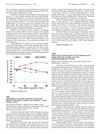 April 2010 in “The Journal of Urology”
 Human prostate cells produce more WISP1/CCN4 when there's not enough oxygen.
November 2024 in “Journal of Investigative Dermatology” 3 citations
,
June 2021 in “Frontiers in genetics” This study found that STAT3 directly inhibited the activity of the sheep FST gene promoter, consequently reducing cell proliferation and promoting a better understanding of hair follicle development mechanisms.
14 citations
,
March 2022 in “Plant Cell & Environment” In this study, the authors reported that AtRXR3, a phosphorus-inducible DUF506 protein, modulates root hair growth under phosphorus stress by interacting with calmodulin and influencing calcium oscillations.
7 citations
,
July 2025 in “Nature Communications” In this study using mice, researchers found that the Piezo1 channel regulates metabolic changes and immune cell infiltration during skin growth under tension, with altered expression of glycolysis-related genes and increased macrophage activity observed in stretched skin.
 June 2026 in “Zenodo (CERN European Organization for Nuclear Research)”
 This study presents the design of an autonomous bioregeneration chamber that aims to extend human lifespan to 130-150 years by optimizing biological and environmental conditions, suggesting that a longer healthspan is possible through technological, nutritional, and socio-economic interventions.
 63 citations
,
November 2009 in “British journal of dermatology/British journal of dermatology, Supplement”
63 citations
,
November 2009 in “British journal of dermatology/British journal of dermatology, Supplement” This study found that the subtilisin protease Sub3 from Microsporum canis is essential for adherence to the feline epidermis but is not necessary for invading epidermal structures.
April 2005 in “Journal of Investigative Dermatology” This compilation reviews multiple dermatologic studies, reporting findings such as the lack of a psoriasis-susceptibility allele in cluster 17, and highlighting a mouse model for studying hair follicle formation, among others.
152 citations
,
April 2002 in “The journal of investigative dermatology/Journal of investigative dermatology” This study presents evidence that keratitis–ichthyosis–deafness syndrome is caused by a mutation in the connexin 26 gene, expanding the gene's known involvement in various disorders.
August 2015 in “Han'gug dongmul jawon gwahag hoeji/Han-guk dongmul jawon gwahak hoeji/Journal of animal science and technology” This study reported variable expression levels of TRα and CRABPII genes during the prenatal development of cashmere goats, contributing to an understanding of hair follicle formation in these animals.
64 citations
,
October 2018 in “Thérapie” This report describes the enhancement of the French SNIIRAM/SNDS healthcare database through external data linkages, highlighting its potential use in medical research despite complexities in the integration process.
This article discusses the role of epimorphin as a key morphoregulator for various epithelial cells in tubulogenesis and reports no experimental results on its signaling pathways.

This research developed a pig graph pangenome assembly of 27 genomes, revealing the importance of structural variations in adaptation and breed-specific traits, with BTF3 identified as a key gene influencing intramuscular fat and meat quality.
June 2023 in “Zenodo (CERN European Organization for Nuclear Research)”