 2 citations
,
April 2024 in “Dermatology Practical & Conceptual”
2 citations
,
April 2024 in “Dermatology Practical & Conceptual” This study found that Janus Kinase inhibitors, tofacitinib and baricitinib, showed effectiveness and safety in treating severe alopecia areata in a real-world setting, with optimal tolerability noted in younger individuals.

In this study on C3H/HeJ-engrafted mice, a single injection of BMD-1141 significantly increased anagen hair follicle counts and enhanced hair regrowth compared to daily high-dose ruxolitinib, suggesting it stimulates hair growth by influencing the hair cycle rather than altering immune response.
7 citations
,
August 2017 in “Journal of dermatological science” This study found that sorafenib increased mast cell number and degranulation in skin, suggesting PI3K signaling and SCF production may underlie its adverse cutaneous reactions.
 44 citations
,
October 2017 in “Journal of the American Academy of Dermatology”
44 citations
,
October 2017 in “Journal of the American Academy of Dermatology” In this study, tofacitinib monotherapy was effective in achieving hair regrowth in over half of Korean patients with moderate-to-severe and refractory alopecia areata, though treatment discontinuation typically led to hair loss recurrence.
 48 citations
,
November 2017 in “Journal of the American Academy of Dermatology”
48 citations
,
November 2017 in “Journal of the American Academy of Dermatology” Tofacitinib 2% ointment helped hair regrow in 3 out of 10 patients with alopecia areata, but caused side effects like scalp irritation and raised cholesterol in some.
January 2025 in “International Journal of Pharmaceutics” In this study, gelatin-coated transferosomes were developed to deliver tofacitinib specifically to hair follicles, resulting in 80% hair regrowth in alopecia areata patients with recalcitrant lesions after 12 weeks of treatment.
16 citations
,
January 2020 in “Annals of the rheumatic diseases” In this study, baricitinib improved the resolution of arthritis or rash in patients with systemic lupus erythematosus, but outcomes for skin involvement like alopecia were not reported.
12 citations
,
January 2016 in “Journal of clinical biochemistry and nutrition” In this study, combining deferasirox with sorafenib significantly reduced liver fibrosis and preneoplastic lesions in rats while also lessening adverse effects compared to sorafenib alone.
April 2025 in “Anais Brasileiros de Dermatologia” Abrocitinib effectively treats severe alopecia areata with significant improvement and no side effects.
1 citations
,
March 2025 in “Skin Appendage Disorders” This literature review on JAK inhibitors reports that ocular side effects are rare but could be significant, with an inability to establish a causal link. Clinicians are advised to monitor such adverse events and report them to drug safety agencies.

In this study, baricitinib was used as monotherapy to treat a 21-year-old woman with severe alopecia areata, resulting in significant hair regrowth and reduced alopecia severity within three months, suggesting its effectiveness and potential as a robust treatment option for this condition.
 December 2024 in “Drug Discoveries & Therapeutics”
 This study investigated using baricitinib-loaded mesenchymal stem cell exosomes injected locally in an alopecia areata mouse model and found that this method improved hair regrowth better than baricitinib or exosomes alone, potentially offering a new therapeutic approach for treating alopecia areata.
 September 2023 in “PubMed”
 This study reviewed baricitinib's efficacy and safety for treating alopecia areata and found that more patients achieved significant hair regrowth with baricitinib compared to placebo in two phase III trials. Mild to moderate side effects were reported, with additional study suggested for long-term effects.
May 2026 in “Bioorganic Chemistry” 
In this randomized controlled trial, researchers found that after six months of treatment, oral baricitinib was significantly more effective than methotrexate for improving hair regrowth in patients with severe alopecia areata, as measured by the Severity of Alopecia Tool score.
 August 2025 in “Dermatology and Therapy”
 This review reports that three JAK inhibitors—baricitinib, ritlecitinib, and deuruxolitinib—have gained FDA approval for treating alopecia areata due to their demonstrated efficacy in fostering hair regrowth in clinical trials.
 November 2025 in “SKIN The Journal of Cutaneous Medicine”
 In this open-label study of post-menopausal women with frontal fibrosing alopecia, researchers found that 12 weeks of baricitinib monotherapy significantly reduced disease activity as measured by the Lichen Planopilaris Activity Index, improved patient-reported scalp hair growth, but showed no significant change in eyebrow growth.
November 2023 in “Journal of Investigative Dermatology” JAK inhibitors are effective and generally safe for treating alopecia areata, but monitoring for side effects is important.
 8 citations
,
May 2017 in “Singapore Medical Journal”
8 citations
,
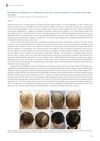
May 2017 in “Singapore Medical Journal” A Korean woman with complete hair loss regrew her hair after taking tofacitinib, with no side effects.
March 2026 in “Journal of the American Academy of Dermatology” In this study, patients with active lymphocytic cicatricial alopecia showed significant improvement using a three-stage treatment regimen involving Tofacitinib, Apremilast, and Crisaborole, with 93.5% experiencing marked improvement and only three mild adverse events reported.
 December 2025 in “International Journal of Innovative Technologies in Social Science”
 This study found that ritlecitinib, approved for alopecia areata in patients aged 12 and older, has an acceptable safety profile with mild to moderate side effects and no increase in serious adverse events compared to placebo.
 October 2024 in “Canadian Journal of Health Technologies”
 This CADTH recommendation advises that Olumiant should be publicly reimbursed for treating severe alopecia areata in adults, provided conditions such as a 50% scalp hair loss and specific prescribing criteria are met.
2 citations
,
January 2025 in “Journal of Clinical Immunology”  October 2024 in “Journal of the European Academy of Dermatology and Venereology”
 This study reported that ritlecitinib 50 mg and baricitinib 4 mg showed similar efficacy in treating severe alopecia areata, with no significant difference in hair regrowth outcomes at Week 24, but there remains considerable uncertainty and a need for further research.
This study found that P144 (Disitertide) significantly reduced collagen deposition and improved muscle organization in a rabbit model of post-radiotherapy fibrosis, suggesting potential antifibrotic effects.
11 citations
,
February 2022 in “JAAD case reports” This case report observed hair regrowth following the treatment of alopecia universalis and atopic dermatitis with tofacitinib, a JAK inhibitor.
In a retrospective clinical study, this research found that baricitinib is effective for alopecia areata, with 42.3% of patients achieving a significant reduction in hair loss by week 36, and 52.4% by week 52, outperforming previous trials.
 5 citations
,
August 2018 in “PubMed”
5 citations
,
August 2018 in “PubMed” This case report documented successful full hair regrowth in an 8-year-old with alopecia universalis after oral tofacitinib treatment, but mild headaches led to discontinuation.
 9 citations
,
March 2022 in “Journal of radiation research”
9 citations
,
March 2022 in “Journal of radiation research” This study identified specific profiles and courses of adverse events associated with boron neutron capture therapy for head and neck cancer, suggesting differences based on the beam incidence site.
 October 2021 in “International journal of basic and clinical pharmacology”
 This case report discusses how trichomegaly, an adverse effect of the cancer therapy drug erlotinib, might serve as a marker of positive tumor response and potentially aid in treating madarosis.