 95 citations
,
January 2012 in “British Journal of Dermatology”
95 citations
,
January 2012 in “British Journal of Dermatology” This study found that androgens inhibit hair follicle stem cell differentiation by disrupting the Wnt signalling pathway in dermal papilla cells, but Wnt activation can restore differentiation.
 89 citations
,
November 2017 in “Journal of Cellular Physiology”
89 citations
,
November 2017 in “Journal of Cellular Physiology” This review discusses the role of Wnt/β‐catenin signaling in stem and cancer stem cell maintenance and its involvement in the development and regeneration of various organs, but reports no new experimental results.
 86 citations
,
July 2020 in “International Journal of Molecular Sciences”
86 citations
,
July 2020 in “International Journal of Molecular Sciences” This review discusses the role of Wnt/β-catenin signaling in hair follicle regeneration and highlights recent progress in developing hair loss treatments targeting this pathway, but reports no new clinical results.
 84 citations
,
October 2014 in “PLoS Genetics”
84 citations
,
October 2014 in “PLoS Genetics” This study found that epidermal Wnt production is crucial for forming the skin's spinous layer through a BMP-FGF signaling cascade, although Wnt from basal cells is not needed for their differentiation.
 77 citations
,
February 2017 in “Stem Cell Reports”
77 citations
,
February 2017 in “Stem Cell Reports” This study found that activation of Wnt/β-catenin signaling in mouse testes promotes spermatogonial differentiation and reduces the stem cell pool, with SHISA6 inhibiting this process and maintaining stem cell characteristics.
 74 citations
,
January 2013 in “Journal of Investigative Dermatology”
74 citations
,
January 2013 in “Journal of Investigative Dermatology” Four genetic risk spots found for hair loss, with WNT signaling involved and a link to curly hair.
 74 citations
,
September 2006 in “Cell Cycle”
74 citations
,
September 2006 in “Cell Cycle” This review examines the role of Hairless, a nuclear receptor corepressor, in regulating Wnt signaling during hair cycling and reports no new clinical results.
 72 citations
,
April 2008 in “Organogenesis”
72 citations
,
April 2008 in “Organogenesis” This review discusses the roles of Wnt signaling in skin organogenesis and related processes but reports no new experimental results, highlighting areas for future research.
 70 citations
,
January 2009 in “The Journal of clinical endocrinology and metabolism/Journal of clinical endocrinology & metabolism”
70 citations
,
January 2009 in “The Journal of clinical endocrinology and metabolism/Journal of clinical endocrinology & metabolism” This study explored the interaction between androgen and Wnt signaling in dermal papilla cells, targeting the effects of androgen on hair growth reduction.
 68 citations
,
May 2018 in “PLOS Biology”
68 citations
,
May 2018 in “PLOS Biology” This study demonstrates that inhibiting SFRP1 with the antagonist WAY-316606 enhances hair growth in human scalp hair follicles ex vivo by facilitating Wnt signalling.
 66 citations
,
July 2015 in “Organogenesis”
66 citations
,
July 2015 in “Organogenesis” This review summarizes recent findings on how Wnt signaling proteins play crucial roles in the cutaneous wound healing process but reports no new clinical results.
 59 citations
,
April 2016 in “Cell Reports”
59 citations
,
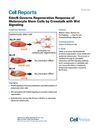
April 2016 in “Cell Reports” This study demonstrated that EdnrB signaling promotes melanocyte stem cell proliferation and differentiation, enhancing hair and epidermal melanocyte regeneration, especially under conditions of active Wnt signaling.
 59 citations
,
November 2010 in “Circulation Research”
59 citations
,
November 2010 in “Circulation Research” This review discusses the potential role of Wnt signaling in aging-related heart diseases and reports no clinical results.
 56 citations
,
February 2010 in “PLOS ONE”
56 citations
,
February 2010 in “PLOS ONE” This study demonstrates that canonical Wnt signaling is crucial for maintaining thymic epithelial microenvironments in postnatal thymus, possibly by affecting TEC progenitor cells.
 54 citations
,
April 2019 in “Journal of cellular physiology”
54 citations
,
April 2019 in “Journal of cellular physiology” In this study, miR-218-5p was found to enhance hair shaft growth and positively regulate the Wnt signaling pathway by targeting SFRP2 during skin and hair follicle development.
 49 citations
,
February 2008 in “Stem Cells”
49 citations
,
February 2008 in “Stem Cells” This study found that after injury, the bone marrow microenvironment's increased Wnt10b expression supports hematopoietic stem cell regeneration by enhancing Wnt signaling, revealing a vital interaction during recovery.
 48 citations
,
July 2008 in “Acta Biochimica et Biophysica Sinica”
48 citations
,
July 2008 in “Acta Biochimica et Biophysica Sinica” This review discusses the roles and mechanisms of Wnt signaling in embryonic and adult stem cells and its association with cancers, and reports no new experimental findings.
 46 citations
,
June 2015 in “Journal of Investigative Dermatology”
46 citations
,
June 2015 in “Journal of Investigative Dermatology” This study found that androgen receptor activation in adult mouse skin reduces β-catenin-induced hair follicle growth and sebaceous gland conversion, highlighting its role in stem cell fate decisions.
 45 citations
,
April 2016 in “Journal of Dermatological Science”
45 citations
,
April 2016 in “Journal of Dermatological Science” This study found that the Wnt/β-catenin signaling pathway activates melanocyte stem cells, promoting hair follicle regeneration both in vitro and in vivo.
 45 citations
,
September 2012 in “Life Sciences”
45 citations
,
September 2012 in “Life Sciences” This study observed that Aconiti Ciliare Tuber extract may promote hair growth in mice by activating the Wnt/β-catenin signaling pathway.
 42 citations
,
March 2014 in “European Journal of Pharmacology”
42 citations
,
March 2014 in “European Journal of Pharmacology” This study found that minor ginseng saponin F2 may promote hair growth more effectively than finasteride by enhancing anagen induction and modulating the Wnt signaling pathway in cell and mouse models.
 39 citations
,
March 2018 in “Archives of Dermatological Research”
39 citations
,
March 2018 in “Archives of Dermatological Research” This review describes the molecular interactions between androgens and Wnt/ß-catenin signaling in androgenetic alopecia but reports no new experimental or clinical findings; the authors discuss potential Wnt/ß-catenin-targeted treatments for hair growth.
 39 citations
,
January 2013 in “Journal of Investigative Dermatology”
39 citations
,
January 2013 in “Journal of Investigative Dermatology” This review explains how recent understanding of Wnt signaling regulation in hair follicles could potentially be used to enhance hair growth, but it reports no new empirical results.
 33 citations
,
January 2017 in “Annals of Dermatology”
33 citations
,
January 2017 in “Annals of Dermatology” This study suggests that LED light may promote the proliferation of human dermal papilla cells through the activation of specific signaling pathways.
 32 citations
,
August 2015 in “Journal of Investigative Dermatology”
32 citations
,
August 2015 in “Journal of Investigative Dermatology” In this study using a mouse model, Prom1+ dermal papilla cells were found to regulate the size of the papilla via β-catenin communication but did not aid in dermal repair.
 30 citations
,
August 2021 in “Oncogene”
30 citations
,
August 2021 in “Oncogene” This study reports that miR-22 promotes cancer progression and metastasis by maintaining Wnt/β-catenin signaling and cancer stem cell function.
 30 citations
,
February 2017 in “Histochemistry and Cell Biology”
30 citations
,
February 2017 in “Histochemistry and Cell Biology” This study found that applying TPA to mice accelerated hair follicle regeneration by activating Akt and Wnt/ß-catenin signaling pathways, involving hair follicle stem cell proliferation.
 27 citations
,
August 2015 in “Experimental Dermatology”
27 citations
,
August 2015 in “Experimental Dermatology” In this study, electrical stimuli at low voltage and frequency settings promoted hair growth in vitro and in rabbit models, possibly by activating pathways like Wnt/β-catenin.
 25 citations
,
September 2018 in “Molecular Biology of the Cell”
25 citations
,
September 2018 in “Molecular Biology of the Cell” This study found that in mice lacking EGFR, elevated Wnt signaling disrupts hair follicle development by affecting cell proliferation and differentiation, revealing a critical role for EGFR in regulating these processes.
 25 citations
,
November 2017 in “Molecular Medicine Reports”
25 citations
,
November 2017 in “Molecular Medicine Reports” This study found that PlncRNA‑1 may enhance the proliferation and differentiation of hair follicle stem cells by upregulating the TGF‑β1-mediated Wnt/β-catenin signaling pathway.